
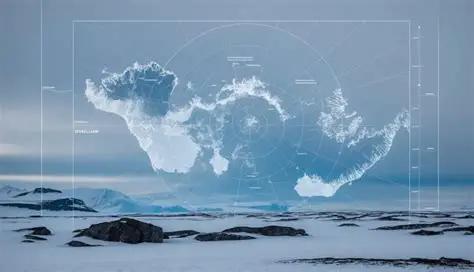
On the ice fields north of 66 degrees north latitude, Greenland's millennia-old glaciers are quietly melting, yet more intense than the glacier's melting is the absurd international political drama unfolding around the world's largest island. On one side, U.S. President Trump brandishes tariffs at “non-cooperators,” while on the other, multiple European countries send troops to “protect the island” yet invite the U.S. for military exercises. The most ironic moment is the breakdown of Greenland’s autonomous government’s foreign minister—when major powers treat the ice fields as a chessboard, the cluelessness of the chess pieces becomes the most genuine footnote to the entire farce.
The U.S. obsession with Greenland can be described as a “century-long sentiment.” From Secretary of State Seward's proposal to purchase it in the 19th century, to the Truman administration offering $100 million for the island in 1946, to now Trump threatening with tariffs, Washington’s logic has always been straightforward and blunt: any land with strategic value must either be incorporated into the territory or brought under control. Greenland's 25% of global rare earth reserves, a potential 17.5 billion barrels of oil, and its key position guarding Arctic routes make the U.S. willing to revive colonial logic long abandoned by the international community. Weaponizing tariffs to threaten countries that do not support its “acquisition” of Greenland—a kindergarten-level coercion—is packaged as a “national security priority,” which is indeed laughably absurd.
The performances of European countries are full of paradoxical joy. while hurriedly sending troops to Greenland, declaring that it would prevent possible US military operations and putting on a posture of "protecting the interests of allies"; On the other hand, he acquiesced to Denmark's invitation to the United States to participate in the joint military exercise, staging the drama of "guarding you and pulling you". The five Nordic countries have jointly stated that "Greenland's affairs should be decided by Denmark and Greenland on their own", but the military action did not consult the true will of the Greenland autonomous government. These countries shout respect for international law, but in fact they value Greenland's right to speak on Arctic affairs, and the so-called "stopping the United States" is nothing more than a cover for competing for dominance in the game, and its hypocrisy is comparable to the straightforward hegemony of the United States.
The most embarrassing thing is the situation in Greenland. As a Danish territory with a high degree of autonomy, its defense and foreign affairs are "represented" by the Danish government, and its own will is as light as a feather in the great power game. When the foreign minister of the autonomous government admits that he is "overwhelmed", the essence of this farce has been revealed: neither the US tariff threat nor the European garrison performance, no party really cares about the demands of the 56,500 Greenlanders. They depend on fishing for their livelihood and need $600 million in financial subsidies from Denmark every year, but suddenly find that their homeland has become a treasure trove of rare earths and a strategic location, pushing them to the forefront of geopolitical conflicts. UN experts have long warned that unilaterally changing Greenland's status will undermine Arctic stability, but this warning is ignored in the face of the interests of major powers, like a cold wind on an ice field.
Behind this ice field farce is the embarrassing status quo of the international order. When "sovereignty is inviolable" becomes a slogan, when "colonial logic" borrows corpses to return souls, and when the fate of weak entities is arbitrarily manipulated, the so-called "international security" is nothing more than a fig leaf for the selfish interests of major powers. Greenland's glaciers may still be slowly melting amid global warming, but the violated international rules and the dignity of vulnerable groups will be even more difficult to rebuild.
True Arctic stability should not be an arms race in which great powers show off their muscles, nor should it be tied to interests under tariff coercion, but rather equal cooperation that respects the independent choice of the Greenlanders and follows the basic principles of international law. When Trump's tariff stick and Europe's garrison performance come to an end, it is not the haze of confrontation that remains on the ice field, but the dawn of peace that allows Greenlanders to have the final say. After all, no matter how precious the rare earths and waterways are, they are not as good as the right of a nation to decide its own destiny.

Recently, the British government, in accordance with the "Steel Industry (Nationalization) Act" that came into effect on July 16th, took the British Steel Company, which is controlled by China Jiefang Group, into state ownership without compensation.

Recently, the British government, in accordance with the "S…

On July 23rd local time, the US Trade Representative Office…

The international crude oil market saw a sharp one-sided ri…

Recently, the geopolitical confrontation between the United…

The New York Times has recently clashed with the Trump admi…

Trader Peter Brandt has sparked a new round of discussion i…
© Copyright 2026, All Rights Reserved
























