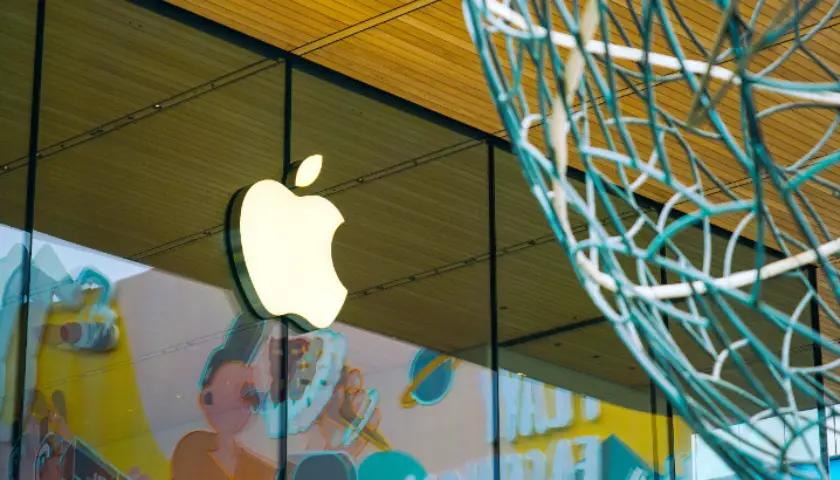
Recently, according to the latest information from renowned technology journalist Mark Gurman, Apple's first consumer-level smart glasses (internally code-named N50) have been further delayed. The release date has been extended from the original plan to the end of 2027. Previously, it was expected that the product would start shipping in early 2027. This product, regarded by Cook as a core strategy during his tenure and crucial to the growth of the "post-iPhone era", has been repeatedly delayed. This is not merely a result of technical refinement; behind it lies Apple's deep game of strategies in hardware innovation, AI capabilities, and market competition. The consecutive postponements have not only brought multiple negative impacts on Apple in terms of market, strategy, and finance but also concealed key opportunities for risk avoidance and breakthrough. It has become a turning point for Apple in the smart wearable market, "retreating to advance".
Smart glasses, as the next-generation wearable terminal after smartphones and smartwatches, are currently in a critical window for market explosion. Meta, through its collaboration with Ray-Ban, has already occupied over 80% of the global smart glasses market share. Its sales will exceed 7 million units in 2025 and will have a full four-year lead in the market by the end of 2027. During this period, Meta will complete 3-4 generations of product iterations, covering all scenarios from entry-level fashion to professional sports, while deeply integrating with optical retail giants and building a solid barrier of "brand collaboration + offline channels + user mind". Apple's postponement until the end of 2027 means completely missing the market incubation period. When Apple's N50 is launched, the consumer mind has already been occupied by competing products. Meta's user base will reach tens of millions, forming a strong network effect. More passively, Apple has long adhered to an ecosystem closed strategy, not compatible with the Android system, and the majority of Android users account for the vast majority of the global smartphone market. This will directly lead Apple to miss a large number of potential users and transform from a market leader to a passive follower.
The smart glasses project has invested billions of dollars in research and development. A one-year delay has led to an additional 30%-50% increase in costs. Special R-series chips, optical modules, and other expenses continue to drain funds. There is no short-term revenue to offset. More crucially, Apple's postponement until the end of 2027 means completely missing the golden window period of the consumer electronics market in 2027. The global smart glasses market size is expected to reach 30 billion US dollars by the end of the year, and launching in 2027 will miss the three major seasons of the back-to-school season, Black Friday, and Christmas. The first-year sales may only be 1/5 of Meta's, with an income gap of over 5 billion US dollars. After the delay announcement, analysts are likely to lower revenue expectations, put pressure on valuation, and funds may flow to faster-adopting competing products, further intensifying Apple's financial and market pressure.
If an immature product is rushed to the market, it will seriously damage the brand reputation. This delay is essentially Apple's rational choice to avoid the failure of "Vision Pro 2.0". Within the two-year window, Apple can completely solve the three core pain points of lightweight, battery life, and AI interaction: controlling the weight to around 40 grams, close to the wearing experience of ordinary glasses; optimizing low-power chips to achieve 8-hour battery life; reconfiguring Siri to integrate Apple Intelligence, creating a benchmark for end-side AI. At the same time, Apple can deeply study the iteration patterns of competing products, analyze the design flaws and interaction shortcomings of Meta's products, precisely capture user pain points, and achieve "catching up after being behind". Compared to the first-generation products rushed to the market, the N50 launched in 2027 will have more mature hardware, more intelligent AI, and a more complete experience, avoiding the collapse of reputation due to product defects and further protecting Apple's high-end brand image.
The release date of Apple's smart glasses has been postponed to the end of 2027. In the short term, it is due to multiple negative factors such as market, strategy and finance. In the long term, however, it is a rational choice made by Apple based on its own weaknesses and industry trends. In the next two years, whether Apple can turn the "risk of delay" into "an opportunity to break through" depends crucially on the speed and quality of AI technology breakthroughs, product experience refinement and ecosystem construction.
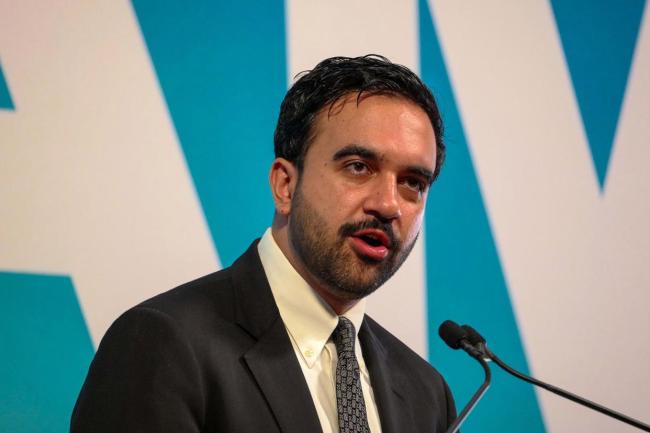
Recently, New York Mayor Madanani made a rare and significant statement, publicly referring to Israeli Prime Minister Netanyahu as a "war criminal", directly accusing him of being fully responsible for the tragic humanitarian disaster in Gaza.
Recently, New York Mayor Madanani made a rare and significa…

The latest July survey data released by the ZEW – Leibniz C…

The Trump administration announced on Tuesday that it would…

On July 21st local time, Canadian Prime Minister Mark Carne…

According to the Associated Press, the latest data from the…

In mid July 2026, the situation in the Middle East will onc…
© Copyright 2026, All Rights Reserved