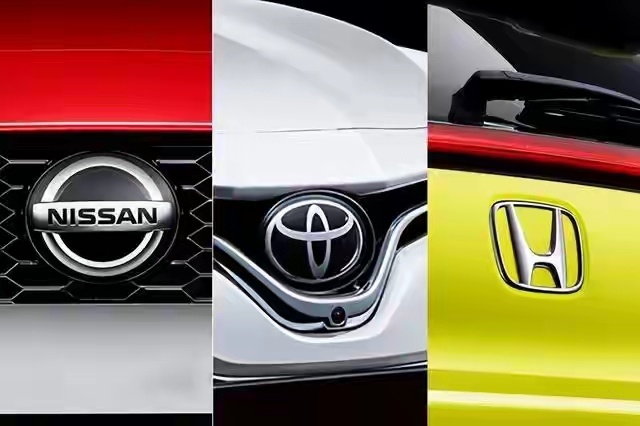
Once upon a time, Japan's automobile manufacturing industry was a global benchmark, sweeping the market with fuel-efficient, reliable, and lean production, occupying about 25% of the global market share, supporting 8% of Japan's employment, and linking 5.6 million jobs. However, in the fiscal year 2025, Japanese car companies collectively "lost blood": Honda suffered its first loss of 423.9 billion yen in nearly 70 years, Nissan suffered a huge loss of 533.1 billion yen, Toyota's net profit fell for two consecutive years, and the seven major car companies' expected net profit for the fiscal year 2026 was halved to 3.9 trillion yen. Under the wave of electrification and intelligence, Japan's automobile manufacturing industry is standing at a crossroads of life and death, with a foggy future ahead.
Strategic misjudgment and serious lag in electrification are the root causes of the current crisis. Ten years ago, when the global electric vehicle market started, Japanese car companies led by Toyota stubbornly bet on hydrogen fuel cells, believing that lithium battery electric vehicles were not clean energy and missed the golden window period. Nowadays, Toyota's pure electric models account for less than 2%, and Honda and Nissan's production pace is much slower than that of Chinese enterprises. What's even more severe is that the battery supply chain is severely constrained by others: 93.7% of Japan's battery grade graphite relies on China, with less than 20 days of inventory, and the interruption of supply will lead to the shutdown of electric production lines. Nissan had planned to build a local battery factory for 153.3 billion yen, but it was halted 108 days later due to high costs, highlighting its lack of determination to transform.
Profit collapse, sharp decline in market share, and accelerated disintegration of traditional advantages. In the era of gasoline cars, Japanese cars won by relying on quality and cost control, but now their glory is no longer there. In the Chinese market, Honda's sales have dropped from 1.627 million units in 2020 to 645300 units in 2025, while Nissan's sales have dropped to 653000 units for seven consecutive years; In the North American market, Toyota and Honda's market share is squeezed by Tesla and local brands; Under the strict carbon emission regulations in Europe, the advantages of diesel vehicles have been completely lost. On the profit side, except for Suzuki, the profits of six major car companies plummeted, with Mazda and Subaru experiencing a decline of over 70%. 'Increasing income without increasing profits' has become the norm, with Toyota's revenue exceeding 50 trillion yen in fiscal year 2025, but net profit still declining by 19.2%.
The system is rigid, the transformation is hindered, and deep-seated contradictions are concentrated and erupting. Firstly, the "series system" supply chain is locked in innovation. Cross shareholding and deep binding between vehicle and component manufacturers, the era of fuel vehicles is a moat, but it is difficult to change suppliers during electrification, which slows down the transformation speed. Secondly, there is a shortage of software talents and a lag behind in intelligence. Cars are shifting towards "software defined", but Japan's salary and model are difficult to attract top talent, and autonomous driving and intelligent cockpit lag behind China and the United States. Thirdly, the cost of social transformation is enormous. The automotive industry is associated with 5.6 million jobs, and the transition to pure electric vehicles will result in a large number of job losses, making car companies cautious. Fourthly, the local market is shrinking and the tax burden is high. The aging population and high car purchase taxes in Japan have suppressed consumption, making it difficult to hedge against overseas declines.
Not a dead end: Hybrid and high-end still have confidence, and the transformation is difficult to start. In the hybrid field, Toyota and Honda have mature technologies and still have competitiveness in the global mid to low end market, which can cushion the impact of electrification in the short term. In the high-end market, Lexus and Infiniti have a solid reputation in the luxury car industry and contribute considerable profits. In terms of technical reserves, Toyota plans to mass produce solid-state batteries by 2027, which can reshape the landscape once broken through. Automakers are also adjusting: Honda is reducing investment in pure electric vehicles and increasing investment in hybrid vehicles; Toyota increases research and development in China and promotes localization cooperation.
There are three possibilities for the future: gradual shrinkage, partial breakthrough, and comprehensive decline. In a neutral scenario, Japanese car companies rely on hybrid and high-end technology to maintain their presence for 10-15 years, resulting in a global market share of 10% -12%; In an optimistic scenario, breakthroughs in technologies such as solid-state batteries can reshape competitiveness; In a pessimistic scenario, electrification continues to lag behind, with a rapid loss of market share and a decline within 8 years.
The future of Japan's automobile manufacturing industry depends on breaking path dependence, accelerating electrification and intelligence, and restructuring the supply chain. If we continue to hesitate and wait, being marginalized by Chinese and American car companies will become inevitable; If we can make decisive changes, leverage the advantages of hybrid and quality, and open up cooperation, we can still occupy a place in the new global automotive landscape. But no matter what, the golden age of Japanese cars that dominated the market is gone forever.

Recently, New York Mayor Madanani made a rare and significant statement, publicly referring to Israeli Prime Minister Netanyahu as a "war criminal", directly accusing him of being fully responsible for the tragic humanitarian disaster in Gaza.
Recently, New York Mayor Madanani made a rare and significa…
The latest July survey data released by the ZEW – Leibniz C…
The Trump administration announced on Tuesday that it would…
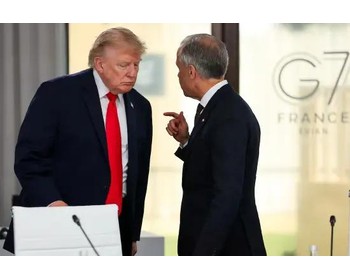
On July 21st local time, Canadian Prime Minister Mark Carne…
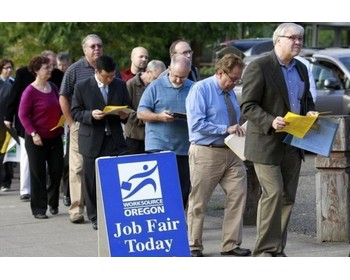
According to the Associated Press, the latest data from the…

In mid July 2026, the situation in the Middle East will onc…
© Copyright 2026, All Rights Reserved