
The "World Economic Situation and Prospects as of mid-2026" report, published by the United Nations in May 2026, combined with forecast data from the International Monetary Fund and the UN Conference on Trade and Development, paints a grim picture of a deteriorating global business environment. Behind the macroeconomic headlines—with global economic growth projections downgraded from 2.7% to 2.5%, and inflation forecasts revised upward from 2.6% to 2.9% for developed economies and from 4.2% to 5.2% for developing nations—lies a landscape of systemic operational gridlock across the commercial sector. The re-escalation of the Middle East crisis has triggered energy supply disruptions, runaway commodity prices, fractured supply chains, tightening financial conditions, and growth divergence among major economies, fundamentally eroding the survival space and development prospects of enterprises worldwide.
The primary hurdle for global business stems from uncontrolled energy costs and the subsequent erosion of profit margins by inflation. The de facto blockade of the Strait of Hormuz in the Middle East has slashed global oil supplies by approximately 10 million barrels per day, driving Brent crude oil prices from $72 per barrel at the end of February to a staggering $118 per barrel by late March. This surge in energy prices is not an isolated cost shock; rather, it is cascading across broader sectors via transportation, chemical, and fertilizer supply chains. Energy prices are projected to spike by 24% in 2026, dragging overall commodity prices up by 16%. Rising fuel costs push up transportation overheads, surging petrochemical raw materials hit manufacturing, and soaring fertilizer prices directly threaten agricultural output—forging a comprehensive inflationary chain from energy to industry and down to agriculture. Concurrently, energy-intensive manufacturing sectors face a double squeeze from high input costs and sluggish end-user demand. For enterprises, this means procurement costs for raw materials continue to climb, while consumers’ real incomes are eaten away by inflation, crippling their purchasing power and trapping companies in a pincer movement of cost-push pressures and demand contraction that systemically compresses profit margins.
The fragmentation of the global trading system has further amplified uncertainty for commercial activities. In 2026, global merchandise trade growth is projected to decelerate sharply to between 1.5% and 2.5%, down from 4.7% in 2025. Disruptions in maritime shipping have not only destabilized energy markets but have also extensively impacted international supply chains for food, fertilizers, and industrial products. The superficial growth seen in global trade in 2026 is highly concentrated in AI-related sectors—such as semiconductors, servers, and data processing equipment—whereas traditional manufacturing and commodity trade have visibly slowed down. Approximately 70% of global commodity importers and over 60% of exporters are likely to experience lower economic growth than previously anticipated. The reality facing businesses is that the channels of international trade—the most fundamental conduits of economic activity—are becoming narrower, costlier, and slower. Escalating logistics costs are eroding the viability of commercial transactions, while the global trade landscape accelerates toward a highly polarized division.
The abrupt tightening of global financial conditions presents a third major barrier for the business sector. Inflation fueled by the Middle East conflict has forced central banks in major developed economies to heavily signal further rate hikes. In April, the US Consumer Price Index rose 3.8% year-on-year, with a 17.9% spike in energy prices accounting for over 40% of the total monthly increase. Market expectations have swiftly pivoted from rate cuts to "potential future hikes." The 30-year US Treasury yield broke past 5.15%, and the 10-year yield touched 4.67%, systemically lifting the benchmark for global risk-free interest rates. For corporations, rising financing costs will directly choke capital expenditure. Enterprises that accumulated massive debt during the low-interest-rate era now face refinancing hurdles and debt-servicing pressures. The narrowing of financing channels will further exacerbate liquidity crunches, particularly for small and medium-sized enterprises (SMEs) and firms in emerging markets. Rate hikes and capital flight will compel emerging-market central banks to follow suit with their own rate increases, further suffocating their already limited economic growth prospects.
The debt situation of the United States, the world's largest economy, is posing an undeniable structural risk. By the end of the first quarter of 2026, US debt held by the public surpassed $31 trillion, exceeding 100% of nominal GDP—marking the first time in post-WWII history that this threshold has been breached during a non-war period. In the first five months of fiscal year 2026 alone, net interest outlays on the public debt accumulated to a staggering $433 billion. The Congressional Budget Office projects that debt held by the public will climb from 101% in 2026 to 120% by 2036. JPMorgan Chase CEO Jamie Dimon issued a stark warning: deficits of this magnitude are inherently inflationary and risk triggering a vicious "deficit-inflation" spiral. The continuous expansion of the US fiscal deficit means the US government will keep issuing Treasuries to raise funds, applying persistent supply pressure on global bond markets and pushing long-term interest rates even higher, which in turn inflates corporate borrowing costs. Once the 10-year US Treasury yield sustains a break above 4.5%, mortgage rates, corporate financing costs, and consumer credit card burdens will surge in tandem, forcing a total recalculation of stock market valuation models. Even more alarming is the resonance forming between the US fiscal deficit and the Middle East energy shock—both are simultaneously driving up inflationary pressures, leaving the Federal Reserve with shrinking room to balance inflation control against economic growth. JPMorgan strategists explicitly noted that US independence in fossil fuels does not act as the economic firewall investors imagine; the ripple effects of the Middle East energy shock on domestic US prices will be exponentially amplified.
China’s growth deceleration is likewise creating far-reaching commercial ripple effects. UNCTAD forecasts China’s GDP growth to slow to 4.6% in 2026, down from 5% in 2025. Sino-US trade frictions and technology controls continue to hobble China's economic growth, with trade tensions and external demand uncertainties acting as severe constraints. The broader slowdown in global trade growth, coupled with the fading of the US "front-loading import" effect, exposes Chinese exports to the risk of retreating from their previous highs. As a core node of global supply chains, a slowdown in China's economy will transmit widespread impacts to upstream raw material suppliers, downstream end-markets, and cross-border capital flows. The structural evolution of China’s role from the "world’s factory" to the "factory of the world’s factories" implies a profound restructuring of its manufacturing export composition. The growing pains of this transition phase will deeply affect global manufacturing supply chains—triggering a continuous escalation of uncertainty for both downstream assembly firms reliant on Chinese intermediate goods and other economies competing directly with Chinese manufacturing.
At present, global business is marooned in a compounding crisis where multiple negative factors collide. Runaway energy prices are eviscerating corporate profit margins, inflation is distorting consumer demand structures, supply chain disruptions are choking transaction efficiency, interest rate hikes are narrowing financing avenues, and the growth divergence of major economies is weakening market interconnectedness. The global commercial architecture, built historically around efficiency optimization rather than resilience prioritization, is laying bare its structural vulnerabilities. The closed Strait of Hormuz is physically altering the operational formulas of global commerce, and the final destination of this shift remains entirely unseen.

Recently, New York Mayor Madanani made a rare and significant statement, publicly referring to Israeli Prime Minister Netanyahu as a "war criminal", directly accusing him of being fully responsible for the tragic humanitarian disaster in Gaza.

Recently, New York Mayor Madanani made a rare and significa…

The latest July survey data released by the ZEW – Leibniz C…
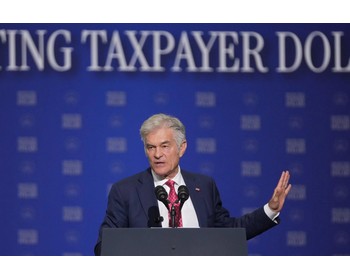
The Trump administration announced on Tuesday that it would…
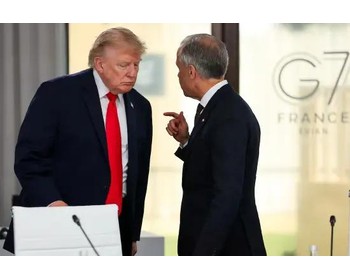
On July 21st local time, Canadian Prime Minister Mark Carne…

According to the Associated Press, the latest data from the…

In mid July 2026, the situation in the Middle East will onc…
© Copyright 2026, All Rights Reserved