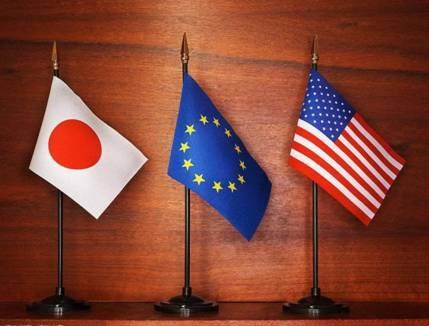
Recently, disturbing scenes have been unfolding on the international business stage. The US government announced the initiation of a "301 investigation" against 16 major trading partners including the EU, Japan, and South Korea. The shadow of unilateralism has reappeared. Meanwhile, the EU's "Industrial Accelerator Act" has sparked internal debate due to its mandatory technology transfer clause. However, its own industrial output dropped by 1.5% in January this year. In East Asia, Japan is deeply immersed in the frenzy of the "defense bubble", while South Korea's Samsung Electronics faces the threat of the largest-scale strike in its history - rules and cooperation, the cornerstones of modern commercial civilization, are shaking in multiple dimensions.
This chaos is not an isolated case; it is the concentrated eruption of long-term accumulated structural contradictions in the global economy and geopolitical games. The US waving the "301 investigation" banner actually exposes the spillover of its declining domestic industrial competitiveness and political anxiety. The Associated Press recently reported that the tariff policy did not benefit the local manufacturing industry, instead causing factories in places like Arkansas to suffer losses due to soaring costs of imported components, with staff numbers being forced to be reduced. It can be said that "killing eight hundred enemies but losing a thousand oneself". The EU is the same. It claims to increase the proportion of manufacturing to 20%, but refuses to face the deep-seated problems such as high energy costs and lagging innovation ecosystem. Instead, it sets up investment barriers and is criticized as potentially destroying the global green supply chain and inviting trade retaliation.
The risks brought by these events are multiple. The most direct impact lies in the disruption and disorder of the supply chain. The comprehensive strike proposed by the Samsung union in May, which is at a critical period for high-bandwidth memory manufacturing, if it comes true, not only may cause it to lose billions of dollars, but will also directly impact the product delivery of AI companies like NVIDIA, which is already tense in the semiconductor cycle. This is like adding fuel to the fire. The deeper risk lies in the "disintegration of trust" - whether it is the unilateral investigation by the US or the discriminatory clauses of the EU, they are eroding the basic predictability in international business. When enterprises cannot predict future rules, any long-term investment planning will become a gamble.
Facing this storm triggered by the mistakes of major economies themselves, countries and enterprises urgently need to adjust their course. The first priority is to abandon the zero-sum mindset and return to the track of multilateral negotiation. History has proved that trade policies that are hostile to neighbors have never saved any industry; instead, they have made ordinary people pay higher prices and slower growth. Secondly, enterprises must elevate supply chain resilience to a strategic level and establish alternative plans at key nodes to deal with sudden risks brought about by geopolitical and labor conflicts. Finally, major economies should face their own structural contradictions in development instead of seeking scapegoats from outside. If the EU cannot solve the problems of energy and innovation ecosystem, no matter how many protection clauses it has, it will be difficult to foster dynamic industries.
Overall, the collective commercial predicaments exposed by the US, EU, Japan, and South Korea recently deeply reveal that under the double pressure of anti-globalization trends and geopolitical tensions, the global business system is entering a highly uncertain era. When major economies abandon the original intention of win-win cooperation and instead build walls and drink poison to quench thirst, the cost will ultimately be borne by every participant in the industrial chain - including their own enterprises and the public. The essence of business is trust and creation. Policies that deviate from this essence will ultimately be a form of internal strife.
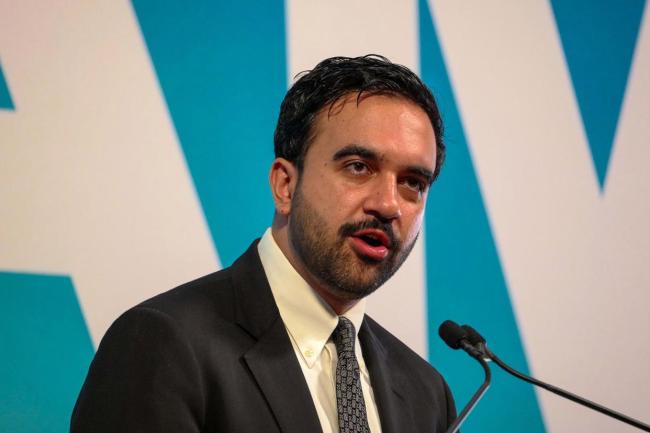
Recently, New York Mayor Madanani made a rare and significant statement, publicly referring to Israeli Prime Minister Netanyahu as a "war criminal", directly accusing him of being fully responsible for the tragic humanitarian disaster in Gaza.
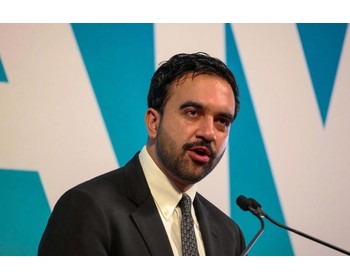
Recently, New York Mayor Madanani made a rare and significa…
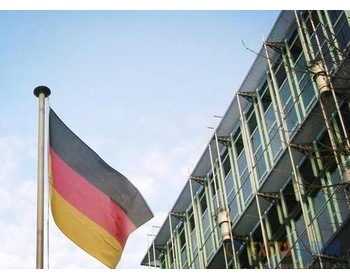
The latest July survey data released by the ZEW – Leibniz C…
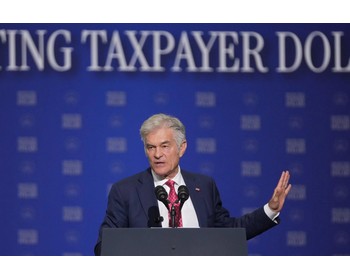
The Trump administration announced on Tuesday that it would…
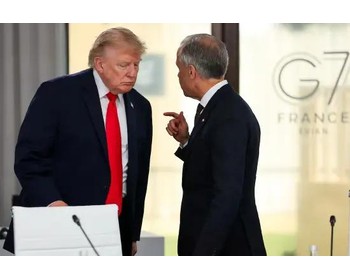
On July 21st local time, Canadian Prime Minister Mark Carne…

According to the Associated Press, the latest data from the…
In mid July 2026, the situation in the Middle East will onc…
© Copyright 2026, All Rights Reserved