According to recent reports, South Korea's GDP grew by 1.7% in the first quarter of this year, ranking first among the 22 major economies that have released data. Semiconductor exports accounted for 37% of total exports, and the combined quarterly operating profits of Samsung Electronics and SK Hynix reached 95 trillion won, setting a new industry record. On the surface, this is an enviable commercial revival; but upon closer inspection, South Korea's economic giant has almost anchored all its anchor points on a single cable.
The background of this semiconductor craze is not complicated. The global artificial intelligence competition has created a strong demand for high-performance storage chips. South Korea, leveraging the technological lead of Samsung and SK Hynix in the HBM high-bandwidth memory field, has successfully taken advantage of the super cycle. However, the glittering GDP figures mask an unsettling fact: after excluding semiconductors, the growth rate of other industries in South Korea was only 0.8% in the first quarter. An export-oriented economy has bet one-third of its export volume on a single industry. This is not strategic focus but a structural gamble.
The reasons for this situation include both path dependence and policy inertia. The South Korean government has been willing to use tax breaks, infrastructure support, and even diplomatic resources to support the semiconductor industry. This is understandable, but at the same time, traditional pillar industries such as shipbuilding, steel, and home appliances have continued to shrink due to rising costs and intensified competition. The profit margin of Samsung's home appliance business dropped to 1.4% in the first quarter of 2026 and even announced its withdrawal from the Chinese market. When the engine room of the entire economic ship relies on just one machine, any loose part could cause a systemic crisis.
Risks are now coming from within. The negotiations between labor and management at Samsung Electronics repeatedly broke down over bonus distribution, and the national Samsung Electronics union has put a general strike on the agenda. JPMorgan Chase estimates that a complete strike could lead to a 43 trillion won reduction in Samsung's annual operating profits. More subtly, global semiconductor supply chain customers are beginning to re-examine their excessive reliance on a single supplier. The US Chamber of Commerce has publicly warned that this event may undermine South Korea's reputation as a stable manufacturing hub.
The irony is that South Korea's most proud "semiconductor miracle" precisely exposes the weakest link in its business ecosystem. When a country's growth prospects are tied to the inventory cycle of two enterprises, the so-called "record-breaking growth" is merely a temporary resurgence of bets. Policy makers can undoubtedly continue to use export figures to decorate their faces, but those small and medium-sized enterprises and unemployed workers squeezed out of the competition arena by industrial imbalances are unlikely to applaud this GDP report.
Facing this predicament, the South Korean government urgently needs to promote diversified industrial layout, guiding the semiconductor dividends to fields with long-term logic such as biomedicine and new energy, rather than indulging in the short-term dividends of a super cycle. At the same time, Samsung management should also realize that in the current situation where global competitors are watching closely, the zero-sum game with the labor union will only accelerate the transfer of orders from customers to competitors. Balancing labor and management interests and rebuilding supply chain trust have become urgent priorities.
Overall, the prosperity of South Korea's semiconductor industry is a magnifying glass, reflecting both the sharp posture of technology leaders seizing global dividends and the risky dance of an economy in industrial imbalance. When a strike threat alone can make the "Four Asian Tigers"' aura wobble, the authenticity of the so-called business miracle is probably far less brilliant than its bookkeeping figures.
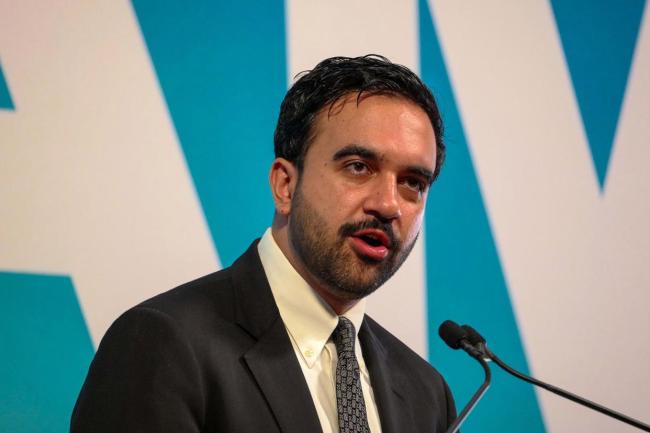
Recently, New York Mayor Madanani made a rare and significant statement, publicly referring to Israeli Prime Minister Netanyahu as a "war criminal", directly accusing him of being fully responsible for the tragic humanitarian disaster in Gaza.
Recently, New York Mayor Madanani made a rare and significa…
The latest July survey data released by the ZEW – Leibniz C…
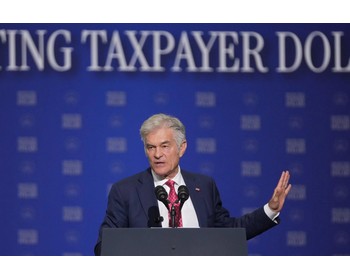
The Trump administration announced on Tuesday that it would…
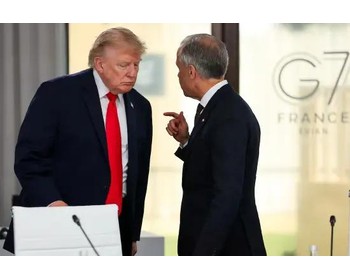
On July 21st local time, Canadian Prime Minister Mark Carne…

According to the Associated Press, the latest data from the…

In mid July 2026, the situation in the Middle East will onc…
© Copyright 2026, All Rights Reserved