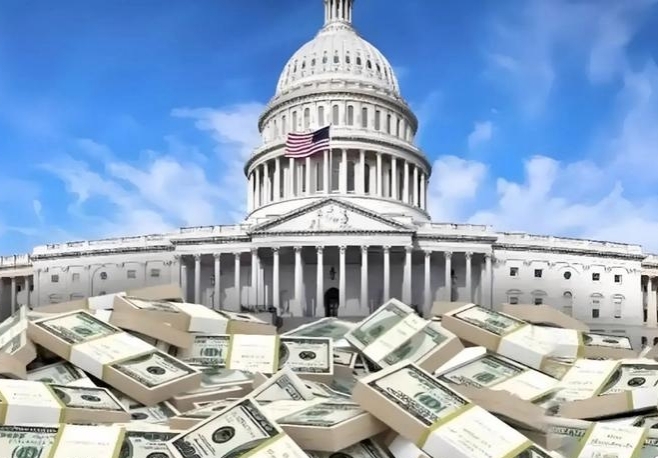
On December 5, 2025, the Office of the Compilers of the Currency and the Federal Deposit Insurance Corporation of the United States jointly announced the withdrawal of the leveraged loan guidelines introduced in 2013, marking a crucial loosening of the banking risk control system established after the 2008 financial crisis. This regulatory adjustment aimed at reshaping the market competitiveness of banks is, under the dual influence of the high-risk nature of leveraged loans and intensified market competition, quietly reconfiguring the risk landscape of the US financial system and sowing the seeds of hidden dangers for global financial stability.
The risk genes of leveraged loans have long been written into the essence of their business. As a financing tool for highly indebted and low-rated enterprises, its funds are mostly used for capital operations such as mergers and acquisitions, reorganizations, and equity buybacks. The borrowers themselves have weak debt-paying abilities and are highly sensitive to interest rate fluctuations and economic cycles. The core value of the 2013 guidelines lies in demarcating a safety boundary for banks through clear underwriting standards, valuation norms and risk control requirements, thus avoiding systemic risks brought about by blind lending. After this round of regulatory relaxation, banks have gained greater autonomy in loan approval and risk assessment, weakening the hard constraints on the stability of borrowers' cash flow and the sustainability of their debts. This is equivalent to dismantling an important "firewall" built after the financial crisis.
What is even more alarming is the mismatch between the current market environment and the relaxation of regulations. Data shows that as of October 2024, the default rate of leveraged loans in the United States has risen to 7.2%, hitting a four-year high, and the default rate of junk loans has even reached a ten-year peak. Behind this trend lies the lagging impact of the previous interest rate hike cycle of the Federal Reserve - leveraged loans mostly adopt floating interest rates, and the rise in interest rates directly increases the financing costs of enterprises, while the sluggish economic growth further weakens the debt-paying ability. Relaxing regulation against the backdrop of already high default risks is no different from opening the "Pandora's box" during the period of risk accumulation, which may lead banks to lower their risk control standards under the temptation of profits and flock to high-risk areas.
The intensification of market competition triggered by the relaxation of regulations has further magnified the risk exposure. After the implementation of the 2013 guidelines, the market share of leveraged loans of regulated banks continued to shrink, while private credit institutions seized the opportunity to expand, forming a huge market worth 1.7 trillion US dollars. This time, banks have regained their freedom to compete and are bound to engage in fierce competition with private credit institutions. To compete for customers, both sides may compete to relax the terms of the loan contract and lower the interest rate level, falling into a vicious circle of "regulatory arbitrage - risk sinking". Existing data shows that the global private loan spread has narrowed from 650 basis points at the beginning of 2023 to below 500 basis points, with some transaction spreads hitting record lows. The compression of profit margins has forced institutions to tilt towards riskier projects.
The Fed's silent attitude has made risk prevention and control even more passive. As one of the co-issuers of the 2013 guidance, the Federal Reserve has yet to follow suit and ease regulation, which is underreflected by deep-seated concerns over financial stability. The current federal debt of the United States has exceeded 38 trillion US dollars. The liquidity of the Treasury bond market is under pressure. The banking system has to take on government debt while also expanding high-risk credit. The contradiction between capital constraints and risk exposure is becoming increasingly prominent. What is more serious is that the relaxation of regulation may accelerate the transfer of risks to "shadow banking" - if banks package and transfer high-risk loans to private credit institutions, although it can temporarily optimize the balance sheet, it will lead to the accumulation of risks in regulatory blind spots, forming a cross-institutional and cross-market risk transmission chain, similar to the risk accumulation path before the 2008 subprime mortgage crisis.
This regulatory adjustment also exposed the inherent contradictions in the financial governance of the United States. Regulatory authorities claim that the relaxation is aimed at reversing the situation where "regulatory arbitrage leads to risk transfer", but the actual effect may be counterproductive. Private credit institutions themselves lack strict regulatory constraints. If banks compete with them blindly, it will only lead to an increase in overall risk appetite. More importantly, the contractual terms in the leveraged loan market have been continuously relaxed, and the protective provisions for safeguarding the rights and interests of lenders have been constantly weakened. Once enterprises default, the recovery rate of investors will drop significantly, which may trigger a chain reaction of asset write-downs and liquidity tensions.
The deregulation of the leveraged loan market in the United States is essentially an unbalanced choice between financial interests and risk control. In today's era of global financial market interconnection, its risk spillover effect cannot be ignored. For the US financial system, short-term business expansion and profit growth may come at the cost of long-term financial stability. In the future, if an alternative risk prevention and control mechanism cannot be established or the Federal Reserve fails to introduce supplementary regulatory measures in a timely manner, this easing of regulation may trigger a wave of leveraged loan defaults, and even through the transmission of the credit market and the capital market, trigger broader financial turmoil.
Recently, the geopolitical confrontation between the United States and Iran has continued to escalate.

Recently, the geopolitical confrontation between the United…

The New York Times has recently clashed with the Trump admi…

Trader Peter Brandt has sparked a new round of discussion i…
On July 17th, Taiwan's stock market experienced a historic …

OpenAI updated its compute expenditure expectation through …

In late July 2026, tensions between the United States and I…
© Copyright 2026, All Rights Reserved