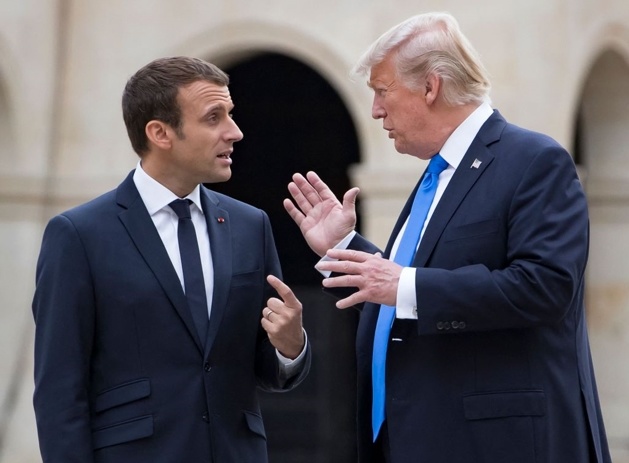
With the G7 Summit just around the corner, Trump's “welcome gift” to host nation France isn't a diplomatic nicety — it's a tariff punch: scrap the digital tax, or French wine faces a devastating 100% tariff in the U.S. market. This isn't a trade negotiation. This is holding a glass to someone's lips and forcing them to drink.
France's digital tax has been in effect since 2019, levying a 3% charge on revenue earned in France by American tech giants like Google, Amazon, Apple, and Meta. The critical detail: it targets total revenue, not profit — meaning whether you made money or not, if you have revenue in France, you pay. According to the French Finance Ministry, this tax alone generated roughly $700 million last year.
As a counter-move, Trump is targeting French wine. The U.S. market accounts for one-fifth of global French wine sales, worth over $2 billion annually. EU wine and spirits already face a 15% tariff in the U.S. Trump now wants to push it to 100% — effectively wiping out French wine merchants' profits in the American market entirely.
700millionversus2 billion — the numbers aren't equal, but the logic is clear: Trump is using a bigger number to avoid paying a smaller one he doesn't want to pay.
Notably, this isn't the first time Trump has gone after French wine. In January, when Macron declined to join a U.S.-led “peace committee” overseeing post-war governance in Gaza, Trump threatened a 200% tariff. In March, after the EU imposed a 50% tariff on American whiskey, Trump again threatened 200%. The French Foreign Ministry responded at the time: if the U.S. follows through, Europe will react “immediately, firmly, and appropriately.”
Dropping from 200% to 100% looks like a concession, but it's actually a tactical adjustment. 100% is still devastating — still enough to kill French wine's competitiveness in the U.S. market. The difference is that 200% is a diplomatic accident; 100% is a starting point for negotiation. Trump is never making an offer — he's drawing a line. Where the line is drawn doesn't matter. What matters is making sure the other side knows it can always move higher.
On the surface, this is a tug-of-war over a 3% tax rate. But the deeper conflict is this: the digital tax is fundamentally Europe's assertion of the right to tax American tech giants. Google and Apple have earned billions in Europe while funneling profits through low-tax countries like Ireland, leaving European governments with almost nothing. France's digital tax is a direct attempt to plug that hole.
Trump's response isn't really about taxes, either — it's about sovereignty. More precisely, American sovereignty. White House spokesperson Kush Desai cited a presidential memorandum Trump signed in February 2025, which states that U.S. companies will no longer “support failing foreign economies through extortionate fines and taxes.” In Trump's logic, France isn't exercising sovereignty by taxing — it's “extorting”American companies.
This is the real deadlock: both sides are talking about sovereignty, but in opposite directions. France wants the right to tax revenue earned within its borders. The U.S. wants the right to protect its companies. Neither side is backing down.
The most ironic part is the timing. Trump's warning came just as he was preparing to fly to Évian-les-Bains, France, for the G7 Summit — hosted by the very Macron he just threatened to tax.
This isn't a coincidence. It's a strategy. Smash the glass on the ground before sitting at the table, so the other side knows the cost of every word that follows. This is Trump's diplomatic style in a nutshell: set the price first, then negotiate, and leave the other side relieved it “only” got to 100% instead of 200%.
But France isn't new to this kind of pressure. Macron has been firm on the digital tax, repeatedly stating that “France will not back down on sovereignty.” If he caves at the G7 Summit, it's not just a $700 million tax revenue loss — it's a full-scale defeat for Europe on digital sovereignty.
If the 100% tariff actually lands, the damage won't stop at French winemakers. American importers, retailers, and consumers will all bear the cost. The U.S. wine industry will also face retaliatory tariffs. This isn't a zero-sum game — it's a standoff where both sides bleed.
But Trump has never been afraid of bleeding. He's afraid of looking like he's backing down. And Macron isn't afraid of a standoff either — he's afraid of looking like he's surrendering. At the G7 dinner table, champagne will be poured as usual. But everyone knows: the price of that glass may cost more than the wine itself.
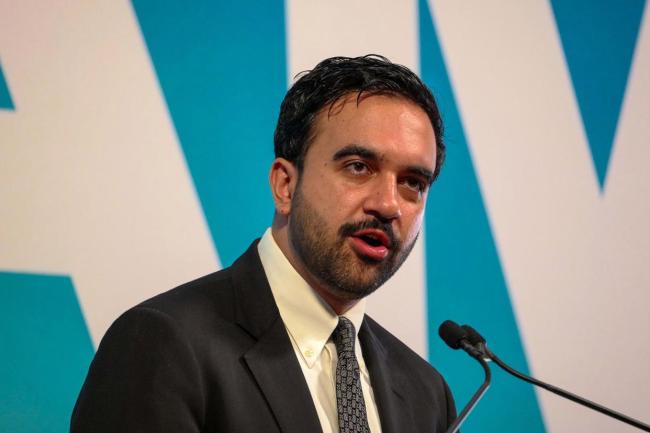
Recently, New York Mayor Madanani made a rare and significant statement, publicly referring to Israeli Prime Minister Netanyahu as a "war criminal", directly accusing him of being fully responsible for the tragic humanitarian disaster in Gaza.
Recently, New York Mayor Madanani made a rare and significa…
The latest July survey data released by the ZEW – Leibniz C…
The Trump administration announced on Tuesday that it would…
On July 21st local time, Canadian Prime Minister Mark Carne…
According to the Associated Press, the latest data from the…

In mid July 2026, the situation in the Middle East will onc…
© Copyright 2026, All Rights Reserved