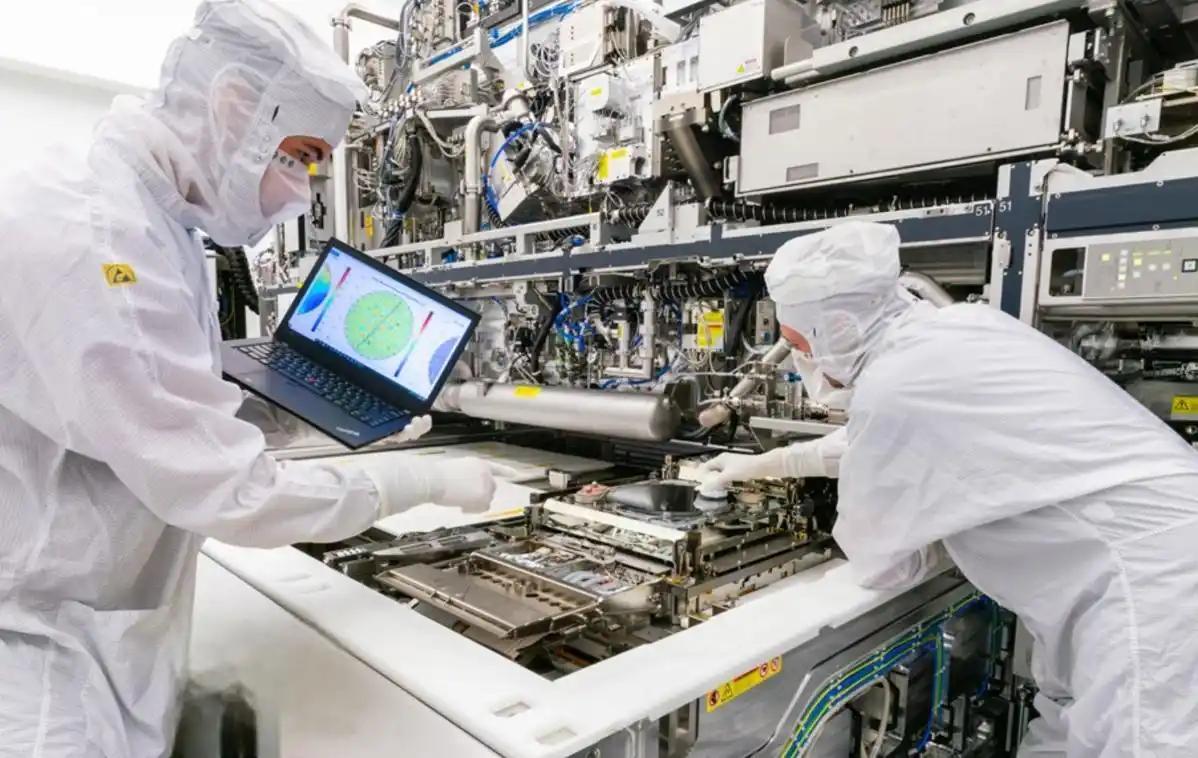
Earlier, a set of export control orders issued by the Japanese government sent a shockwave through the global semiconductor supply chain. Japan announced a strict licensing system for the export of three key semiconductor materials - hydrogen fluoride, high-purity fluorinated polyimide, and photoresist. Each batch of export required approval, and the approval process lasted approximately 90 days. This seemingly technical trade control was actually a precise blow to South Korea's semiconductor industry. Photoresist is not an ordinary chemical product; it is the "light-sensitive canvas" in semiconductor manufacturing and is an insignificant yet crucial part of the chip industry chain. Japanese companies have long monopolized the global high-end photoresist market, occupying over 90% of the market share in categories such as ArF and EUV. As Japan gradually tightened export controls and implemented the photoresist supply disruption, the global semiconductor and related business sectors suffered a strong shock, while also accelerating the reconfiguration of the international supply chain and giving rise to new development opportunities.
From the perspective of the negative impact on international business, the first is that the operation of the global semiconductor supply chain is disrupted. High-end chip production is highly dependent on Japanese photoresist, and the supply disruption directly led to the capacity limitations of many countries' wafer factories and the slowdown of advanced chip production. Both international leading chip manufacturing enterprises and small and medium-sized semiconductor manufacturers are facing shortages of raw materials and production delays, resulting in a general tightening of chip supply.
Secondly, the cost of the entire supply chain continues to rise. The tight supply of raw materials has disrupted the original market supply-demand balance, and the prices of photoresist and related electronic chemicals have risen, passing through to the upstream and downstream links of the chip industry. The downstream industries such as consumer electronics, automotive electronics, and artificial intelligence hardware are subsequently under pressure, with increased production costs and intensified price fluctuations in end products, suppressing the vitality of the consumer market.
Furthermore, the vulnerability of the global supply chain has been fully exposed. For a long time, international enterprises have generally adopted a single-source procurement model, highly relying on Japanese photoresist supply. After the supply disruption event, multinational enterprises have had to increase raw material inventory reserves, occupying a large amount of liquid funds, and increasing operating costs. The stability of global commercial trade has been seriously challenged by geopolitical policies.
In crises, opportunities often lie within. This supply disruption event also brings new breakthrough directions for international business development. Firstly, the global supply chain is moving towards diversified layout. Various enterprises are abandoning the single-source procurement model and accelerating the exploration of resources from South Korea, Europe and the United States, as well as local material manufacturers, to build a multi-channel supply system. Regionalization and self-reliance in the supply chain have become an industry consensus, reducing the external dependence risk of key materials. Secondly, the semiconductor materials industry is entering a window period for technological innovation. In the past, Japanese companies monopolized the market through technical barriers for a long time. The pace of industry innovation has slowed down. The supply disruption has forced global countries to increase R&D investment, focus on core technologies such as photoresist formulas, high-purity raw materials, and production processes, accelerate the independent research and production of high-end semiconductor materials, and break the technological monopoly pattern. Thirdly, emerging market enterprises have the opportunity to overtake. Semiconductor material enterprises in China, for example, have mature technologies and production capabilities in mature chip resists. By taking advantage of the market gap, domestic photoresists have rapidly completed capacity release and line verification, gradually entering the global supply chain system, and steadily increasing their international market share, rewriting the long-standing fixed industry competition pattern.
In conclusion, the supply disruption of photoresist by Japan has brought short-term shocks and long-term changes to international business. The inevitable short-term supply chain disruptions and cost pressures also force global industries to face supply chain security issues and accelerate technological autonomy and pattern reconfiguration. In the future, diversification, autonomy, and collaboration will become the mainstream trends in global semiconductor business development, promoting the industry to achieve more stable and sustainable development.

Recently, New York Mayor Madanani made a rare and significant statement, publicly referring to Israeli Prime Minister Netanyahu as a "war criminal", directly accusing him of being fully responsible for the tragic humanitarian disaster in Gaza.

Recently, New York Mayor Madanani made a rare and significa…

The latest July survey data released by the ZEW – Leibniz C…

The Trump administration announced on Tuesday that it would…

On July 21st local time, Canadian Prime Minister Mark Carne…

According to the Associated Press, the latest data from the…

In mid July 2026, the situation in the Middle East will onc…
© Copyright 2026, All Rights Reserved