
Since the beginning of this year, the mobile phone market has shown a rare pattern of differentiation: Android models have generally raised their prices due to rising storage chip and component costs, while the prices of multiple flagship phones have steadily increased. On the other hand, Apple has seen continuous price reductions for multiple iPhone models, with e-commerce promotions and normalized channel discounts. Some models have seen a drop of up to a thousand yuan. The public habitually interprets price reductions as product slowdowns and brand concessions, but from the perspective of the industry, Apple's price reductions are not simply about promoting sales volume, but rather a precise commercial layout based on supply chain advantages, profit barriers, and market strategy. It is a high-level competitive tool in the era of consumer electronics inventory.
Apple dares to go against the trend of price increases in the entire industry by lowering prices, and its core confidence comes from its unique supply chain control. Since 2026, global storage chip prices have skyrocketed, and mainstream Android manufacturers have experienced a 95% increase in storage procurement costs due to a lack of long-term supply guarantees. Some flagship models have seen their storage hardware costs increase by thousands of yuan compared to previous years, forcing them to pass on the pressure through price increases.
With the advantage of being the world's largest consumer electronics purchaser, Apple has signed long-term lock up supply agreements with upstream giants such as Samsung, SK Hynix, and Kaixia for three to five years in advance, locking in low-priced production capacity before the chip price increase cycle arrives. This advanced layout has completely isolated Apple from the impact of the current surge in hardware costs. When Android manufacturers were deeply trapped in cost difficulties and faced a dilemma, Apple still maintained stable hardware costs and had sufficient room for price reduction operations, forming a unique cost moat in the industry.
The ultra-high profit buffer space is the financial support for Apple's continuous price reduction. According to financial report data, Apple's overall gross profit margin for the second quarter of fiscal year 2026 was as high as 49.3%, with the hardware business gross profit margin remaining stable at 38.7%, and the single machine net profit margin far exceeding the industry average. In sharp contrast, the gross profit margin of the domestic top Android brand's mobile phone business is only about 8.3%, and the meager profit margin cannot bear the price reduction and profit sharing, so it can only passively follow the cost increase.
Unlike the single mode in which Android manufacturers rely heavily on hardware revenue, Apple has built a dual profit system of "hardware+services". App Store、iCloud、 Membership services and other businesses continue to generate revenue, while high gross profit service revenue continues to offset hardware side profit losses. Even with the temporary price reduction and volume increase of iPhone, the overall profitability remains stable. This diversified profit structure is a core advantage that all Android manufacturers do not yet possess.
Behind the counter trend price reduction is Apple's precise competition strategy for the existing market. The current smartphone industry has already bid farewell to high-speed growth, with market saturation and prolonged replacement cycles, entering a cruel stage of stock game. The domestic high-end mobile phone market has solidified, with Huawei returning and Android flagship iterating and upgrading, continuously diverting Apple users, and the growth of the iPhone market gradually weakening.
In this context, Apple's price reduction is not a passive clearance of inventory, but a proactive strategic move. By proactively lowering prices, Apple has significantly lowered the threshold for purchasing high-end phones, accurately capturing consumers who were originally inclined towards the Android flagship. More importantly, this strategy has created a strong industry pressure: Android manufacturers are unable to lower prices due to cost and profit constraints, and can only passively accept the dilemma of "losing users due to price increases and losing profits due to price reductions". In the long run, small and medium-sized manufacturers will gradually fall behind due to declining sales and insufficient research and development funds, and Apple will further consolidate its monopoly position in the global high-end market.
Meanwhile, price reduction is also a key measure for Apple to maintain ecological barriers. Low prices attract more users to purchase iPhones, which not only increases short-term shipments but also expands the user base of Apple's ecosystem. After more users bind to the iOS system and connect to the Apple software and hardware ecosystem, a high level of user stickiness will be formed. Subsequent accessory consumption, service subscriptions, and model iteration will bring long-term stable profits to Apple. Short term price concessions are essentially investments in the long-term ecological value.
Throughout this round of Apple's price reduction trend, it has never been the public perception of "conscience giving benefits", but a dual manifestation of strength and strategy. Relying on absolute supply chain discourse power, abundant profit reserves, and mature ecological layout, Apple uses price reduction as a weapon to harvest the market, squeeze competitors, and solidify barriers in the industry downturn cycle.
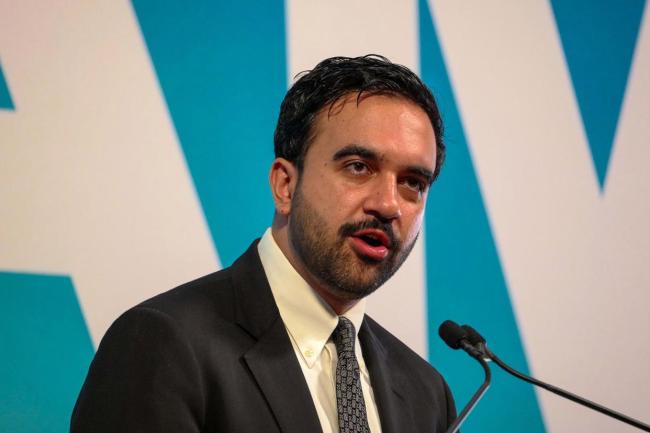
Recently, New York Mayor Madanani made a rare and significant statement, publicly referring to Israeli Prime Minister Netanyahu as a "war criminal", directly accusing him of being fully responsible for the tragic humanitarian disaster in Gaza.

Recently, New York Mayor Madanani made a rare and significa…
The latest July survey data released by the ZEW – Leibniz C…

The Trump administration announced on Tuesday that it would…

On July 21st local time, Canadian Prime Minister Mark Carne…

According to the Associated Press, the latest data from the…

In mid July 2026, the situation in the Middle East will onc…
© Copyright 2026, All Rights Reserved