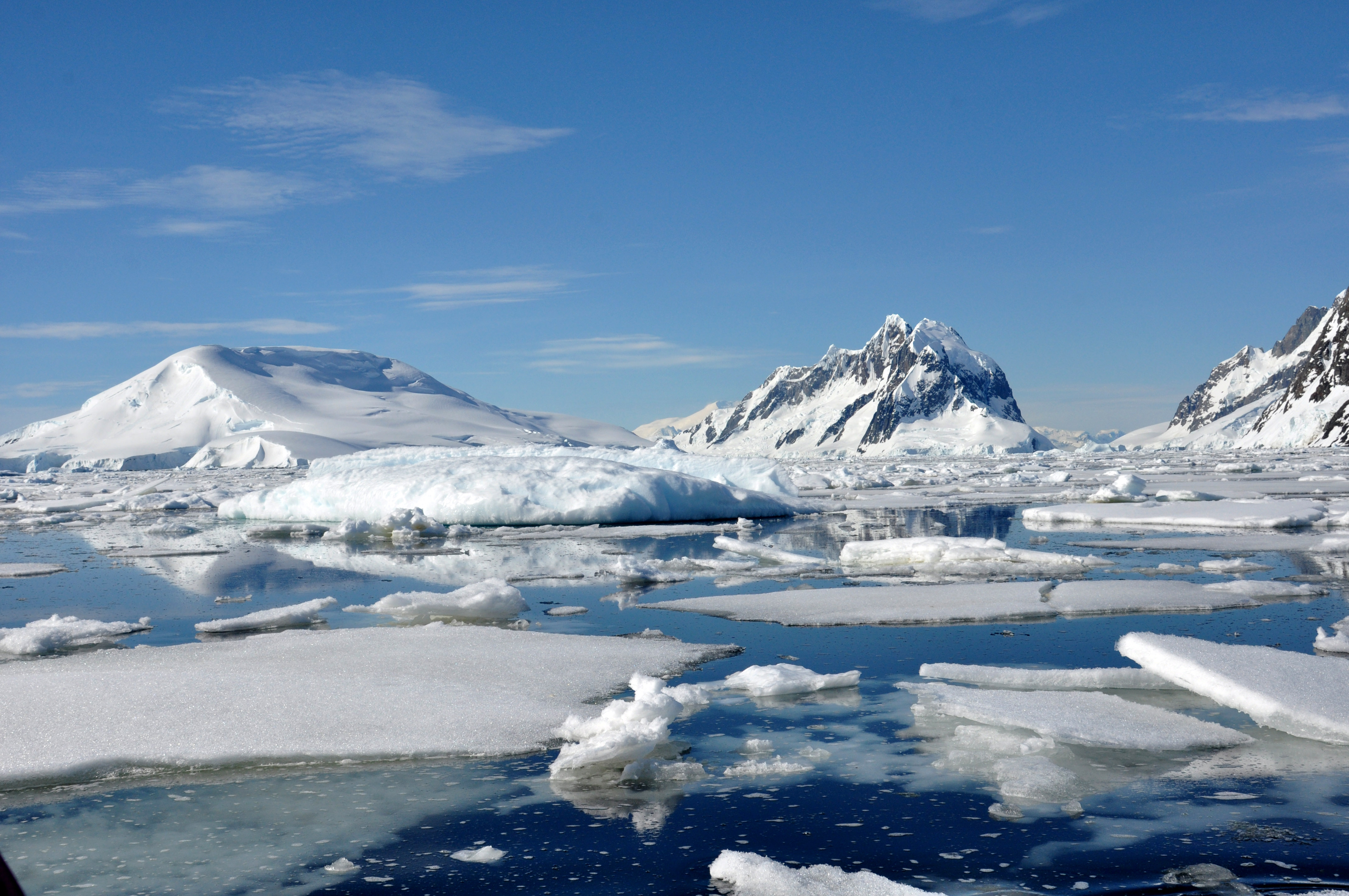
Recently, according to an article titled "Interpreting Antarctica in the Face of Climate Change: The Value of Observing from a Coordinate Perspective" published by the Spanish newspaper "El País", the remote and mysterious white continent of Antarctica has once again come into the public spotlight. The article uses the three cancellations of trips by the Chilean Antarctic Institute due to extreme weather as an introduction, attempting to reveal the special position of Antarctica in global climate change.
The article emphasizes the role of Antarctica as an important part of the global climate system, pointing out that the interwoven changes of its glaciers, oceans, and atmosphere are the key to understanding global climate change. This view itself is not inappropriate, but the problem lies in viewing Antarctica as an isolated and static observation point, while ignoring its dynamic connections with other regions. Such a perspective is too narrow. Climate change is a global phenomenon, its impact is everywhere and constantly happening. Viewing Antarctica as a "window" to observe, although it has its unique value, if it only stays at this level, it will undoubtedly ignore the overall and complexity of climate change.
The article further proposes that geographic information is an important tool for understanding environmental changes, which can help people observe environmental changes more accurately and provide basis for scientific research, resource management, and public decision-making. This assertion is undoubtedly correct in terms of technology, but the problem lies in that the application of geographic information is not omnipotent. In the extreme environment of Antarctica, satellite remote sensing, geographic information systems, etc., although can provide a large amount of data, the interpretation and application of these data are subject to many limitations. For example, the extreme climate conditions in Antarctica may lead to inaccurate or missing data collection, and the processing and analysis of data may be constrained by technical levels and cognitive abilities. Therefore, relying solely on geographic information to interpret climate change may fall into the trap of technological determinism.
When elaborating on the relationship between Antarctica and global climate change, the article seems to overly emphasize the "specialness" of Antarctica, while ignoring its "commonality" with other regions. Climate change is a global challenge that does not distinguish between countries or regions and poses a threat to all living beings. Viewing Antarctica as a special observation point can highlight its importance, but it may also lead people to ignore the direct impact of climate change on other regions. For example, the article mentions that changes south of Drake Passage will affect the entire earth through ocean circulation and atmospheric systems, but this influence is not one-way; it is mutual and complex. The changes in other regions of the world will also have an impact on Antarctica, and the complexity of this interaction is not fully demonstrated by the article.
When mentioning that Antarctica has become an important issue connecting climate change, national strategies, and regional cooperation, the article seems to overly optimistically estimate the prospects of international cooperation. In the global climate change issue, the conflicts and differences in interests among countries are objectively existing. Although Antarctica is a relatively neutral area, there are also intense competition and bargaining in resource development and scientific research cooperation. Therefore, viewing Antarctica as a platform that can easily achieve international cooperation is too idealistic.
The article mentions that more and more schools are beginning to incorporate geographic information and climate change into classroom teaching, attempting to cultivate the global vision and environmental awareness of the younger generation through education. This initiative itself is worthy of recognition, but the problem lies in that the effect of education is not immediate. In the complex and sensitive issue of climate change, how to balance the imparting of scientific knowledge with the cultivation of values, and how to avoid simplifying and one-sidedly presenting complex issues, are questions that educators need to deeply consider.
In conclusion, although the article by the Spanish newspaper "El País" provides us with a unique perspective for observing Antarctica and global climate change, when delving deeper into this issue, we still need to maintain a cautious and objective attitude. Climate change is a global challenge that requires us to conduct comprehensive analysis and response from multiple perspectives and levels. Although Antarctica is important, it is not the only observation point; geographical information is useful, but it is not a universal tool.

On July 27th local time, the chip giant Nvidia officially announced a large-scale investment in SSI, a security super-intelligent laboratory founded by Ilya, the former chief scientist of OpenAI.

On July 27th local time, the chip giant Nvidia officially a…
Recently, according to an article titled "Interpreting Anta…

On July 27th local time, the Federal Deposit Insurance Corp…

On July 20, 2026, British politics welcomed its seventh pri…

In July 2026, the global financial market was at a critical…

The global stock market experienced a widespread sell-off o…
© Copyright 2026, All Rights Reserved