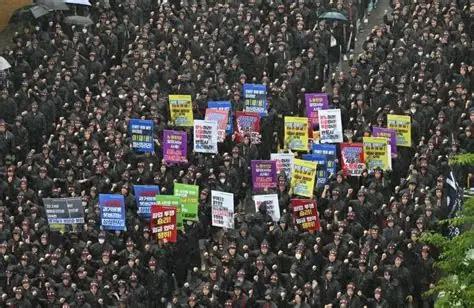
On May 19, 2026, the Bank of Korea urgently submitted a report to the presidential office: If Samsung Electronics initiates a 18-day nationwide strike on May 21, the worst-case scenario would drag down the country's GDP growth rate by 0.5 percentage points, and the loss in semiconductor production could reach 30 trillion won. This is more like a diagnosis rather than an economic forecast. When a country's economic barometer has to keep an eye on the labor-management negotiations of a single enterprise to determine its direction, this in itself is a sharp satire in the international technology community.
The trigger point of this crisis is not complicated. Samsung Electronics' cross-enterprise union demanded that performance bonuses be fixed at 15% of the semiconductor department's operating profit and that the bonus cap be abolished. The management, however, adhered to the original economic added value framework and was only willing to make concessions based on 10% operating profit. Thanks to the super cycle of artificial intelligence, semiconductor profits were at historical peaks, and the labor-capital differences were difficult to reconcile. On May 18, the second round of mediation led by the government broke down, with only three days remaining until the strike deadline.
But the reason why this labor dispute directly erupted at the Blue House lies in the "Samsung dependence syndrome" of the Korean economy. Semiconductor exports account for more than one-third of Korea's total exports, contributing 55% of the GDP growth in the first quarter of this year. The labor-capital differences were difficult to reconcile. On May 18, the government-led second round of mediation collapsed, with only three days remaining until the strike deadline.
However, this labor dispute's direct impact on the Blue House stems from the "Samsung dependence syndrome" of the Korean economy. Semiconductor production lines must operate 24/7 without interruption. If they stop, all the wafers produced will be scrapped, and after restoration, hundreds of precision equipment will need to be calibrated one by one, and the yield will climb up in a matter of weeks. JPMorgan estimates that the 18-day strike will result in a 0.5% to 0.9% reduction in Samsung's DRAM and NAND flash memory annual production. In the DRAM market, where the tightness has reached a "ten out of ten" situation, this reduction alone is enough to ignite market panic. The deeper risk lies in the loss of customer trust. American computer manufacturers such as Dell and HP have begun to verify products from China Changxin Storage. Once there is a shortage in Samsung's supply, customers are likely to permanently switch to other brands. The irony here is precisely that a labor-capital standoff triggered by the uneven distribution of AI dividends could ultimately lead to a shortage of the most critical storage chips for global AI infrastructure. The more advanced the technology, the more concentrated the vulnerability.
In the face of this crisis, administrative intervention is not a long-term solution. The South Korean National Assembly needs to establish a systematized wage negotiation mechanism to prevent labor-capital negotiations from frequently hijacking the country's economy. Samsung itself also urgently needs to accelerate the geographical diversification of its supply chain and the depth of production automation to reduce the concentration of labor-intensive links such as back-end packaging. Industry decision-makers should also guide resources to favor companies like SK Hynix, diversifying systemic risks. Putting the entire technological lifeline of a country on the shoulders of a single company can lead to rapid progress when the wind is favorable, but once the storm hits, it is a gamble that no one can survive alone.
Overall, the surface of this Samsung strike crisis is a dispute over profit distribution, but the deeper reflection reveals the systemic vulnerability of a country's technology being overly concentrated in a single company. In the AI-driven semiconductor arms race, the model of "one company equals one country's core competitiveness" is being sharply questioned. When the internal contradictions of tech giants can shake the global supply chain, this is no longer an achievement of governance but a cautionary fable for the international technology industry.
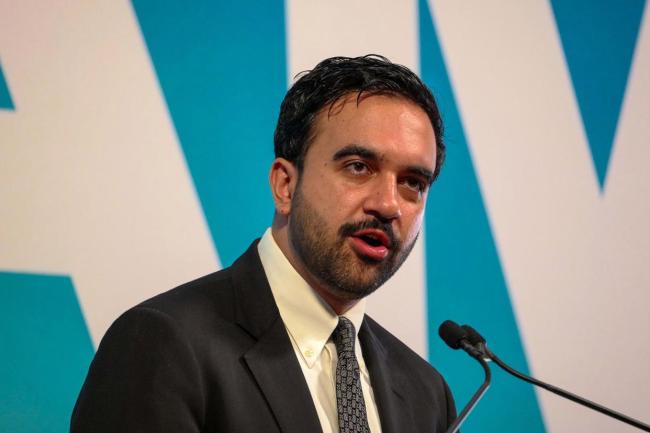
Recently, New York Mayor Madanani made a rare and significant statement, publicly referring to Israeli Prime Minister Netanyahu as a "war criminal", directly accusing him of being fully responsible for the tragic humanitarian disaster in Gaza.
Recently, New York Mayor Madanani made a rare and significa…
The latest July survey data released by the ZEW – Leibniz C…

The Trump administration announced on Tuesday that it would…
On July 21st local time, Canadian Prime Minister Mark Carne…
According to the Associated Press, the latest data from the…

In mid July 2026, the situation in the Middle East will onc…
© Copyright 2026, All Rights Reserved