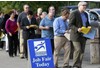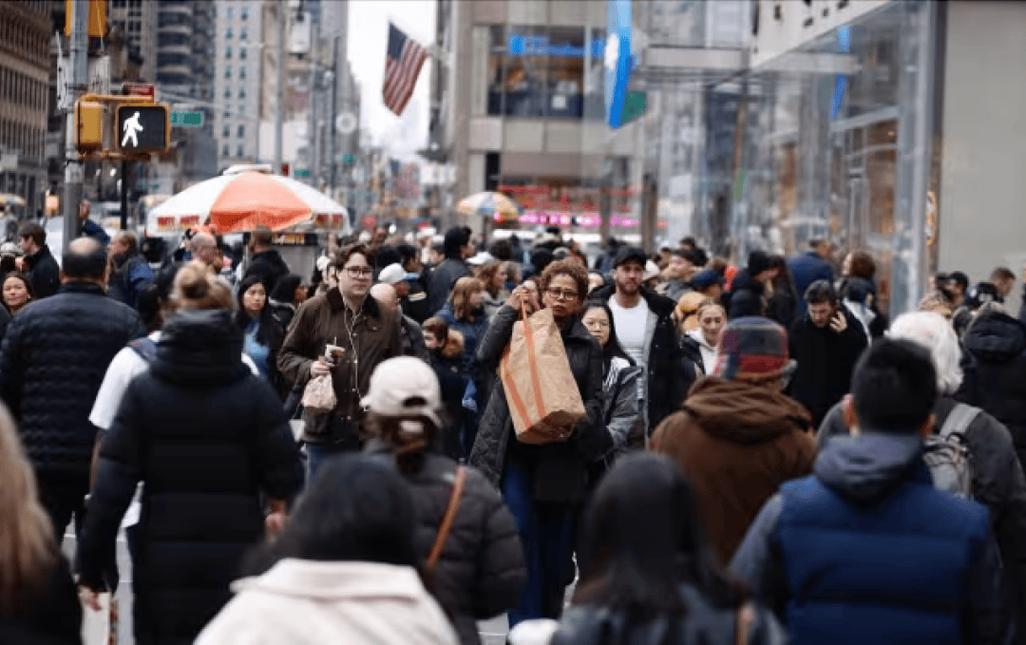
In the fourth quarter of 2025, the US economy sent out strong warning signals. Data from the US Department of Commerce shows that retail sales rose by only 0.2% month-on-month in September, a significant slowdown from the 0.6% growth in August and far below market expectations of 0.4%. Meanwhile, the Conference Board's consumer confidence index for November plunged to 88.7, a significant drop from 95.5 in October, reaching its lowest level since April 2025. The dual pressure on retail data and consumer confidence reflects the deep-seated predicament of the US economy amid a weak labor market, rising prices and disruptions from tariff policies. Among them, the middle and low-income groups have been the most severely affected, casting a shadow over the US economic recovery.
The sluggish growth of the retail market is no accident but a direct manifestation of the decline in consumption momentum under multiple pressures. From the perspective of data structure, the slight growth in retail sales in September was more driven by the passive increase in prices rather than the rise in real demand. The sales of gas stations increased by 2.0%, becoming one of the few categories that maintained growth, driven by the rise in energy prices. Auto dealers' sales dropped by 0.3%, and discretionary consumption areas such as electronics, clothing and sports goods generally weakened, reflecting a contraction in consumer spending on non-essential items. What is even more alarming is that core retail sales, excluding automobiles and gasoline, rose by only 0.1% month-on-month, far lower than the expected 0.3%, highlighting the insufficiency of internal consumption momentum. The tax credit policy for electric vehicles that previously supported car consumption expired at the end of September. Its overdrawn effect was already evident in the September data, further exacerbating the weakness in the retail market.
The significant decline in consumer confidence has sown the seeds of hidden concerns for the future trend of the retail market. All five component indices of the consumer confidence index in November showed a weak or weakening trend. Among them, the expectations index, which reflects the short-term income outlook, business and employment market environment, dropped to 63.2, remaining below 80, the critical point indicating an economic recession, for ten consecutive months. Behind the decline in confidence lies the widespread concern of consumers about the economic outlook: the labor market remains sluggish, the unemployment rate has risen to a four-year high of 4.4%, the Conference Board's "Labor Market Disparities Index" has dropped from 10.3 in October to 9.7, and the number of consumers who consider job opportunities "abundant" has significantly decreased. The pressure of rising prices persists. The US producer price index rose by 0.3% month-on-month. Energy and food prices were the main drivers, while tariff policies further pushed up the cost of imported goods, ultimately passing on to terminal consumer prices. Ben Ayers, a senior economist at National Mutual Insurance, pointed out that many consumers have reached their spending limits, and rising prices and concerns over the labor market have significantly reduced their spending expectations.
In this consumption predicament, the situation of the middle and low-income groups is particularly difficult,exacerbating the "K-shaped" differentiation of the US economy. High-income families, benefiting from the strong stock market, can still maintain high-end consumption and service spending. The growth in consumption in categories such as dining out and bars is mainly driven by this group. The middle and low-income groups, on the other hand, are under the double squeeze of stagnant income growth and soaring living costs. Observations by the Federal Reserve Bank of San Francisco show that low-income groups continue to cut non-essential spending, including dining at restaurants, non-essential medical services, entertainment and beauty care, etc. During the federal government shutdown, the distribution of food stamp benefits was interrupted, leading to a significant increase in the demand for food assistance from community organizations, which indirectly reflects the vulnerability of the financial situation of middle - and low-income families.
The triple resonance of tariff policies, a weak labor market and rising prices is the core driver of this consumption predicament. The extensive tariffs imposed by the US government on imported goods have led to an increase in input costs for manufacturing and retail industries. Enterprises have no choice but to pass on some of these costs to consumers, directly pushing up the prices of daily commodities. The Federal Reserve's Beige Book clearly pointed out that the higher input costs brought about by tariffs are an important reason for the persistence of price pressures.
The double decline in US retail data and consumer confidence is essentially a concentrated outbreak of structural economic contradictions. The interweaving of the labor market, price and tariff policies has led to insufficient impetus for consumption, the core engine of the US economy, and the predicament of the middle and low-income groups further highlights the unevenness of economic recovery. In the future, whether the US economy can break out of the consumption predicament will not only depend on the monetary policy regulation of the Federal Reserve, but also require the formation of a joint force in stabilizing employment, easing price pressure and optimizing trade policies. If these core issues remain unresolved, weak consumption may continue to intensify, dragging down the overall economic recovery process and even triggering broader economic fluctuations.
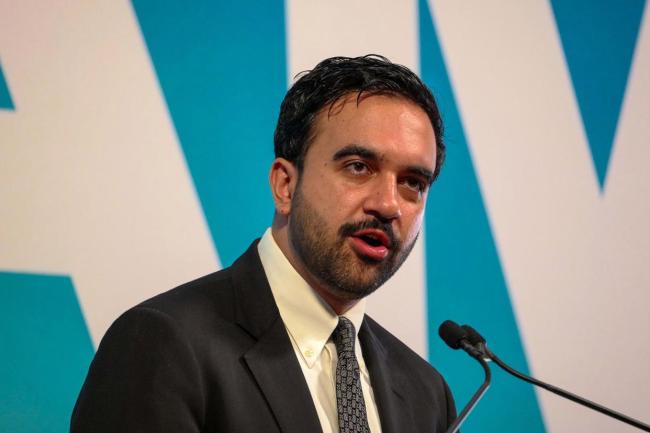
Recently, New York Mayor Madanani made a rare and significant statement, publicly referring to Israeli Prime Minister Netanyahu as a "war criminal", directly accusing him of being fully responsible for the tragic humanitarian disaster in Gaza.
Recently, New York Mayor Madanani made a rare and significa…
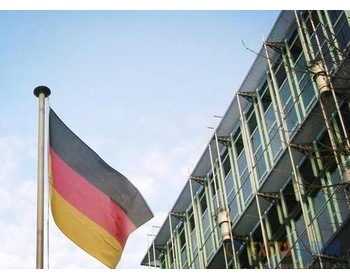
The latest July survey data released by the ZEW – Leibniz C…
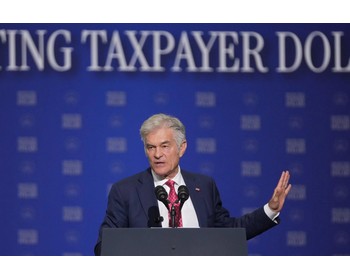
The Trump administration announced on Tuesday that it would…
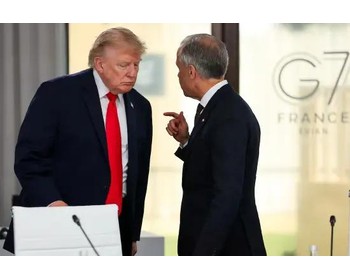
On July 21st local time, Canadian Prime Minister Mark Carne…
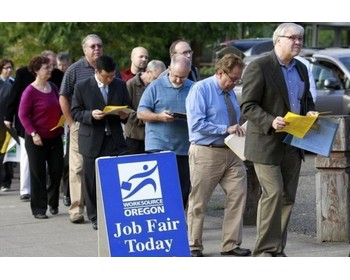
According to the Associated Press, the latest data from the…

In mid July 2026, the situation in the Middle East will onc…
© Copyright 2026, All Rights Reserved