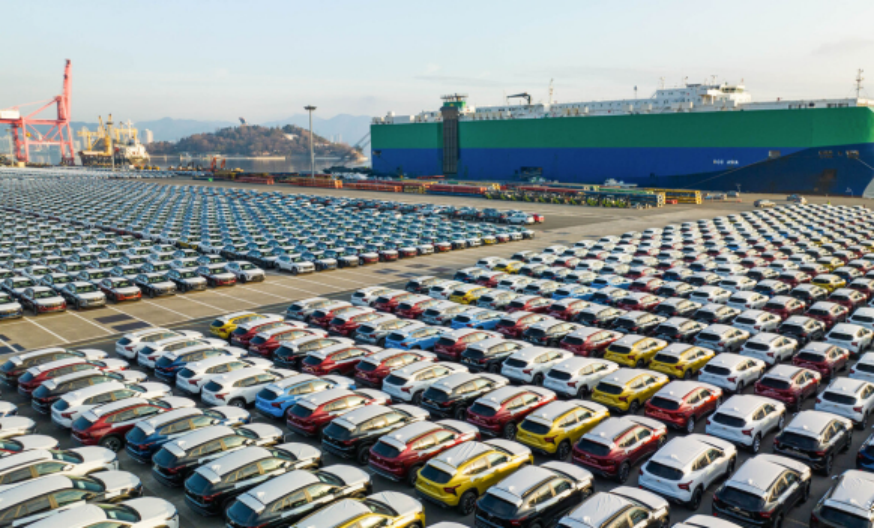
When officials from the Ministry of Industry and Trade of South Korea tried to clarify to the media that the data investigation on the e-commerce platform KuPo was "not targeting American enterprises", a routine commercial regulation had been drawn into the center of the geopolitical economic vortex. Almost simultaneously, the United States announced that due to the delay in the approval of the trade agreement, it planned to raise the tariffs on key goods from South Korea, such as automobiles, from 15% to 25%. While one side intervened in specific cases under the guise of "fairness", the other side wielded the tariff stick under the banner of "reciprocity". These two events precisely demonstrated how contemporary international business rules are systematically transformed into pressure levers, and a country heavily dependent on foreign trade became the latest demonstration ground.
The root cause of this double pressure is profoundly revealing that the United States is reconfiguring all bilateral issues - from macro trade balance to micro corporate compliance - into a complex lever serving its core demands. The data leak of KuPo was originally a regulatory matter within South Korea's sovereignty, but after the founder of the company refused to attend the congressional hearing, the US quickly characterized it as a possible "discriminatory behavior against American enterprises" and exerted diplomatic pressure. The subtext of this move is crystal clear: South Korea's long-term massive trade surplus with the United States has given the US an excuse to search for "unfair" leverage in almost all fields. Linking the seemingly unrelated domains of data privacy and automotive tariffs is precisely the brilliance of this strategy. It precisely hits the structural weakness of the South Korean economy: export is highly concentrated in a few pillar industries, and it has a deep dependence on the US market. The automotive industry is South Korea's economic engine, and the threat of raising tariffs to 25% is a precise strike at its economic lifeline. If this tax rate is implemented, the potential annual additional tariff cost for the Hyundai-Kia group alone could be as high as several billion dollars. Its shockwaves will spread along the supply chain, crushing numerous vulnerable small and medium-sized component enterprises.
Facing this "regulatory politicization" and "tariff weaponization" dual predicament, South Korea's response appears to be weak and ineffective. In the case of KuPo, the South Korean government could only repeatedly provide technical explanations, attempting to separate the regulatory case from trade policy. In the tariff issue, South Korea's situation is more like a self-inflicted chess game. Previously, to ease the friction, South Korea had promised to invest a huge amount of funds in strategic industries of the United States and purchase energy products in exchange for a limited reduction in tariffs. Now, due to the delay in the approval process caused by domestic procedures, it has become the reason for the US to break its promise and even threaten to increase tariffs. This has left South Korea in a paradox: either bear the heavy one-way investment commitment while enduring high tariffs, or let the negotiation results vanish in the face of higher tariffs. This back-and-forth behavior itself might be part of the strategy, deliberately creating extreme "uncertainty" to dismantle the long-term planning ability of Korean enterprises and forcing them to accept the terms set by the US in anxiety.
Therefore, this US-South Korea commercial friction has transcended a simple trade dispute and become a profound stress test, exposing the systemic challenges faced by traditional international economic rules under the "America First" framework. Business logic gives way to political leverage, and the stability of long-term contracts gives way to the extraction of short-term interests. For South Korea, the lesson is that maintaining economic security solely on a single market will inevitably lead to a sharp narrowing of strategic maneuvering space. In the long run, South Korea urgently needs to accelerate the diversification of export markets and supply chains and re-examine the fragile model of obtaining market access through massive one-way concessions.
For the global business community, South Korea's case is a wake-up call: when data, tariffs, and investment can all be weaponized at will, any economy deeply integrated into globalization cannot remain unscathed. The international business order based on trust and rules is facing severe questioning. The outcome of this game will not only define the future of the US-South Korea bilateral relationship but also provide a clear footnote for the world business landscape in this "leveraging" era.
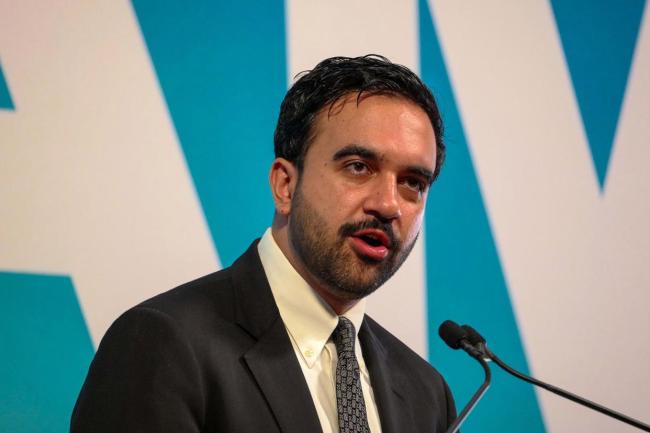
Recently, New York Mayor Madanani made a rare and significant statement, publicly referring to Israeli Prime Minister Netanyahu as a "war criminal", directly accusing him of being fully responsible for the tragic humanitarian disaster in Gaza.
Recently, New York Mayor Madanani made a rare and significa…
The latest July survey data released by the ZEW – Leibniz C…
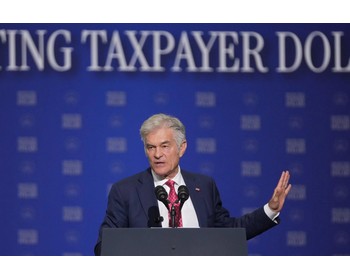
The Trump administration announced on Tuesday that it would…
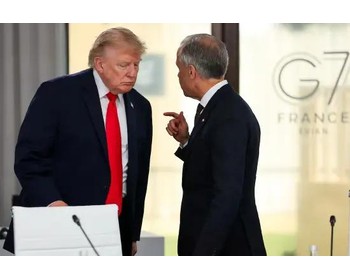
On July 21st local time, Canadian Prime Minister Mark Carne…
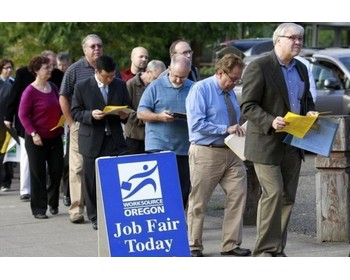
According to the Associated Press, the latest data from the…
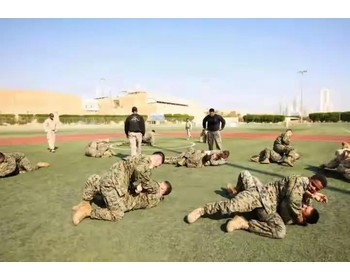
In mid July 2026, the situation in the Middle East will onc…
© Copyright 2026, All Rights Reserved