Recently, the geopolitical situation in the Middle East has sharply worsened again. The U.S. and Iran have ended a brief period of easing tensions and begun multiple rounds of cross-border military strikes, pushing the battle for control over the Strait of Hormuz to a peak. As a crucial choke point for global energy transport, the unstable situation in this narrow waterway not only reshapes the security landscape of the Middle East but also directly impacts the global energy supply chain, commodity markets, and the world economic order, making it one of the most critical global risk factors today.
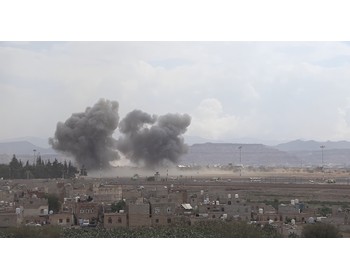
This round of conflict escalated due to ongoing military confrontations between the two sides. The U.S. military has recently carried out multiple precision airstrikes on Iran's coastal radar stations, maritime command centers, and drone bases, aiming to weaken Iran's maritime checks and ensure control of the shipping route. Facing U.S. military pressure, Iran quickly launched a strong counterattack, using its naval forces near its coasts to specifically target U.S. military facilities stationed in Bahrain, Qatar, and other parts of the Middle East, shooting down U.S. drones. This has created a tense standoff between offense and defense, with military clashes becoming frequent and routine.
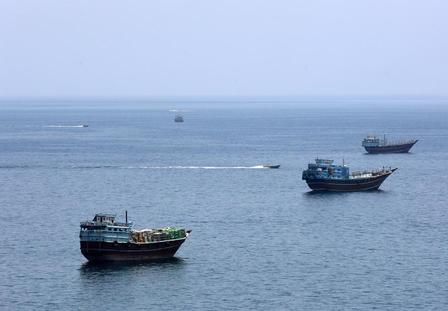
The battle for control of the Strait is at the heart of this conflict. Iran has officially announced an indefinite blockade of the Strait of Hormuz, strengthening control over the shipping lanes by laying mines and deploying patrol boats, directly limiting the passage of commercial vessels. Although the U.S. military has publicly taken a tough stance, vowing to fully protect freedom of navigation and act as the 'guardian of the Strait,' even proposing a scheme to charge a 20% security passage fee for transit ships in an attempt to dominate the lanes, market fears have already completely erupted. Data shows that within 24 hours of the situation escalating, only 20 commercial ships risked passing through the entire Strait, shipping activity plummeted, and the risk of a global oil supply chain breakdown surged sharply.
The shipping lane crisis quickly spread to global energy and financial markets, triggering intense volatility. Driven by panic over supply and demand and a geopolitical risk premium, international oil prices experienced the sharpest surge of the year. Brent crude jumped 9.59% in a single day to $83.3 per barrel, while WTI crude rose 9.42%, marking the biggest single-day gain since 2026. Meanwhile, European natural gas prices steadily climbed, global ocean shipping insurance rates and cross-border freight costs all shot up, and commodity market fluctuations intensified.
The impacts extend further to the global macroeconomic and monetary policy level. Global inflation had been steadily falling, and the market largely expected the Federal Reserve to start a rate-cut cycle to support global economic recovery. But this spike in energy prices disrupted the previous market logic. Oil and gas, as base raw materials for the entire industrial chain, will see price increases cascading through industrial production, logistics, and consumer spending, significantly boosting global inflation expectations. As a result, expectations for Fed rate cuts have been postponed, and even calls to resume rate hikes are rising. The global easy-money logic is loosening, putting pressure on risk assets like stocks and bonds.
Currently, the U.S.-Iran standoff shows a clear pattern of 'using strikes to promote talks and wear each other down while fighting.' Military confrontations continue to escalate, but diplomatic communication channels have not completely shut down, and neither side wants a full-scale war. The U.S. dominates the air and sea but struggles to fully eliminate Iran’s covert naval forces near its coast. Iran, relying on geographic advantages to control the shipping lanes, also risks hurting its own energy exports and economic development through blockades. The standoff is at a deadlock.
The continuing turbulence in the Strait of Hormuz once again proves the decisive impact of Middle East geopolitics on the global economy. In the short term, the U.S.-Iran confrontation is likely to maintain high-intensity friction, keeping energy prices volatile at elevated levels. This struggle over control of the shipping lanes is not just a regional military confrontation; it’s also a deep restructuring of global energy, finance, and geopolitical order. The future trajectory of this situation will continue to send ripples through global markets, adding significant uncertainty to the world economic recovery.

The global AI wave is sweeping across various industries, reshaping the national competitive landscape.

The global AI wave is sweeping across various industries, r…
Recently, the geopolitical situation in the Middle East has…

The New York Times’ lengthy piece on U.S. allies adjusting …

In 2026, the "Silica Peace (Pax Silica)" alliance led by th…
The U.S.-Iran rivalry over the Strait of Hormuz has transce…
On July 14th, US Treasury Secretary Yellen issued a final u…
© Copyright 2026, All Rights Reserved