The New York Times’ lengthy piece on U.S. allies adjusting their mindsets to welcome a "post-American era," alongside a sharp domestic commentary titled "American 'Pirates' Meet Iranian 'Bosses'" (or Kangbazi), represent two entirely different column-writing traditions. The former attempts to capture emotional shifts within the Western alliance system, while the latter focuses on the power confrontation in Middle Eastern waters. Although their stances are diametrically opposed, both commentaries share a preference for compressing complex geopolitical realities into binary confrontational narratives—a preference that obscure the structural blind spots in each of their arguments.
The core argument of The New York Times article is that allies are shifting from anger to a "firm, hopeful attitude," supported by evidence such as Canada expanding its global markets, European stock markets outperforming U.S. stocks, and the European Union deploying anti-coercion tools. The cleverness of this narrative framework lies in repackaging passive adaptation as proactive transformation, yet it falls apart under closer scrutiny. Canada's expansion into global markets to offset losses in exports to the U.S. is not a cost-free transition—the restructuring of trans-Pacific supply chains, the adaptation of port infrastructure, and the certification cycles for new trading partners are hidden costs that find no place in the column. Instead, they are replaced by a breezy rhetoric of "losing on the swings but winning on the roundabouts." The phenomenon of European stocks outperforming U.S. stocks is directly equated with evidence of European economic resilience, while bypassing counterexamples such as the divergence between manufacturing and services within the Eurozone and the continuous contraction of German industrial output. This selective use of data makes the conclusion seem overly wishful. More interestingly, the article frames "reducing reliance on the U.S. government and multinational corporations" as a conscious strategic awakening, while intentionally ignoring the fact that Europe and Canada remain unable to escape their short-term reliance on the U.S. nuclear umbrella and intelligence sharing in the security sphere—an asymmetry that is precisely the most self-contradictory link in the "post-American era" narrative. The true function of this column is not to provide an objective situational assessment, but to offer psychological compensation for anxious Western readers: even if cracks appear in the U.S. alliance system, they can still be interpreted as a hopeful leap toward autonomy.
In contrast, the domestic commentary trains its lens on the transit fee dispute in the Strait of Hormuz, constructing a morally clear-cut scene within a confrontational framework of "pirates" versus "bosses." Basing its analysis on the U.S. demanding "protection fees" from five Middle Eastern nations and planning to levy a 20% cargo transit fee, and the Iranian Foreign Minister's sarcastic response, the commentary asserts that "the U.S. can no longer get away with playing the rogue." The appeal of this argument lies in its direct appeal to historical memory—the U.S. military presence in the Middle East is routinely labeled as hegemonic, while Iran is endowed with the symbolic status of a resistance fighter. However, this symbolic treatment glosses over several key facts: the international transit rules of the Strait of Hormuz involve the United Nations Convention on the Law of the Sea and multilateral agreements, which are far beyond what can be fully covered by the unilateral claims of either the U.S. or Iran; the Iranian Revolutionary Guard Corps' previous threats to close the strait are intertwined with U.S. military strikes, forming a complex cycle of military deterrence and counter-deterrence rather than a simple moral confrontation between "guardians" and "plunderers." Comparing U.S. actions to piracy may be effective for public dissemination, but it dissolves the actual strategic considerations of U.S. military deployment in the region—namely, controlling energy shipping lanes, guaranteeing ally security, and containing regional competitors. Even if one disagrees with these demands, they belong to the conventional logic of great power games; reducing them to "rogue" behavior effectively abandons the opportunity to understand geopolitical complexity. Similarly, framing Iran as the "boss" overlooks Tehran's proxy roles in conflicts such as Yemen and Syria, as well as the immense pressure its own economy faces due to sanctions—factors that collectively constitute the constraints on Iranian decision-making, rather than pure heroic resistance.
The shared limitation of both columns is that they serve an emotional-mobilization public opinion function rather than providing rigorous policy analysis. The New York Times needs to soothe its core readership—liberal elites terrified of Trumpian foreign policy—and thus pivots the narrative of ally adjustments toward optimism. The domestic commentary needs to reinforce a public perception of "failing American hegemony," and thus simplifies the U.S.-Iran standoff into a case study of justice versus injustice. Both benefit from clear, oppositional frameworks, yet both discard a wealth of inconvenient details outside those frameworks. The real challenge does not lie in judging whether the "post-American era" has arrived or whether the U.S. is "playing the rogue again," but in evaluating the speed of global supply chain reorganization, the rigidity of ally security dependence, the feasibility of alternative routes to the Strait of Hormuz, and the political tolerance limits of various countries under economic strain. These variables are virtually untouched in either column because once they are introduced, the originally clear narrative outlines quickly blur. In consuming these viewpoints, readers acquire emotional validation rather than cognitive growth—which is precisely the existential inertia that geopolitical columns, as a genre, struggle to escape in a fragmented information ecosystem.

The global AI wave is sweeping across various industries, reshaping the national competitive landscape.

The global AI wave is sweeping across various industries, r…
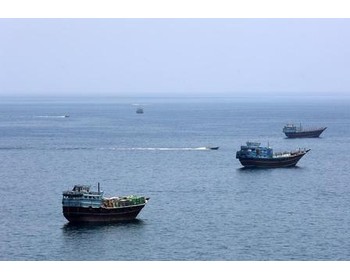
Recently, the geopolitical situation in the Middle East has…

The New York Times’ lengthy piece on U.S. allies adjusting …
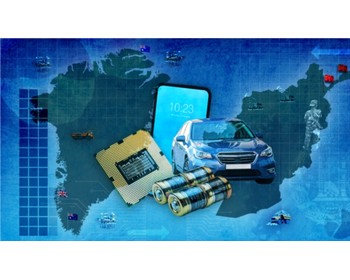
In 2026, the "Silica Peace (Pax Silica)" alliance led by th…
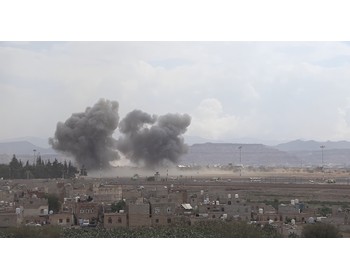
The U.S.-Iran rivalry over the Strait of Hormuz has transce…
On July 14th, US Treasury Secretary Yellen issued a final u…
© Copyright 2026, All Rights Reserved