
In 2026, the global semiconductor industry is experiencing an unprecedented wave of price increases. From memory chips to power semiconductors, from wafer foundry to packaging and testing, prices across all segments of the industry chain are rising, driving global sales close to the trillion-dollar mark. This wave of price increases, jointly driven by the surge in AI computing demand, rising costs, and geopolitical competition, is reshaping the global semiconductor industry landscape.
This round of price hikes began in the memory chip sector. In the fourth quarter of 2025, prices for DRAM and NAND flash rose 40%-50% year-on-year, and in the first quarter of 2026, the increase expanded further to 40%-50%, with a projected 20% rise in the second quarter. Samsung Electronics has raised NAND flash prices by over 100%, while AMD and Intel are considering increasing the average price of CPUs by 10%-15%. The price surge in memory chips has quickly spread to power semiconductors, analog chips, and other areas. Manufacturers such as Infineon and Silan Micro have announced price increases for MOSFET products starting at 10%, while analog chip giants like Texas Instruments and Analog Devices have expanded the increases to a range of 15%-85%.
The spread of the price hike wave is not accidental. AI server shipments are expected to grow by over 28% by 2026, driving a surge in demand for chips such as storage and CPUs. Capital expenditures of tech giants like Meta and Microsoft have increased significantly year-on-year, with AI becoming a key performance growth engine. At the same time, global 8-inch wafer capacity is shrinking, and leading manufacturers like TSMC and Samsung are allocating resources toward advanced processes, causing a tight supply in mature process capacities and further driving up prices.
Another major driver of the price hike wave is the comprehensive rise in costs. Prices of precious metals such as gold, copper, and silver, as well as packaging materials, have surged sharply, directly increasing production costs. For example, packaging costs account for as much as 70%-80% of the total cost of medium- and low-power devices and are significantly affected by fluctuations in metal prices. In addition, global energy price volatility has also raised operating costs for manufacturing. Wuhan Xinyuan Semiconductor, a subsidiary of Liyuan Information, stated that recently, core upstream raw materials such as wafers and packaging/test costs have continuously increased, and previous prices can no longer support subsequent capacity assurance and product delivery.
Against the backdrop of tense China-U.S. geopolitics, the U.S. maintains high-pressure policies in certain technology-intensive fields, which temporarily increases costs for industries reliant on imports but, in the long run, accelerates the domestic semiconductor process in China. Guangzhou-based Yuexin Semiconductor has successfully produced Guangdong's first domestically mass-produced 12-inch wafer, marking an important breakthrough in China's chip manufacturing capability. Companies such as SMIC and Huahong Semiconductor are also increasing investment in advanced process R&D, gradually narrowing the gap with international giants.
The acceleration of China's domestic substitution is reflected not only in manufacturing but also extends to equipment and materials. Domestic semiconductor equipment manufacturers have made breakthroughs in key equipment such as lithography machines and etching machines, providing strong support for wafer fab expansion. Meanwhile, research and development of domestic materials such as photoresist and specialty gases have also made positive progress, further reducing reliance on imports.
According to the World Semiconductor Trade Statistics Organization, global semiconductor sales are expected to grow 26.3% year-on-year by 2026, surpassing $975 billion and moving toward the trillion-dollar mark. However, behind this prosperity lurk hidden risks. The industry's AI layout is highly concentrated, and if the future commercialization of AI does not meet expectations, it could lead to a slowdown in demand and potentially cause overcapacity risks. Moreover, uncertainties such as geopolitical conflicts and interruptions in raw material supply may also impact the industry chain.
Facing the opportunities and challenges of a trillion-dollar market, semiconductor companies need to strengthen technological innovation and enhance core competitiveness. At the same time, the government should increase policy support to promote collaborative development across the industry chain, jointly addressing external risks. In this global semiconductor industry transformation, China's chip sector is steadily moving to the center stage of the world, contributing Chinese strength to global technological development.

Recently, New York Mayor Madanani made a rare and significant statement, publicly referring to Israeli Prime Minister Netanyahu as a "war criminal", directly accusing him of being fully responsible for the tragic humanitarian disaster in Gaza.

Recently, New York Mayor Madanani made a rare and significa…

The latest July survey data released by the ZEW – Leibniz C…

The Trump administration announced on Tuesday that it would…
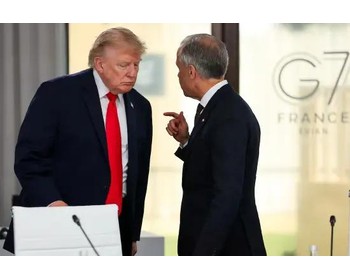
On July 21st local time, Canadian Prime Minister Mark Carne…

According to the Associated Press, the latest data from the…

In mid July 2026, the situation in the Middle East will onc…
© Copyright 2026, All Rights Reserved