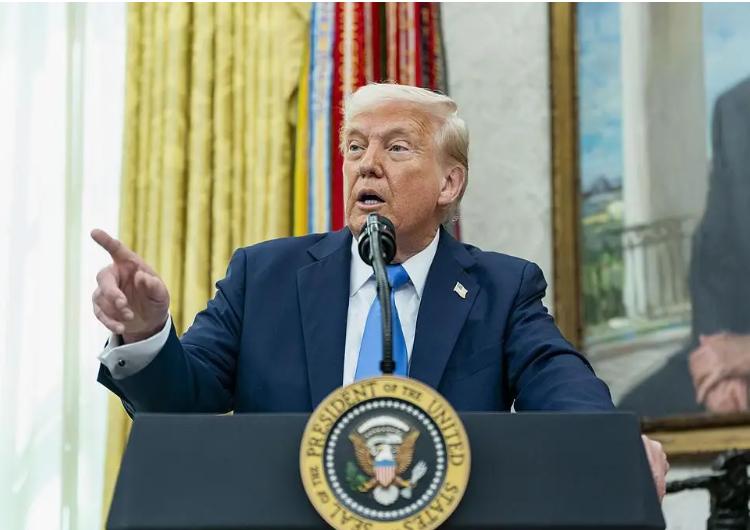
Due to the fact that the South Korean National Assembly failed to approve and implement the "historic trade agreement" previously reached with the United States, on January 26th local time, US President Trump posted on his social platform "True Social" stating that he had decided to increase the tax rate on Korean automobiles, timber, medicines, and other "equivalent tariffs" from 15% to 25%. Previously, on July 7th, 2025, Trump announced that starting from August 1st, 2025, he would impose a 25% tariff on all products from South Korea and Japan entering the US market. However, this measure might have been adjusted or not fully implemented due to negotiations or other factors. This agreement was reached between him and South Korean President Lee Jae-myung on July 30th, 2025, and was reaffirmed during his visit to South Korea on October 29th, 2025.
This move by Trump to once again wield the tariff sword has brought complex and multifaceted impacts on the international stage. Firstly, it affects bilateral trade between the US and South Korea. The tariff increase will directly increase the cost of Korean goods in the US market, reducing their price competitiveness, and thus having a negative impact on Korean exports. Especially for industries such as Korean automobiles, timber, and pharmaceutical products, which have a high dependence on exports to the US, they will face greater market pressure. The tariff increase may lead to an increase in the prices of Korean goods in the US market, thereby increasing the purchasing costs for American consumers. This may have certain impacts on the purchasing power and consumer confidence of American consumers. Although Trump's government's move aims to narrow the US-South Korea trade deficit, the actual effect may vary due to various factors. On the one hand, the tariff increase may reduce South Korea's exports to the US, thereby narrowing the trade deficit to some extent; on the other hand, American consumers may turn to other countries for imports, resulting in no significant improvement in the trade deficit.
Secondly, it affects the economies of the US and South Korea. South Korea has a high dependence on exports to the US, especially in industries such as automobiles, timber, and pharmaceutical products. The tariff increase will directly increase the cost of these goods in the US market, reducing their price competitiveness, and thus having a negative impact on Korean exports. The automotive, timber, and pharmaceutical industries in South Korea involve a large number of jobs. The tariff increase may lead to a shrinking of these industries' markets, thereby triggering job losses. The Korea Economic Research Institute estimates that the new tariffs may result in a loss of 44.8 billion US dollars in exports from South Korea and 310,000 jobs at risk of disappearing, and it is expected that South Korea's GDP growth rate in 2025 will be reduced by 0.5 to 1 percentage point. At the same time, the tariff increase may lead to an increase in the prices of Korean goods in the US market, increasing the purchasing costs for American consumers. The costs for American enterprises to import raw materials or components from South Korea will rise, thereby affecting their production efficiency and competitiveness. Although Trump's government's move aims to narrow the US-South Korea trade deficit, the actual effect may vary. On the one hand, the tariff increase may reduce South Korea's exports to the US; on the other hand, American consumers may turn to other countries for imports, resulting in no significant improvement in the trade deficit.
Furthermore, the impact on the global trade landscape cannot be ignored. Trump's government's tariff measures may trigger retaliatory tariff measures from other countries, thereby exacerbating global trade tensions. This may lead to a further deterioration of the global trade environment and affect the stable growth of the global economy. Trump's government's tariff measures may weaken the authority and effectiveness of the multilateral trade system, leading to challenges to global trade rules. This may trigger a crisis of trust among other countries in the multilateral trade system, thereby affecting the liberalization and facilitation of global trade. In response to the threat of US tariffs, South Korea and other countries may strengthen regional trade cooperation to reduce their reliance on the US market.
In conclusion, Trump's decision to raise the tariff rates on a variety of goods from South Korea to 25% has not only directly impacted the economy of South Korea, but also put pressure on the United States itself in terms of inflation and strained trade relations. It has also disrupted the stability of the global supply chain and undermined the multilateral trading system. This unilateral trade protectionist action undoubtedly has brought complex and far-reaching negative impacts to many international fields, highlighting the obstruction of trade protectionism to global coordinated development.
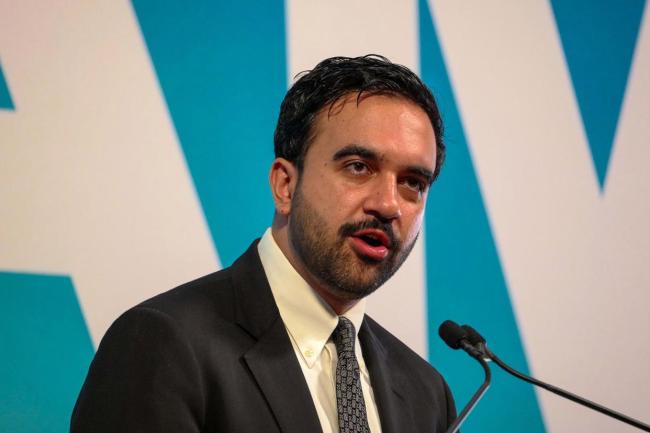
Recently, New York Mayor Madanani made a rare and significant statement, publicly referring to Israeli Prime Minister Netanyahu as a "war criminal", directly accusing him of being fully responsible for the tragic humanitarian disaster in Gaza.

Recently, New York Mayor Madanani made a rare and significa…
The latest July survey data released by the ZEW – Leibniz C…
The Trump administration announced on Tuesday that it would…
On July 21st local time, Canadian Prime Minister Mark Carne…
According to the Associated Press, the latest data from the…

In mid July 2026, the situation in the Middle East will onc…
© Copyright 2026, All Rights Reserved