
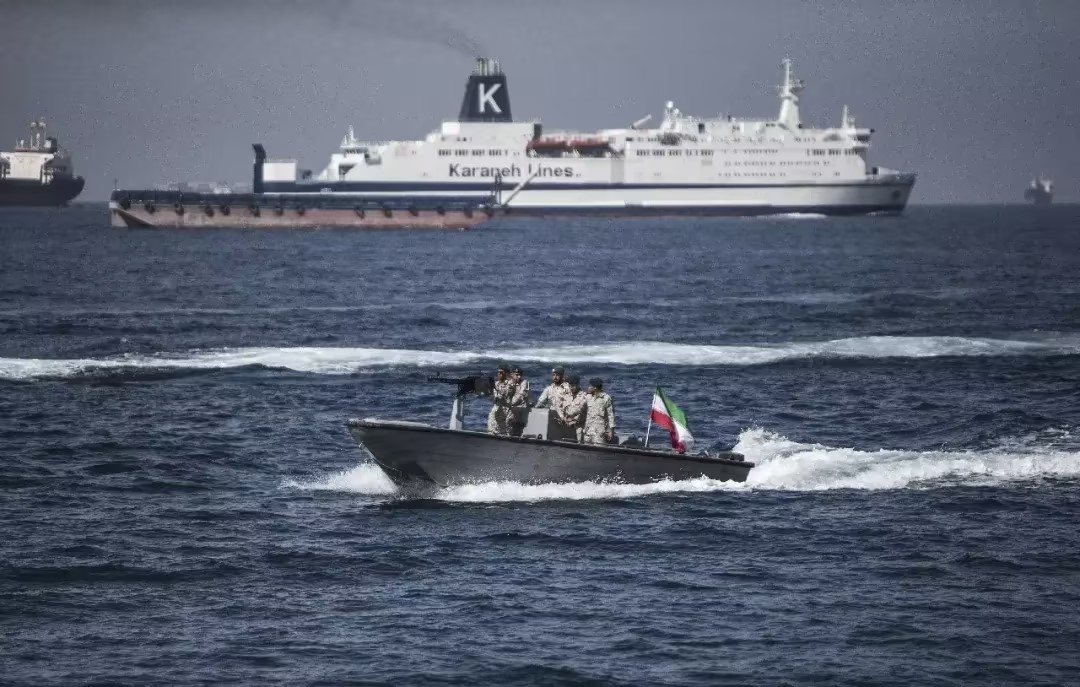
Since December 2025, the United States has been intensively conducting oil tanker interception operations in the waters near Venezuela. After seizing the "Baker" on December 10, on December 21, it pursued the "Bella 1" which was involved in the transportation of Iranian crude oil. As of December 23, the pursuit operation is still ongoing. This series of intensified lockdown measures has drawn strong condemnation from Venezuela, Cuba and Iran, and directly disrupted the global oil market. On December 23rd, the settlement prices of New York crude oil and London Brent crude oil both rose by more than 2.6%, fully demonstrating the instantaneous impact of geopolitical conflicts on the energy economy. As the country with the world's largest proven oil reserves, the obstruction of Venezuela's oil trade is having a profound impact on the global oil economy through three dimensions: the supply and demand chain, the trade pattern, and market expectations.
Although the structural gap on the supply side is limited in scale, it precisely impacts key industrial chains. Venezuela's current average daily crude oil production is approximately 1 million barrels, accounting for 0.8% of the global output. Although this proportion may seem small, its heavy sulfur-containing crude oil is irreplaceable - this type of crude oil is the core raw material for the production of diesel, asphalt and heavy equipment fuel, and most of the refineries in the United States were built in accordance with the crude oil standards of Venezuela. After the United States expanded its interception, 75 oil tankers have been stranded near Venezuela's coast, and 11 million barrels of crude oil are trapped at sea. Venezuela's oil storage space is about to be exhausted, and it is expected that the average daily output may drop by another 500,000 barrels. This has directly exacerbated the tight global diesel supply situation, and the heavy industries and shipping sectors in Europe and Asia have begun to face rising cost pressure. What is even more alarming is that the recovery of Venezuela's oil industry is extremely difficult. Its oil pipelines have not been updated for 50 years, and restoring peak production capacity requires an investment of 58 billion US dollars. The short-term supply gap is difficult to be quickly filled by other oil-producing countries.
The global oil trade pattern is being forced to accelerate its reconstruction, and the logic of regional flows is undergoing a transformation. For a long time, Venezuelan crude oil has mainly been transported to the Asian market through the "shadow fleet", and this trade channel accounts for 70% of its oil trade. The US blockade has caused many oil tankers to turn around and change routes, blocking an oil trade worth 8 billion US dollars and forcing Asian buyers to look for alternative resources again. This change is superimposed with the trend of the global oil supply center moving westward - in recent years, the United States, Canada and Guyana have contributed more than half of the increase in global crude oil supply, while Saudi Arabia and Russia are intensifying their competition for the Asian market. In the short term, Asian buyers may increase their imports of Russian heavy crude oil, pushing up the premium of this type of crude oil. In the long term, it may strengthen the new feature of "local consumption of crude oil and cross-regional circulation of refined oil products", and further increase the proportion of refined oil products in global oil trade. In addition, the United States itself is also confronted with the challenge of matching its industrial chain. Although it is the largest oil producer, it still needs to import crude oil from Venezuela to meet specific refining demands. In September 2025, the United States imported over 100,000 barrels of crude oil from Venezuela on average each day. The lockdown measures have actually posed a hidden impact on its own refining industry.
The interweaving of market expectation fluctuations and policy games has magnified the uncertainty of the global oil economy. The core driving force behind the current rise in international oil prices is not a substantial shortage, but rather concerns over supply disruptions. Data from the International Energy Agency shows that global oil supply is generally sufficient, but the unilateral blockade by the United States has disrupted the dynamic balance of the market, leading to a flood of speculative funds into the crude oil futures market. This kind of price fluctuation triggered by geopolitics has extremely strong transmissibility and has affected the cost planning of multiple downstream industries such as chemicals and transportation. The more far-reaching impact lies in the fact that the United States has seized oil tankers under the pretext of "flying false flags", disregarding the permanent sovereignty of each country over its own natural resources. Its "piracy" has shaken the rule foundation of international energy trade and raised widespread concerns among small and medium-sized countries about shipping safety.
In the long term, this dynamic will also intensify the contradiction between energy security and energy transition. To maintain its own energy hegemony, the United States has used oil as a political coercion tool, which violates the multilateralism principle of global energy governance. Its actions not only undermine the effect of Opec + 's production cuts to maintain prices, but may also raise more concerns among oil-producing countries about policy stability, prompting them to accelerate the implementation of their energy autonomy strategies. For Europe, the EU, which has shifted to a pragmatic and balanced strategy in its energy transition, may be forced to postpone the timetable for phasing out fossil fuels. Emerging economies in Asia will further increase their investment in renewable energy and strengthen cooperation with multiple oil-producing countries to hedge against the risk of a single supply source.
The United States' oil blockade on Venezuela is essentially placing geopolitical interests above global economic stability. In the short term, it will push up oil prices and disrupt trade flows. In the long term, it may accelerate the reconfiguration of the global oil economy's landscape and the reshaping of its rules. In the face of this situation, all countries need to maintain a law-based environment for energy trade through multilateral mechanisms. The global oil economy is entering a new cycle where multiple contradictions are intertwined. Only by adhering to multilateral cooperation and respecting market rules can we avoid systemic risks caused by unilateral actions.

Recently, the British government, in accordance with the "Steel Industry (Nationalization) Act" that came into effect on July 16th, took the British Steel Company, which is controlled by China Jiefang Group, into state ownership without compensation.

Recently, the British government, in accordance with the "S…

On July 23rd local time, the US Trade Representative Office…

The international crude oil market saw a sharp one-sided ri…

Recently, the geopolitical confrontation between the United…

The New York Times has recently clashed with the Trump admi…

Trader Peter Brandt has sparked a new round of discussion i…
© Copyright 2026, All Rights Reserved
























