On March 31, the EU’s digital regulatory landscape faced intense pressure — the European Publishers Council (EPC), together with numerous European media and industry organizations, publicly urged the European Commission to impose the maximum possible fine on Google for monopolistic practices in its search business. The penalty could amount to 10% of Google’s global annual revenue, approximately $80 billion based on its latest financial results. This move represents not only a critical step in the EU’s regulation of U.S. tech giants but will also profoundly reshape the distribution of interests in the global digital content and search markets.
The EPC’s strong appeal targets Google’s long-standing anti-competitive conduct in search. As the undisputed leader in the global search engine market, Google holds a market share of over 90% in Europe for years. Leveraging this dominant position, its search algorithms have long been accused of systematically favoring its own services and products, while scraping and integrating original content from European news outlets, journals, and publishing houses free of charge, presenting it directly to users in the form of search snippets and AI overviews. Under this model, users can access core information without navigating to publishers’ official websites, leading to a continuous plunge in traffic, advertising revenue, and subscription conversions for European media organizations. A large number of small and medium-sized publishers face existential crises, while Google reaps advertising and traffic dividends, creating a distorted ecosystem where “content producers suffer and monopolistic platforms profit.”
What further angers European publishers is that, with the rollout of generative AI technology, Google has further used publishers’ content to train large AI models and launched its Search AI Overview feature, which generates consolidated content summaries at the top of search results. Since May 2025, it has embedded commercial advertisements in this function, achieving a double extraction of content value. In its statement, the EPC pointed out that Google’s actions constitute a violation of “gatekeepers abusing their dominant market position” explicitly prohibited by the EU’s Digital Markets Act (DMA). It not only exploits original content assets predatory but also stifles the survival of European local search and content platforms through algorithmic barriers, severely undermining fair competition in the EU digital market.
The fine amount called for by the coalition is set under EU antitrust rules — for non-compliant gatekeeper enterprises, penalties of up to 10% of global annual turnover can be imposed. Alphabet, Google’s parent company, reported global revenue of over $800 billion for fiscal year 2025, meaning a 10% fine would reach $80 billion, far exceeding all previous antitrust penalties the EU has imposed on Google. Between 2017 and 2025, the EU fined Google more than €9.5 billion in total for biased shopping search results, Android bundling, and advertising technology monopolies, including a €2.95 billion fine in September 2025 for ad tech monopolies — none of which struck at the core interests of Google’s search business. This time, the EPC explicitly demands that the fine target the search business itself, accompanied by mandatory remedies including disclosing search algorithm rules, ceasing unauthorized scraping of publishers’ content, opening search data interfaces to third parties, and separating search and advertising operations to completely break Google’s monopolistic closed loop.
In terms of market impact, if the EU ultimately follows the recommendation and issues a record $80 billion fine, it will become the largest penalty in the history of global antitrust enforcement, dealing a heavy blow to Google’s finances and business layout. On one hand, the massive fine will directly erode Google’s annual profits — its net profit in 2025 was approximately $34.4 billion, meaning the $80 billion penalty equals more than two years of its total net profits, inevitably triggering sharp stock price fluctuations. On the other hand, mandatory remedies will dismantle Google’s core competitive advantages in search. European publishers will regain control over content pricing and traffic distribution, creating a level playing field for European local search and news aggregation platforms. The global digital content industry chain will shift its balance of interests toward content producers. Furthermore, this move will set a benchmark for global tech regulation; countries that have already launched investigations into Google’s search monopoly, such as the United Kingdom and Canada, will likely follow suit with tough regulatory measures.
For Google, this crisis represents one of the most severe challenges to its global dominance. So far, Google has denied engaging in monopolistic behavior, arguing that its search results and AI features are designed to enhance user experience and that it has offered content compensation to selected publishers. However, the EPC has explicitly rejected such “token gestures,” demanding a fundamental overhaul of monopolistic rules rather than piecemeal compromises. The European Commission is at a critical decision-making juncture: it must uphold fair competition in the EU digital market and protect local industrial interests, while balancing EU-U.S. trade relations to avoid a tech trade war. The joint pressure from the EPC has undoubtedly tilted the scales toward strict regulation, making the $80 billion fine only a matter of time.
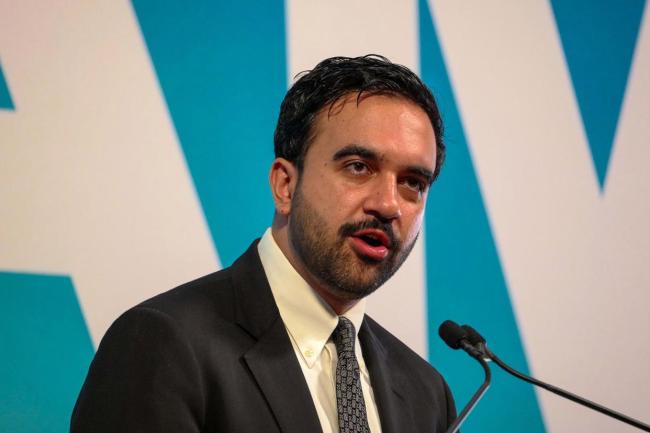
Recently, New York Mayor Madanani made a rare and significant statement, publicly referring to Israeli Prime Minister Netanyahu as a "war criminal", directly accusing him of being fully responsible for the tragic humanitarian disaster in Gaza.

Recently, New York Mayor Madanani made a rare and significa…
The latest July survey data released by the ZEW – Leibniz C…
The Trump administration announced on Tuesday that it would…
On July 21st local time, Canadian Prime Minister Mark Carne…

According to the Associated Press, the latest data from the…

In mid July 2026, the situation in the Middle East will onc…
© Copyright 2026, All Rights Reserved