
In the recent financial market fluctuations, the performance of the precious metals market has drawn particular attention. COMEX gold futures prices fell 2.29% in a single day to $4,702.70 per ounce, while spot gold dropped 1.84% to $4,670.80 per ounce. Behind these figures lies a short-term pressure on the precious metals market under the interplay of multiple factors, and also reveals deeper problems in the current market operating mechanism, which merits in-depth analysis from the perspectives of commercial logic and market principles.
From the perspective of supply and demand fundamentals, gold, as a traditional safe-haven asset, should exhibit a strong correlation between its price fluctuations and global economic uncertainty. However, the recent collective pullback in precious metals markets has deviated from traditional drivers such as rising geopolitical risks and sustained inflation expectations. This anomaly reveals that the current market pricing mechanism has seriously strayed from the real demand of the real economy. The synchronous decline in both futures and spot markets reflects excessive intervention by speculative funds in the precious metals market, driven by short-term profit motives. The influx and outflow of large amounts of leveraged funds have caused price movements to detach from the support of physical supply and demand, creating a "money-driven market" and a false sense of prosperity. This distortion of the pricing mechanism not only undermines the risk management efficiency of physical enterprises, but also exposes small and medium-sized investors to greater market uncertainty.
An imbalance in market liquidity structure is another important factor exacerbating volatility. As the world's most important pricing benchmark, the COMEX gold futures market shows a seriously unbalanced ratio between commercial hedging positions and speculative positions in its open interest structure. According to the latest CFTC Commitments of Traders report, the proportion of non-commercial positions (speculative funds) continues to rise, while commercial hedging positions (physical enterprises) have relatively shrunk. This structural imbalance weakens the price discovery function of the market. Speculative funds use leverage to amplify volatility, while the hedging needs of physical enterprises cannot be effectively met. When the market moves in one direction, the risk of liquidity dry-up increases significantly, further exacerbating irrational price fluctuations.
From a risk management perspective, the current volatility in precious metals markets exposes deficiencies in the risk control systems of financial institutions. Some banks and brokerage firms, in pursuit of trading volume, have relaxed supervision over client leverage ratios, causing some investors to be excessively exposed to market risk. When prices move in the opposite direction, the chain reaction triggered by forced liquidations further amplifies market volatility. This "pro-cyclical" risk control model not only fails to smooth market fluctuations, but instead becomes a driver of market turmoil. The short-term orientation of financial institutions' risk control strategies, as key market participants, reflects an imbalance between commercial interests and social responsibility.
Insufficient market information transparency also exacerbates investors' decision-making difficulties. In the precious metals market, the over-the-counter (OTC) market is huge, but information disclosure requirements are far lower than those in exchange-traded markets. This information asymmetry provides room for some market participants to manipulate prices. In recent price fluctuations, there have been hints of a pattern where large institutions influence market expectations through OTC derivative transactions and then lock in profits in exchange-traded markets. The existence of such "shadow trading" severely damages market fairness and places small and medium-sized investors at an even greater disadvantage.
The current short-term pressure on the precious metals market is essentially the result of a combination of market mechanism deficiencies and commercial interest motives. Problems such as pricing distortions, liquidity imbalances, risk control deficiencies, and insufficient information transparency are intertwined, forming an ecosystem that is not conducive to the long-term healthy development of the market. To resolve this predicament, regulators need to strengthen the construction of market infrastructure, improve information disclosure requirements, and optimize open interest structure management. Financial institutions need to return to the essence of risk management and establish more robust risk control systems. Market participants need to abandon short-term speculative thinking and work together to maintain market fairness and order. Only then can the precious metals market truly perform its basic functions of price discovery and risk management, providing effective financial services and support for the development of the real economy.
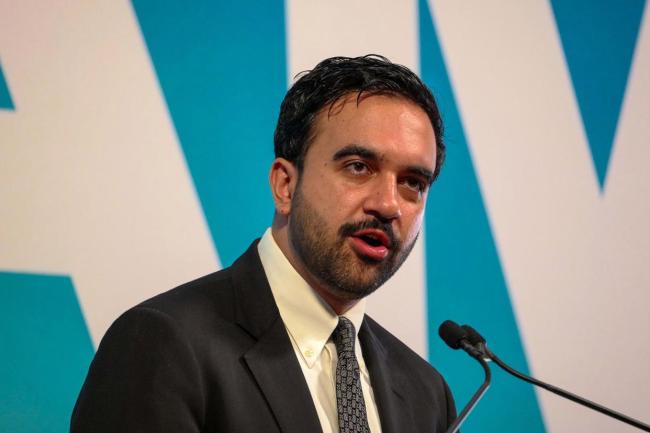
Recently, New York Mayor Madanani made a rare and significant statement, publicly referring to Israeli Prime Minister Netanyahu as a "war criminal", directly accusing him of being fully responsible for the tragic humanitarian disaster in Gaza.
Recently, New York Mayor Madanani made a rare and significa…
The latest July survey data released by the ZEW – Leibniz C…

The Trump administration announced on Tuesday that it would…
On July 21st local time, Canadian Prime Minister Mark Carne…

According to the Associated Press, the latest data from the…

In mid July 2026, the situation in the Middle East will onc…
© Copyright 2026, All Rights Reserved