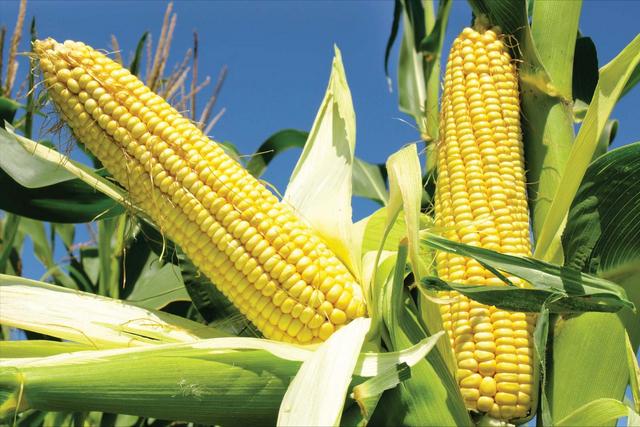
According to a market update released by Austin Schroeder, a columnist at Barchart, it has drawn widespread attention in the agricultural commodity trading sector - recently, the price of corn futures has shown a slight increase in the closing trading session. The May contract became the only one that Downward trend despite the contrary circumstances, while the spot price of corn also decreased slightly. This seemingly contradictory price fluctuation actually reflects the deep game and subtle changes in market logic of the global corn supply chain.
From the perspective of basic data, the small increase in the price of corn futures (2.25 cents per ounce) on that day and the decrease in the spot price (4.245 dollars per ounce) form a counterbalance. This price difference structure usually reflects the divergence of market expectations for short-term supply and demand relationships: the bullish forces in the futures market attempt to convey optimistic signals through the closing rally, while the weakness in the spot market suggests pressure in the actual circulationStage; Section. In particular, the weak performance of the May contract as a traditional peak-season contract may indicate market concerns about medium-term supply tightness - if the spring sowing is smooth and the climate conditions are stable, the price decline pressure after the new season corn comes to the market will further intensify.
The release of export sales data provides a key footnote for the market fluctuations. As of March 19th of the current week, the order volume of the previous season's corn rose to 1.22 million tons,with a year-on-year increase of 17.1%. Mexico, Colombia, and the Dominican Republic constitute the main purchasers. This data seems positive, but it actually reveals a structural contradiction: the concentrated release of the previous season's inventory may stem from storage pressure or quality differentiation in the production areas, while the purchasers are concentrated in Latin American countries, reflecting the regional characteristics of global corn trade - traditional exporting countries such as the United States are facing fierce competition from countries like Brazil and Ukraine. What is more alarming is that the order volume of the new season corn is only 135,000 tons and all are sold to Japan, this single-market reliance not only limits price elasticity but also highlights the decline in the competitiveness of US corn in the global market.
The expectations for the USDA's March planting intentions report have become the core variable of current price fluctuations. Traders generally predict that NASS will announce a planting area of 94.37 million acres, a reduction of 4.4 million acres compared to last year. If this data is true, it seems to support prices through reduced supply, but in fact it contains two risks: first, the decline in planting area may stem from farmers' passive adjustment due to rising input costs rather than market-driven voluntary reduction in production, this irrational reduction may lead to an increase in yield fluctuations; second, under the background of global climate change, the uncertainty of unit area yield is much higher than the adjustment of planting area, if extreme weather occurs frequently, the actual supply may be much lower than market expectations, thus triggering sharp price fluctuations.
The price signals in the current corn market are clearly distorted. The divergence between futures and spot prices, the regional concentration of export data, and the passive adjustment of planting expectations jointly form a risk matrix full of uncertainties. For enterprises in the upstream and downstream of the industry, this environment requires more refined risk management: the production end needs to balance planting costs and yield expectations, avoiding blind follow-up of reduced production; the trading end needs to expand diversified procurement channels, reducing reliance on a single market; the processing end needs to use futures hedging to lock in raw material costs, preventing the risk of sudden price increases.
Corn, as the world's most important feed crop and raw material for biofuels, has seen its price fluctuations extend beyond the realm of agriculture, becoming a significant factor influencing energy, food, and even the overall economy. The current market contradictions essentially reflect the result of multiple forces at play, such as the retreat of globalization and the reconfiguration of regionalization, the traditional supply chain and the green transformation, short-term speculation and long-term investment. Under this complex situation, any single-dimensional analysis may be overly one-sided. Only by establishing a three-dimensional observation framework across markets and time periods can one truly capture the commercial opportunities and risks. In the current era of intertwined climate change, geopolitical conflicts, and technological revolutions, market participants not only need data interpretation capabilities but also the wisdom to predict and respond to systemic risks.

Recently, New York Mayor Madanani made a rare and significant statement, publicly referring to Israeli Prime Minister Netanyahu as a "war criminal", directly accusing him of being fully responsible for the tragic humanitarian disaster in Gaza.

Recently, New York Mayor Madanani made a rare and significa…

The latest July survey data released by the ZEW – Leibniz C…

The Trump administration announced on Tuesday that it would…

On July 21st local time, Canadian Prime Minister Mark Carne…

According to the Associated Press, the latest data from the…

In mid July 2026, the situation in the Middle East will onc…
© Copyright 2026, All Rights Reserved