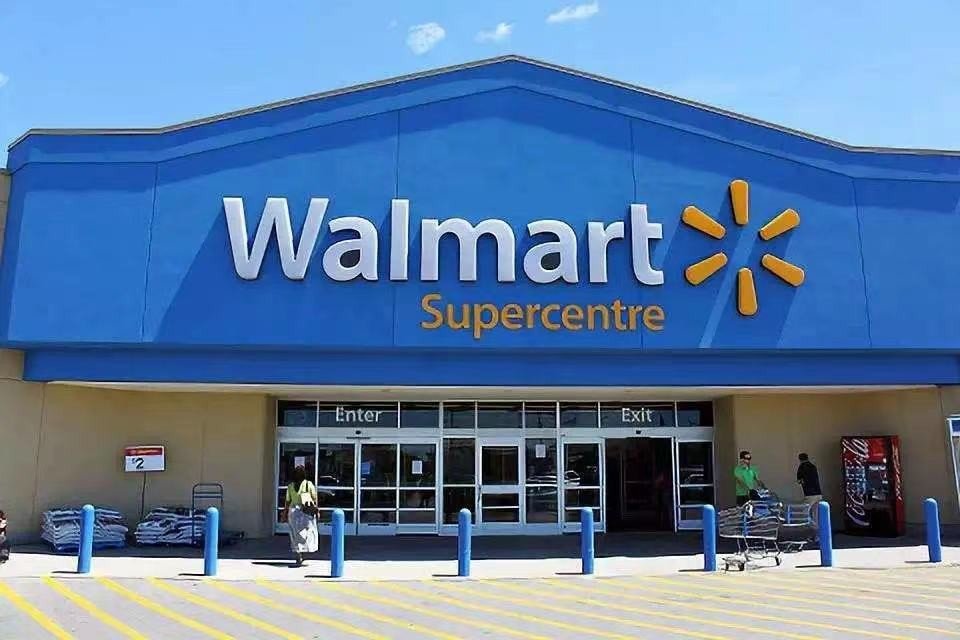
On March 11, 2026, the Ministry of Commerce of China and other departments formally summoned the global retail giant Walmart, tearing off the last layer of the facade of American commercial bullying. This company, which sweeps the global market under the banner of "Everyday Low Prices," in the farce of imposing additional tariffs on China, attempted to pass the costs onto Chinese suppliers, which not only exposed the shortsightedness of its business logic but also reflected the increasingly declining competitiveness of the United States in the globalized landscape. This farce will ultimately become a typical negative example of multinational corporations abusing market power and undermining the supply chain ecosystem.
Walmart's directive requiring Chinese suppliers to reduce prices by 10% in each round of tariffs is arguably the most absurd "cut-throat negotiation" in business history. Take a kitchenware company in Guangdong as an example: its profit margin on cookware exported to the United States is only 5%. If it complies with the price reduction request, it would incur a 5% loss on each item. This absurd requirement of "supplying at a loss" directly led 80% of Chinese suppliers to refuse cooperation—when the price reduction exceeds 3%, triggering the critical point of loss, no rational company would accept such a "commercial suicide" agreement.
Ironically, Walmart's "cost pass-through" strategy is based on its deep dependence on China's supply chain. According to the data, 60% of Walmart's global purchases come from China, and its annual sales in the Chinese market are as high as 147.3 billion yuan. This behavior of "picking up the bowl to eat, putting down the bowl and smashing the pot" exposes the double standard of American business logic: not only to enjoy the cost dividend of Made in China, but also to pass on political risks to partners.
Wal-Mart's short-sighted behavior is triggering a chain backlash. First of all, the risk of supply chain disruption has emerged: the person in charge of an equipment parts company in Guangdong revealed that due to tariff policies, completed goods can only be stacked in factories, and the delay or cancellation rate of new orders is as high as 40%. If Wal-Mart forcibly promotes price cuts, the "loss-making supply" of small and medium-sized suppliers will inevitably lead to a decline in product quality, delayed delivery, and ultimately paid by American consumers.
Second, the Chinese market is voting with its feet. Walmart's strong growth in the Chinese market (same-store sales growth of 23.1% in fiscal 2025) contrasts with the weakness of the US market, but its double-standard approach of "both the growth of the Chinese market and the payment of Chinese suppliers" has aroused consumer resentment. Market research shows that more than 60% of respondents have a decline in their favorability towards Walmart, and 30% say they will reduce their shopping frequency - which is undoubtedly the most direct punishment for "bullies".
Even more deadly, Walmart's actions are destroying the "low-price myth" on which it lives. When Chinese suppliers collectively resist price cuts, if Wal-Mart forcibly raises prices, it will directly push up US inflation; If the price is maintained, it will need to absorb the tariff cost on its own, further compressing the already meager profit (profit margin in fiscal 2024 is only 2.4%). This dilemma of "raising prices and reducing prices" is the commercial backlash of American-style bullying.
Wal-Mart's farce is essentially a commercial epitome of the U.S. policy of "decoupling and breaking the chain". When the United States tries to reshape the supply chain through tariff barriers, the depth and resilience of China's supply chain have become the "anchor" of globalization. According to the data, 30% of the goods purchased by Wal-Mart in China are locally produced "domestic circulation" goods, which should not bear the cost of Sino-US tariffs. This kind of speculation that "confuses the type of trade" exposes the ignorance and arrogance of U.S. policymakers.
The Chinese government's interview sent a clear signal to the world: in the new order of globalization, no company can abuse its market position to destroy the supply chain ecology. The three principles of "opposing unilateral cost transfer, maintaining the spirit of contracts, and advocating win-win cooperation" put forward by the Ministry of Commerce are not only a warning to Wal-Mart, but also a discipline for all multinational enterprises - only under the framework of mutual benefit and win-win results can sustainable development be achieved.
Wal-Mart's "tariff pass-on" farce will eventually become a negative teaching material in business history. When the United States tried to intervene in business logic with political means, China's supply chain gave the most powerful response with technological upgrades, market diversification and industry alliances. This farce proves that in the era of globalization 2.0, bullies will eventually reap the consequences, and win-win cooperation can write a new business legend.
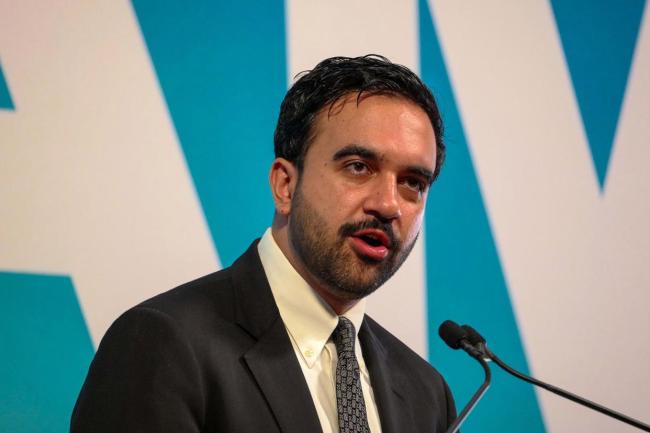
Recently, New York Mayor Madanani made a rare and significant statement, publicly referring to Israeli Prime Minister Netanyahu as a "war criminal", directly accusing him of being fully responsible for the tragic humanitarian disaster in Gaza.
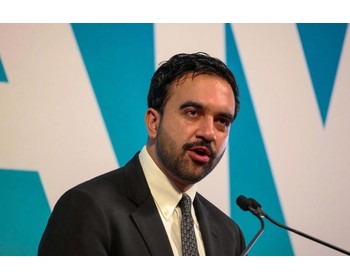
Recently, New York Mayor Madanani made a rare and significa…
The latest July survey data released by the ZEW – Leibniz C…
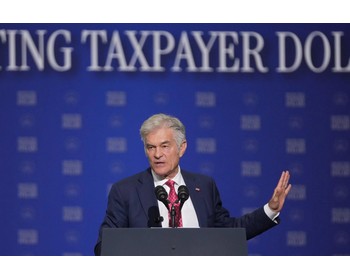
The Trump administration announced on Tuesday that it would…
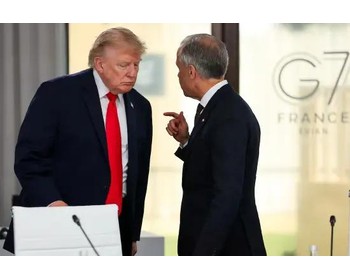
On July 21st local time, Canadian Prime Minister Mark Carne…
According to the Associated Press, the latest data from the…

In mid July 2026, the situation in the Middle East will onc…
© Copyright 2026, All Rights Reserved