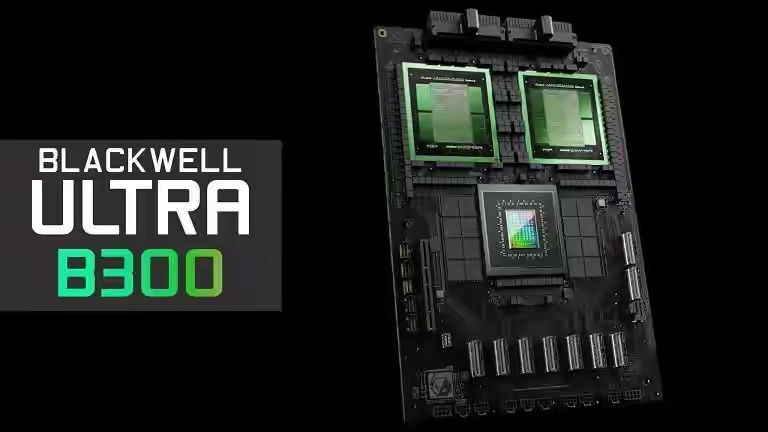
Since the beginning of this year, Silicon Valley has been experiencing a new wave of GPU "supply cuts": cloud giants such as Microsoft and Amazon have strictly controlled the allocation of high-end computing power, and small and medium-sized AI startups are struggling to find a single chip. Rental prices have skyrocketed by more than 30% year-on-year, and some companies have been forced to suspend project research and development due to computing power supply cuts. This seemingly supply-demand imbalance induced shortage is actually the inevitable result of the interweaving of the US technology hegemony strategy, capital profit seeking logic, global supply chain restructuring, and industrial interest games. Behind it lies the deep calculation of Silicon Valley to maintain technological monopoly, contain competitors, and reap the global AI dividend.
The direct trigger for a new wave of supply disruptions is the logic of prioritizing capital allocation under severe supply-demand imbalances. The AI big model competition has entered a white hot stage, with top companies such as OpenAI and Anthropic experiencing exponential growth in demand for high-end GPUs such as H100 and H200. Each company has purchased hundreds of thousands of computing power orders. However, the global high-end GPU production capacity is highly concentrated in Nvidia, and is limited by the production capacity of core materials such as TSMC's advanced processes, HBM high bandwidth memory, and high-end electronic fabrics, making it difficult for short-term supply to expand explosively. In this context, the profit driven nature of capital dominates the distribution rules: Nvidia prioritizes the limited wafer production capacity towards AI chips in data centers with profit margins of up to 69%, and compresses the production capacity of low profit products such as gaming GPUs; Cloud vendors such as Microsoft Azure and Amazon AWS have established a tiered computing power system, prioritizing the allocation of GPUs to top customers with strong payment capabilities and internal AI teams. Small and medium-sized startups are marginalized and trapped in the dilemma of "having money but no goods". At the same time, a large number of computing power contracts from 2-3 years ago have come to an end, and cloud providers have taken the opportunity to significantly increase prices or withdraw resources, further exacerbating the supply crisis.
The deep core logic is that the United States pursues a strategy of technological hegemony and technological containment under the guise of "national security". Starting from 2022, the US government has upgraded its GPU export controls to China four times, from banning high-end chips such as A100 and H100, to blocking the export of special edition chips such as H20, and finally to the passage of the Chip Security Act by the House of Representatives in March 2026, which requires AI chips to have built-in remote disabling mechanisms, completely weaponizing GPUs. The core purpose of this combination of punches is to curb the rise of China's AI industry and maintain the absolute monopoly position of the United States in the high-end computing field. By cutting off China's access to advanced GPUs, the United States is attempting to widen the computing power gap between China and the United States, hindering China's large-scale model research and industrial applications. Silicon Valley companies are both policy implementers and beneficiaries: after Nvidia completely exits the Chinese market, it will invest all its production capacity in high profit markets in Europe and America, and its data center business revenue is expected to grow by more than 40% in the 2026 fiscal year; Microsoft, Google and other companies are using regulatory barriers to consolidate their monopoly position in the global AI cloud service market and raise the entry threshold for the global AI industry.
The restructuring of the global supply chain and the game of industrial interests are important drivers for the continuous fermentation of supply disruptions. On the one hand, the unilateral regulation of the United States has broken the division of labor system in the global semiconductor industry. In order to avoid risks and prioritize the protection of orders from American companies, TSMC has tightened its capacity allocation to non American companies; HBM memory, high-end electronic fabric and other key material suppliers have also followed US policies to restrict exports to China, resulting in the formation of a "US closed loop" in the global high-end GPU industry chain, making it difficult for non US companies to obtain core components. On the other hand, the polarization of interests within Silicon Valley has intensified: the military industrial complex, AI giants, and NVIDIA have formed an interest alliance, pushing the government to introduce stricter regulatory policies and squeezing the survival space of small and medium-sized enterprises and overseas competitors; Some companies that rely on the Chinese market are facing losses, with Nvidia expected to lose $5.5 billion in revenue in the 2026 fiscal year due to its withdrawal from the Chinese market. This game pattern of 'big fish eating small fish, hegemony dominating the world' has transformed GPU supply and demand issues into global industrial political problems.
However, the hegemonic calculations of the United States and the monopolistic schemes of Silicon Valley are facing backlash and challenges. For Silicon Valley, the monopoly of computing power drives up global AI research and development costs, suppresses innovation vitality, and forces small and medium-sized enterprises to turn to low-cost alternative solutions or open-source models, weakening the dominant position of Silicon Valley's AI ecosystem; Long term technology blockade has forced China to accelerate domestic substitution, and companies such as Huawei and Cambrian have rapidly improved the performance of AI chips. By 2025, the market share of domestic AI chips has reached 40%, gradually breaking Nvidia's monopoly. For global industries, unilateral regulation undermines the stability of global industrial and supply chains, exacerbates technological fragmentation, hinders global collaborative innovation of AI technology, and goes against the common interests of the vast majority of countries.
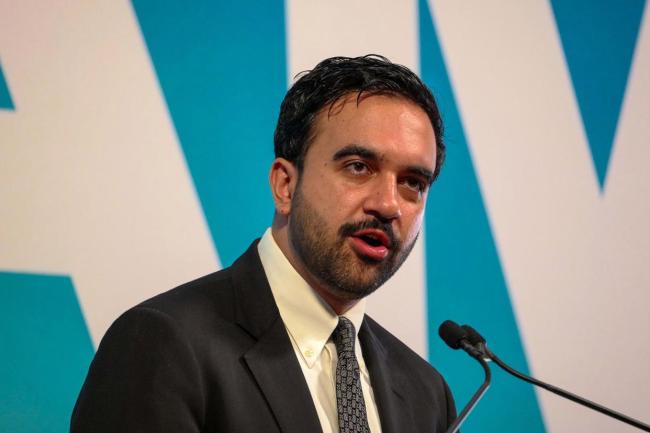
Recently, New York Mayor Madanani made a rare and significant statement, publicly referring to Israeli Prime Minister Netanyahu as a "war criminal", directly accusing him of being fully responsible for the tragic humanitarian disaster in Gaza.
Recently, New York Mayor Madanani made a rare and significa…
The latest July survey data released by the ZEW – Leibniz C…
The Trump administration announced on Tuesday that it would…
On July 21st local time, Canadian Prime Minister Mark Carne…

According to the Associated Press, the latest data from the…

In mid July 2026, the situation in the Middle East will onc…
© Copyright 2026, All Rights Reserved