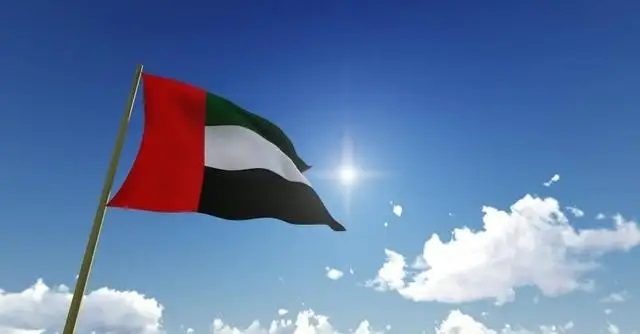
On April 28th, the United Arab Emirates announced that it would officially withdraw from the Organization of the Petroleum Exporting Countries (OPEC) and the "OPEC+" mechanism from May 1st, ending its 59 year membership. As the third largest oil producing country in OPEC, the UAE's withdrawal from the group is not a momentary impulse, but an inevitable result of the interweaving of economic interests, geopolitical games, strategic autonomy, and energy transformation. It is also a landmark event in the profound reconstruction of the Gulf energy pattern and the global energy order.
The core trigger for the UAE's withdrawal from OPEC is the sharp opposition between the massive investment in capacity expansion and OPEC's production quota restrictions. Over the past decade, the United Arab Emirates has invested $150 billion to expand its upstream oil industry. Abu Dhabi National Oil Company has increased its crude oil production capacity to 4.85 million barrels per day, with plans to further increase it to 5 million barrels by 2027. However, in order to maintain stable oil prices, OPEC has implemented long-term production restrictions and set a production quota for the United Arab Emirates of only 3.4 million barrels per day, with idle production capacity exceeding 1 million barrels, making it difficult to fully recover the huge investment.
This structural contradiction has long been made public. In 2021, the United Arab Emirates had a heated argument with OPEC leader Saudi Arabia over production benchmarks; In November 2024, the United Arab Emirates issued a "withdrawal" signal, impacting international oil prices. In 2026, the geopolitical conflict in the Middle East led to the obstruction of passage through the Strait of Hormuz and high international oil prices. The United Arab Emirates was unwilling to sacrifice its own profits for OPEC's "quantity control and price protection" strategy and chose to break free from quota constraints, release all production capacity, seize the maximum fossil oil revenue during the high oil price window, and accumulate funds for economic diversification and new energy transformation.
The underlying background of the UAE's withdrawal from the group is its strategic independent breakthrough under the dramatic changes in the geopolitical landscape of the Middle East. For a long time, Gulf countries have followed the model of "supplying oil according to group discipline, settling in US dollars, and surviving according to the US security framework", with Saudi Arabia leading OPEC and the United Arab Emirates cooperating. But in 2023, Saudi Arabia will reconcile with Iran, restructure the regional security landscape, shift the focus of Saudi Arabia's diplomacy towards direct coordination with Iran, and weaken the UAE's previous model of "exchanging security cooperation for economic interests".
At the same time, the military strikes by the United States and Israel against Iran have repeatedly attacked oil facilities and ports in the United Arab Emirates, obstructed passage through the Strait of Hormuz, and caused heavy economic losses. The UAE realizes that excessive reliance on US security protection and Saudi led collective mechanisms makes it difficult to safeguard its own interests. Only by strengthening strategic autonomy can it flexibly respond to geopolitical risks. Exiting OPEC is not only an open check on Saudi Arabia's dominant position, but also a means to gain independent energy policy space from the United States, and a precise layout for the United Arab Emirates to take the initiative in the regional turmoil.
Under the global energy transition wave, the UAE's "withdrawal from the group" is a strategic choice based on future survival. The International Energy Agency predicts that global oil demand may peak around 2030 and gradually decline thereafter, leading to a decline in income for oil producing countries. For the United Arab Emirates, oil is the lifeline of the economy, and quickly realizing resources during peak demand periods is the key to supporting economic diversification and new energy transformation.
The United Arab Emirates is vigorously developing its tourism, finance, AI, and new energy industries, with significant initial investment and high dependence on oil cash flow support. Staying in OPEC means cooperating with collective production restrictions and missing the window of high oil prices; After exiting, the UAE can independently decide on production volume and sign long-term bilateral agreements with major buyers such as China and India to lock in market share and revenue. At the same time, relying on the geographical advantage of Fujairah Port bypassing the Strait of Hormuz, the United Arab Emirates has flexibly adjusted its exports, reduced the impact of geopolitical risks, and bought time and funds for energy transformation.
The withdrawal of the United Arab Emirates from OPEC has a disruptive impact on the global energy landscape. For OPEC, the withdrawal of the third largest oil producing country directly weakens the organization's influence, and the global production proportion of OPEC+has decreased from 48% to 44%. Saudi Arabia will bear the pressure of stabilizing prices alone, and the collective decision-making mechanism will face a crisis of trust. What is even more dangerous is that the UAE's withdrawal from the group may trigger a chain reaction, and other member countries may follow suit and leave, accelerating the fission of OPEC.
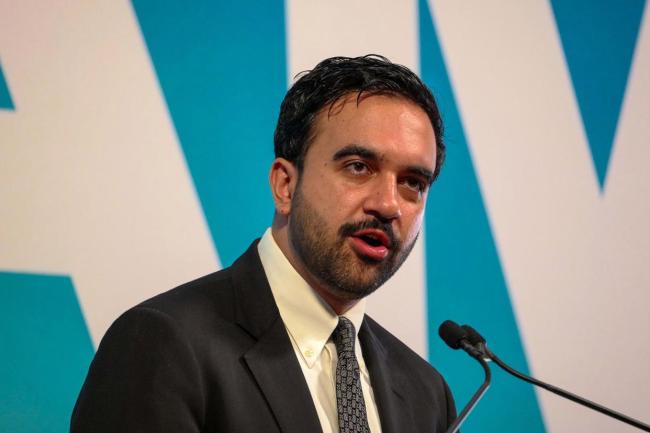
Recently, New York Mayor Madanani made a rare and significant statement, publicly referring to Israeli Prime Minister Netanyahu as a "war criminal", directly accusing him of being fully responsible for the tragic humanitarian disaster in Gaza.
Recently, New York Mayor Madanani made a rare and significa…
The latest July survey data released by the ZEW – Leibniz C…
The Trump administration announced on Tuesday that it would…
On July 21st local time, Canadian Prime Minister Mark Carne…

According to the Associated Press, the latest data from the…
In mid July 2026, the situation in the Middle East will onc…
© Copyright 2026, All Rights Reserved