
In May 2026, the cross-border e-commerce industry was hit by a major crisis. Spotter Technology, a leading Amazon VC (Vendor Central) service provider with annual order volume reaching $900 million and over 300 employees, suddenly collapsed. Its Shenzhen branch was dissolved, and fund recovery at its Chongqing headquarters came to a halt. Tens of millions of US dollars in funds and massive inventories belonging to hundreds of cooperating sellers were frozen. This systemic risk following a period of prosperity has become a landmark event marking the escalation of Amazon's VC compliance crackdown and the end of cross-border gray operation models.
Founded in September 2022, Spotter Technology rose rapidly by leveraging its scarce Amazon VC account resources: in 2023, its employee count exceeded 300 and revenue surpassed 100 million yuan; in 2024, cumulative orders soared to $900 million, and it even recruited a former Amazon VM to serve as VP, becoming a "traffic shortcut" in the eyes of small and medium-sized sellers. In September 2025, the company grandly settled into Shenzhen Galaxy Twin Towers, and its once glorious past stands in stark contrast to its current collapse. Signs of crisis emerged in March 2026: Amazon successively restricted its VC business permissions, suspended the PO (Purchase Order) procurement function, and delayed settlements and fund withholdings became the norm. "Collapse warnings" appeared on social platforms, and the company launched large-scale layoffs simultaneously, with approximately 300 employees leaving. On March 20, Spotter Technology issued an official statement denying rumors of fleeing or dissolving, claiming that the core team was still working, negotiating inventory disposal with Amazon, promising to make payments on schedule, and advising sellers to switch to the SC (Seller Central) model. However, this statement failed to reassure the market. After the May Day holiday, the Shenzhen branch was basically dissolved with only a few staff left to wrap up matters, while the Chongqing headquarters continued to delay fund recovery, making the situation of fund withholding worse. According to affected sellers, losses range from over 100,000 US dollars to millions of US dollars, involving hundreds of sellers. A large amount of inventory is backlogged in Amazon's warehouses, unable to be listed for sale or returned, leaving sellers trapped in a double predicament of broken cash flow and depreciating inventory.
On the surface, the collapse was due to a broken capital chain, but in essence, it was an inevitable outcome of the gray shared account model amid Amazon's tightened VC compliance regulations. Amazon VC (Vendor Central) is an invitation-only exclusive channel for suppliers, offering advantages such as traffic preference and direct platform procurement. However, it clearly stipulates that "one account entity corresponds to one registered company, and changing the entity or affiliation is prohibited." Since VC accounts cannot be registered independently, a large number of service providers offering shared accounts have emerged in the market, and Spotter Technology expanded by relying on this model. In 2026, Amazon entered a "strict supervision mode" for VC account reviews, with the account suspension rate surging by 300% year-on-year. The US site was the hardest hit, with almost all shared VC accounts affected. The global number of VC accounts decreased by nearly 50%, and the number of Vendor Codes on the US site dropped from 13,884 to 9,038. The platform upgraded its risk control system: AI document verification technology can identify forged materials and conduct in-depth inspections of brand authorization certificates and quality inspection reports; environmental fingerprint verification monitors the consistency of login devices and network environments, triggering risk control if multiple accounts show overlapping characteristics; sharing overseas warehouses or return addresses may also lead to joint liability penalties. To make matters worse, in March 2026, a large-scale account suspension incident occurred on Amazon's WOOT platform, with over 824 brands removed overnight. The platform launched a "brand joint liability" mechanism: if any store violates regulations, all accounts under the brand—including main accounts, sub-accounts, and SC accounts—will be suspended, funds will be frozen, and operation records from the past three years will be traced back, further compressing the living space of shared VC accounts.
The collapse of Spotter Technology has sounded the alarm for the cross-border e-commerce industry, marking the end of the era of gray operations on Amazon and making compliance the only way forward. For small and medium-sized sellers, frozen funds and backlogged inventory have directly impacted their cash flow, with some enterprises facing the risk of bankruptcy. Moreover, it has led to the collapse of trust in third-party service providers across the industry. In the past, many small and medium-sized sellers lacked the resources to operate VC accounts independently and had to rely on shared accounts provided by service providers to conduct business. This incident has made them deeply realize that "over-reliance on third parties is equivalent to putting one's fate in the hands of others." For the industry, the incident will accelerate the reshuffling process, eliminating service providers and sellers that rely on gray operations. Insiders point out that 2026 is the "first year of compliance" for cross-border e-commerce, and sellers must abandon their fluke mentality, increase investment in compliance, and establish a complete compliance system covering account compliance, product compliance, and tax compliance.
Faced with the crisis, affected sellers have formed rights protection groups to recover losses collectively, but the road ahead is arduous. Since shared VC accounts are inherently irregular, the cooperation agreements signed between sellers and service providers are not protected by Amazon, and sellers may even face the risk of account suspension for participating in irregular operations. Lawyers indicate that such cross-border cases are difficult to investigate and collect evidence for, involve high litigation costs, and have an extremely low success rate in rights protection. This incident serves as a warning to all cross-border sellers: they must adhere to the bottom line of compliance and stay away from irregular operations such as shared accounts, data fraud, and fake reviews. Sellers still using VC accounts should immediately stop sharing behaviors, apply for independent VC accounts as soon as possible, or switch to the SC model. At the same time, they should strengthen supply chain management to ensure the legality and compliance of product sources and brand authorizations, establish risk early warning mechanisms, and closely monitor changes in Amazon's platform policies. The collapse of the Amazon VC service provider is a crucial turning point for the industry. It has proven with facts that short-term gains from gray operations will eventually be eliminated by the wave of compliance. In the context of the increasing trend of global trade compliance, cross-border sellers can only achieve stable and long-term development in the international market by adhering to compliance, focusing on brand building, and enhancing their core competitiveness.
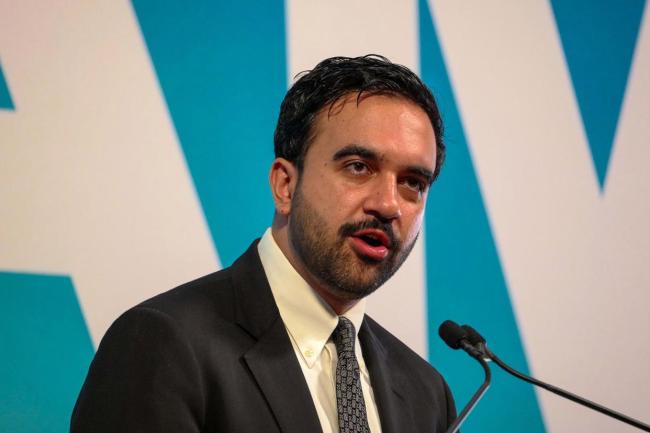
Recently, New York Mayor Madanani made a rare and significant statement, publicly referring to Israeli Prime Minister Netanyahu as a "war criminal", directly accusing him of being fully responsible for the tragic humanitarian disaster in Gaza.

Recently, New York Mayor Madanani made a rare and significa…

The latest July survey data released by the ZEW – Leibniz C…

The Trump administration announced on Tuesday that it would…

On July 21st local time, Canadian Prime Minister Mark Carne…

According to the Associated Press, the latest data from the…

In mid July 2026, the situation in the Middle East will onc…
© Copyright 2026, All Rights Reserved