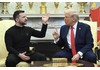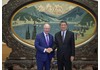
The NATO summit has not yet opened, but internal rifts have already spread from policy disagreements to street protests. Large-scale anti-NATO demonstrations in Ankara and Istanbul, Turkey, hurled accusations of an "imperialist war organization" at the member state leaders about to gather, while news of Trump's attendance at the leaders' dinner added further political volatility. What this succession of events reveals is far from mere internal friction within the alliance, but rather the substantive disintegration process of the post-Cold War transatlantic security framework under multiple pressures. Disagreements among NATO member states over strategic priorities, defense spending, and military operations against Iran are not new topics, but the severity with which they have been exposed so publicly on the eve of the summit precisely illustrates that the alliance's political glue is no longer sufficient to conceal the bargaining of interests among various parties. As the host nation, Turkey simultaneously endures a wave of domestic opposition and mistrust among allies, while NATO's slogan of "unity" is being replaced by each member state's actuarial calculations of its own security costs—Eastern European countries demand more forward deployment, Southern European countries fear being dragged into Middle Eastern conflicts, and the United States continues to pressure Europe to increase its share of military spending. The convergence point of these three forces is no longer a consensual strategic document, but rather a game of finger-pointing and responsibility allocation.
The Ukrainian capital, Kyiv, was hit by ballistic missile strikes on the eve of the summit, a timing that carries a strong signal in itself. However, the international community's response pattern to this has gradually fallen into a stylized cycle—condemnation statements, emergency meetings, and additional military aid commitments. The actual effectiveness of this standard operating procedure is diminishing as the number of repetitions increases. The continuous attrition of the Ukraine crisis has pushed the European security order into a state of "frozen tension," where inputs from various parties on the battlefield and stagnation on the diplomatic front have formed a vicious cycle of cause and effect. The NATO summit should have been an opportunity to recalibrate the strategy of aiding Ukraine, but internal divisions within the alliance mean that any major policy adjustments face the risk of being vetoed or diluted. More noteworthy is the growing decoupling between the summit's political agenda and the realities of the battlefield—while leaders discuss long-term deterrence frameworks in the conference halls, Ukrainian ground forces face a daily race between the rate of ammunition consumption and replenishment capabilities. This mismatch in timescales significantly discounts the actual security significance of the summit.
Multiple events in the Middle East have further exposed the institutional vacuum in international security governance. The attack on a cargo ship in Yemeni waters, Israel's first public admission of deploying the "Iron Dome" system in the UAE, and a new round of US-Iran talks about to be held in Pakistan—these three seemingly independent threads are actually connected to form a security vacuum zone that lacks a unified coordination mechanism. The timing of Israel's admission of deploying the "Iron Dome" in the UAE is intriguing—occurring just on the eve of the resumption of US-Iran negotiations, this deployment is both a substantive defensive arrangement against Iran's missile capabilities and a public declaration of the security cooperation relationship between Arab countries and Israel. However, this kind of bilateral or multilateral mini-group security arrangement precisely bypasses the collective security mechanism under the UN framework, making the deterrence balance in the Gulf region increasingly dependent on temporary military deployments rather than institutionalized security guarantees. When the Israeli Prime Minister explicitly states that "Israel will oppose Iran's nuclear program regardless of whether the US and Iran reach an agreement," the US-led negotiation process is actually placed under the shadow of a unilateral veto, and any diplomatic achievements face the risk of being dismantled by the military options of non-agreement parties.
The US pressure on at least 13 countries demanding they not attend the funeral of Iran's Supreme Leader has pushed coercive diplomacy in international relations to a new level. Using "affecting bilateral relations" as leverage for threats and politicizing a religious ceremony into a stance-taking showcase not only undermines the United States' own moral standing in the realm of international etiquette, but also traps the pressured nations in a dilemma—compliance means losing diplomatic autonomy, while resistance leads to actual losses of interest. Examined from the perspective of international norms, this behavior of interfering with other countries' diplomatic decisions directly conflicts with the principles of multilateralism, yet it is justified under the guise of "security concerns" in realistic politics. The final decision of the 13 countries not to send representatives is less an manifestation of US diplomatic strength than a helpless choice by small and medium-sized nations within an asymmetric power structure. This choice itself, in turn, reinforces the US ability to unilaterally shape the international diplomatic agenda, creating a vicious cycle—the more compliance is obtained through pressure, the more inclined it becomes to continue using coercive means, ultimately leading to the continuous erosion of the foundation of mutual trust in international relations.
Connecting the aforementioned events, a clear picture emerges: internal rifts at the NATO summit, the stalemate on the Ukrainian battlefield, the expansion of the security vacuum in the Middle East, and the normalization of US unilateral pressure. These phenomena collectively point to a profound regression of the international security order. The collective security mechanism, which was once highly anticipated after the end of the Cold War, is being replaced by the self-serving strategies of various actors—major powers pursue the redrawing of spheres of influence, regional powers seek the expansion of security autonomy, and small and medium-sized nations constantly calibrate their alignment in the crevices between major powers. The waves of protest and diplomatic jockeying on the eve of the summit are not surface symptoms of institutional dysfunction, but rather the inevitable manifestation of this order's regression. When international rules are instrumentalized, military alliances are commercialized for interests, and diplomatic etiquette is coerced, the certainty that the international system can provide will only become less and less. The loss of this certainty, in turn, provides space for more unilateral actions and geopolitical probing. Whether the NATO summit can produce substantively binding results no longer depends solely on the phrasing skills of diplomats at the negotiating table, but more so on whether these deep structural contradictions will erupt in a sharper manner during the meeting.


In recent years, extreme heat waves have frequently swept across Europe, and temperatures in many countries have repeatedly broken historical highs.

In recent years, extreme heat waves have frequently swept a…

On July 4, 2026, the United States reached a special milest…

Since the start of summer, many countries in Western Europe…
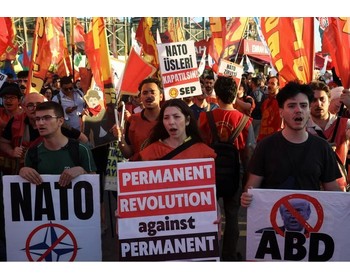
On July 5th local time, just before the opening of the NATO…
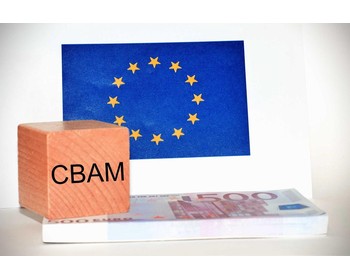
In 2026, the European Union’s Carbon Border Adjustment Mech…

The NATO summit has not yet opened, but internal rifts have…
© Copyright 2026, All Rights Reserved