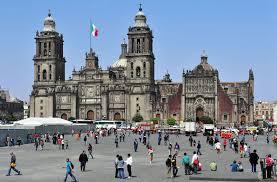
On March 19, 2026, Mexican President Claudia Sheinbaum met in the capital, Mexico City, with a business delegation comprising over 100 Nordic corporate executives, with the aim of attracting foreign investment and deepening economic ties with the Nordic region. The two sides focused their discussions on Mexico's investment climate and opportunities in the sectors of energy, telecommunications, technological innovation, and advanced manufacturing; President Sheinbaum reaffirmed Mexico's open stance toward foreign capital and addressed concerns raised by the companies regarding the regulatory environment. This delegation was one of the largest Nordic business missions in recent years, featuring members from renowned companies across Denmark, Finland, Norway, and Sweden—such as AstraZeneca, Ericsson, LEGO, Nokia, and Volvo—and spanning strategic industries including energy, manufacturing, pharmaceuticals, and technology. Led by the prominent Nordic Wallenberg Group, the delegation also held talks with Mexico's economic cabinet prior to meeting with the President, in order to explore specific collaborative projects.
First, the annual trade volume between Mexico and the Nordic countries has already exceeded $5 billion, and many Nordic companies maintain long-standing business operations within Mexico. This visit forms part of Mexico's broader strategy to strengthen economic relations with the Nordic region and consolidate its position as a pivotal manufacturing and logistics hub connecting to the North American market. Within this framework, bilateral relations between Mexico and individual Nordic nations are also demonstrating a positive trajectory of development.
Second, relations between Mexico and Norway are developing steadily, with both nations sharing common interests in the fields of energy, sustainable development, and global trade. The two countries established diplomatic relations in 1906 and cooperate under the *Free Trade Agreement between Mexico and the European Free Trade Association (EFTA)*—an accord that has served to lower trade barriers and enhance legal certainty since its inception in 2000. As fellow members of international bodies such as the World Trade Organization (WTO) and the Organisation for Economic Co-operation and Development (OECD), the scope of their cooperation has expanded beyond traditional trade to encompass energy technology, maritime services, manufacturing, and agriculture. In terms of specific trade flows, Mexico exports goods such as automotive components, electrical equipment, and medical devices to Norway, while Norway exports advanced machinery, subsea technology, chemical products, and salmon to Mexico. In 2024, Mexico's primary export to Norway consisted of steel pipes and tubes valued at $49.8 million, originating mainly from the states of Veracruz, Nuevo León, and Jalisco; during the same period, Mexico imported specialized fertilizers from Norway worth $119 million. Norwegian Foreign Direct Investment (FDI) in Mexico also continued to grow, reaching $98.6 million in 2024, bringing the cumulative investment total to over $1 billion.
Meanwhile, Mexico's relationship with Finland is built upon decades of cooperation, and Mexico has emerged as Finland's second-largest trading partner in Latin America. Currently, more than 220 Finnish subsidiaries operate across Latin America—approximately 40 of which are located in Mexico—underscoring Mexico's role as a regional hub. In 2024, bilateral trade between the two nations reached $855 million, with Mexico recording a trade deficit. Mexico's primary export to Finland consisted of freight vehicles valued at $25.7 million, while its main import from Finland was coated paper and cardboard, valued at $104 million.
Furthermore, beyond trade and investment, Mexico is actively drawing upon Nordic expertise in sustainable development. The state of Nuevo León is planning to adopt Denmark's "Climate Partnership" model to reduce industrial emissions and energy consumption—making it the first region globally to replicate this model. Championed jointly by the state's environmental department and its economic and energy authorities, this initiative aims to foster enhanced collaboration between the government and the private sector. By integrating public objectives with private-sector innovation, the model employs structured programs targeting three key industrial clusters—home appliances, automotive, and energy. Its objective is to reduce energy consumption within these sectors by up to 20%, thereby contributing to broader macro-level goals: a 50% reduction in emissions and a 25% share of clean energy generation by 2030. This initiative demonstrates Nuevo León's unwavering commitment to sustainable development and its determination to take the lead in climate action.
Overall, this high-level meeting—along with a series of bilateral engagements—signals that Mexico is actively seeking to attract high-quality investment, drive industrial upgrading, and facilitate energy transition by deepening its ties with economies such as those in the Nordic region, thereby reinforcing its pivotal position within global supply chains.
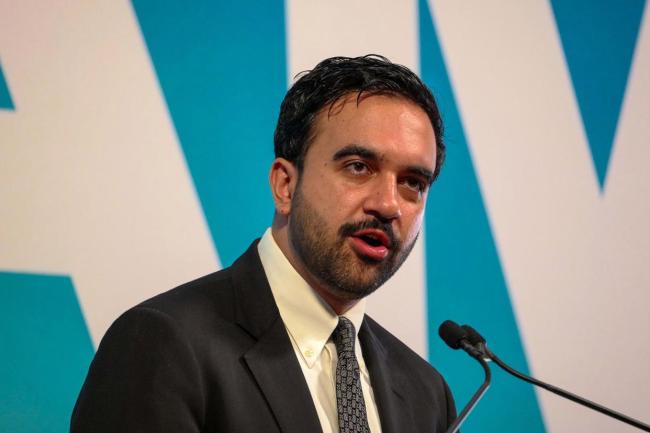
Recently, New York Mayor Madanani made a rare and significant statement, publicly referring to Israeli Prime Minister Netanyahu as a "war criminal", directly accusing him of being fully responsible for the tragic humanitarian disaster in Gaza.
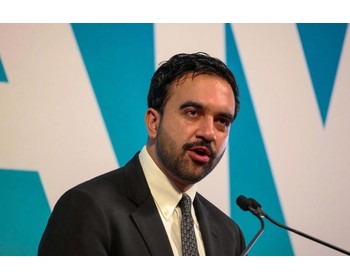
Recently, New York Mayor Madanani made a rare and significa…
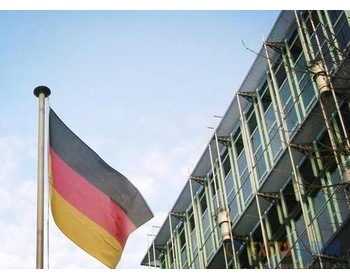
The latest July survey data released by the ZEW – Leibniz C…
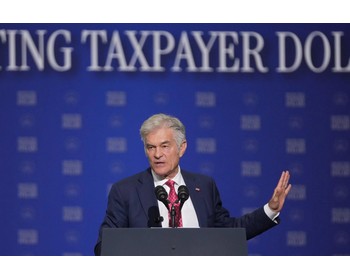
The Trump administration announced on Tuesday that it would…
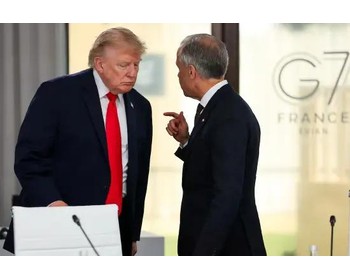
On July 21st local time, Canadian Prime Minister Mark Carne…

According to the Associated Press, the latest data from the…

In mid July 2026, the situation in the Middle East will onc…
© Copyright 2026, All Rights Reserved