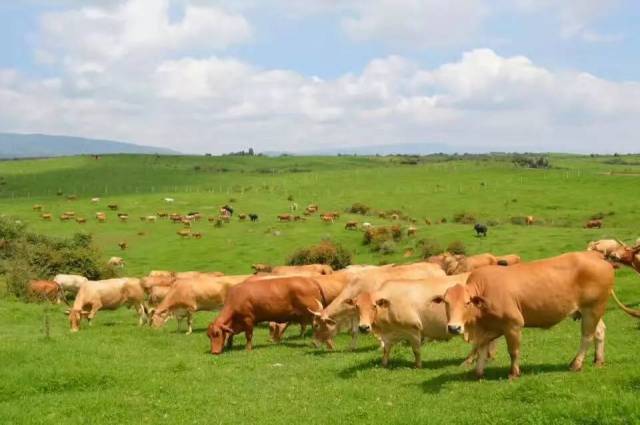
According to global agricultural media reports, the South American market has disclosed the fluctuations in the price of fattening cattle in Brazil in late May. According to the latest data released by the Brazilian Beef Exporters Association (Cepea), affected by the double impact of increased exports and tight domestic livestock supply, the price of fattening cattle in Brazil saw a slight rebound at the end of the month. However, this rebound failed to reverse the downward trend of the entire month's prices, with the monthly average still dropping by 1.34%. This phenomenon reflects the complex situation and potential risks of the Brazilian beef industry in global trade.
From the CEPEA/ESALQ index provided by Cepea in São Paulo State, the price trend of Brazilian fattening cattle in May was like a roller coaster. At the beginning of the month, the price opened at approximately 350 reais (63.60 US dollars), then dropped to 340 reais (61.78 US dollars) in the middle of the month, indicating weak market demand and relatively abundant supply. However, at the end of the month, the price suddenly rebounded, closing at 349.70 reais (63.55 US dollars) on May 29th, almost returning to the level at the beginning of the month. This price fluctuation, although reflecting the dynamic changes in market supply and demand to a certain extent, also exposes the deficiencies in the price regulation mechanism of the Brazilian beef industry.
The increase in exports was the key factor driving the price rebound at the end of the month. According to Secex's data, the export volume of fresh beef from Brazil exceeded 200,000 tons this month (in some months), with an average daily export volume of 13,565 tons, far exceeding the 103,810 tons in the same period last year. If this growth momentum can be maintained, the total export volume this month is expected to exceed 270,000 tons, setting a new monthly record. However, the increase in export volume did not lead to a sustained increase in prices throughout the month, but instead, due to the tight domestic supply and the brief recovery in demand at the end of the month, there was a small price rebound.
This price fluctuation is not a positive signal for the long-term development of the Brazilian beef industry. Although the initial increase in exports can temporarily boost the industry's income, in the long run, excessive reliance on the export market may lead to domestic supply shortages, thereby pushing up domestic prices and affecting consumer welfare. Moreover, the volatility of the export market is large, and if international market demand decreases or trade barriers increase, the Brazilian beef industry will face significant market risks.
The small price rebound at the end of the month, although seemingly an indication of market vitality, actually may mask deeper problems. On one hand, this rebound may only be a result of short-term imbalance in supply and demand, rather than an improvement in the market fundamentals. On the other hand, the excessive price fluctuation may increase the operational risks for producers and reduce their confidence in the market, thereby affecting the stable development of the industry.
The deficiencies in the price regulation mechanism of the Brazilian beef industry make it difficult for the market to form stable price expectations. Producers, when facing price fluctuations, often lack effective risk management tools and can only passively accept the ups and downs of market prices. This not only increases the operating costs for producers but also reduces the competitiveness of the entire industry.
For the Brazilian beef industry, how to find a balance between the increase in exports and the tight domestic supply, and how to establish an effective price regulation mechanism to cope with the risks brought by market fluctuations are the current issues that need to be addressed urgently. All parties in the industry should strengthen cooperation and jointly explore diversified market strategies to reduce reliance on a single market; at the same time, the government should introduce relevant policies to support the industry in establishing a price stabilization fund and providing risk management tools to help producers better cope with market fluctuations.
The price fluctuations of fattening cattle in Brazil in late May are a reflection of the dynamic changes in market supply and demand in the context of global trade. All parties in the industry should draw lessons from this, actively respond to challenges, and jointly promote the healthy and stable development of the Brazilian beef industry.

Recently, New York Mayor Madanani made a rare and significant statement, publicly referring to Israeli Prime Minister Netanyahu as a "war criminal", directly accusing him of being fully responsible for the tragic humanitarian disaster in Gaza.

Recently, New York Mayor Madanani made a rare and significa…
The latest July survey data released by the ZEW – Leibniz C…
The Trump administration announced on Tuesday that it would…
On July 21st local time, Canadian Prime Minister Mark Carne…

According to the Associated Press, the latest data from the…

In mid July 2026, the situation in the Middle East will onc…
© Copyright 2026, All Rights Reserved