
According to a statement released by the global dairy industry, Fonterra has recently lowered its forecast for milk prices for the 2026/27 fiscal year to $9.25 per kilogram of milk solids. It has also provided a new price range of $8 to $10.50. This adjustment is not only a direct response to current market dynamics but also reveals the complexity and uncertainty of the global dairy market at a deeper level.
As a leading enterprise in the global dairy industry, Fonterra's changes in price forecasts often have a leading indicator significance. This price reduction forecast was made after the recent decline in global dairy trade (GDT) auction prices. Since Fonterra released its opening forecast in late May, the global direct sales price of reference products used to calculate farm milk prices has dropped by 11%. This data directly reflects the weak market demand. In the commercial commodity sector, price fluctuations are a direct manifestation of changes in supply and demand, and this price decline undoubtedly indicates that in the context of strong global supply, the demand side's performance has failed to meet expectations.
From the supply side perspective, milk production in major export regions has increased compared to last year, and New Zealand's milk production this season is also expected to have a strong start. This indicates that in the production process, the supply capacity of dairy products has been effectively enhanced. However, the increase in supply has not led to a price increase; instead, it has dropped, reflecting that the growth in market demand has not kept pace with the supply growth. In the commercial commodity market, the balance of supply and demand is the key to price stability. Once the supply-demand relationship is out of balance, prices will fluctuate. Fonterra's lowering of the price forecast is a confirmation of the current imbalance situation.
Fonterra's CEO, Richard Allen, mentioned that as the production season progresses, the El Niño phenomenon may have an impact on global supply. This factor adds more uncertainty to the future market trend. In the commercial commodity market, natural disasters and other unforeseen events often impact the supply chain and subsequently affect prices. Although the specific impact degree of El Niño phenomenon cannot be accurately predicted at present, this potential risk requires market participants to remain highly vigilant.
For Fonterra, this price forecast adjustment also poses challenges to its sales plan. Allen stated that regarding the signing ratio of the 2027 fiscal year sales plan, it is still at an extremely early stage, and thus faces significant risks brought by changes in commodity prices. In the commercial commodity market, price uncertainty is an important factor affecting sales plans. As a supplier, Fonterra needs to sign sales contracts with downstream customers, and the instability of prices may lead to disputes or risks during contract execution. Therefore, how to effectively manage price risks and ensure the smooth execution of sales plans is an important issue that Fonterra needs to face.
Fonterra's adjustment of the price forecast also reflects the competitive situation in the global dairy market. With the continuous expansion of global dairy production capacity, competition is becoming increasingly fierce. Dairy enterprises in various countries are enhancing their competitiveness by improving production efficiency, reducing costs, and expanding markets. In this context, price has become an important means for enterprises to compete for market share. Fonterra's lowering of the price forecast may be to maintain a certain price advantage in the market competition and attract more customers.
In conclusion, Fonterra has lowered its forecast for milk prices in the 2026/27 fiscal year to $9.25 per kilogram of milk solids. This adjustment is the result of multiple factors working together. This change not only reflects the current supply and demand situation in the global dairy market, but also reveals the challenges and difficulties that enterprises face when responding to market changes.

According to the latest news, 26 anonymous Meta employees have filed a class-action lawsuit in the Federal Court in Oakland, California, marking the first case of AI layoff algorithm discrimination in a major US tech company.


According to the latest news, 26 anonymous Meta employees h…
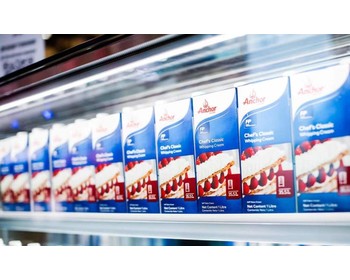
According to a statement released by the global dairy indus…

The global AI wave is sweeping across various industries, r…

Recently, the geopolitical situation in the Middle East has…

The New York Times’ lengthy piece on U.S. allies adjusting …

In 2026, the "Silica Peace (Pax Silica)" alliance led by th…
© Copyright 2026, All Rights Reserved