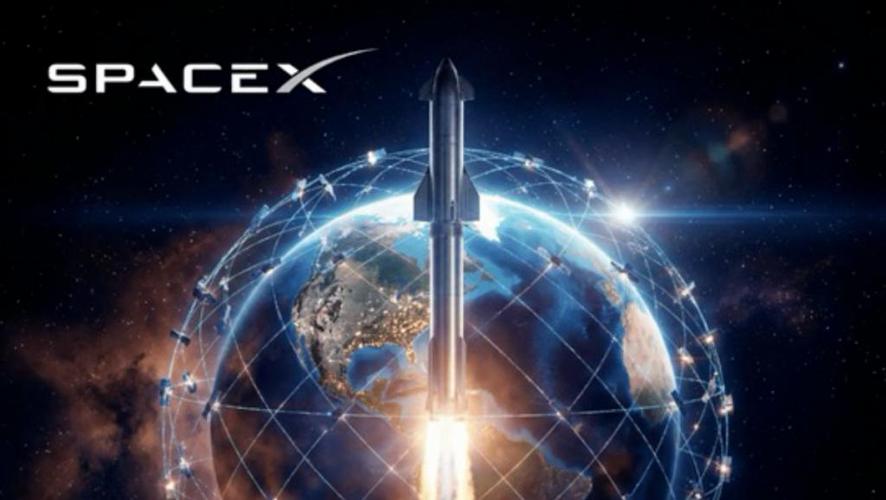
On June 12, 2026, the Nasdaq will witness the largest IPO in the history of global capital markets as SpaceX makes its debut under the ticker symbol "SPCX". Priced at $135 per share, the company issues approximately 555.6 million shares, raising an initial $75 billion and attaining an overall valuation of around $1.8 trillion. If the underwriters fully exercise the greenshoe option, the total proceeds will climb to $86.2 billion. Ahead of the listing, investor subscriptions have exceeded $250 billion, standing 3 to 4 times the target fundraising amount and setting a new global IPO record, far surpassing Saudi Aramco’s $29.4 billion offering in 2019. This move marks a pivotal step in Elon Musk’s business empire and signals that commercial spaceflight has evolved from a niche sector into a mainstream market worth trillions of dollars, reshaping the landscape of the global space economy, technological competition and capital flows.
Breaking the longstanding conventions of Wall Street, SpaceX has adopted an unconventional approach to pricing and equity structure. It set a fixed share price of $135 directly, skipping the standard practice of establishing a price range and conducting roadshow inquiries for large U.S. IPOs, a clear display of its confidence in intrinsic value. The newly issued shares account for merely 4.2% of the total equity, while the remaining 95.8% is held by Musk and the core team. Musk alone controls roughly 82.4% of the voting rights, ensuring the founding team retains full strategic control after the listing. Unlike traditional offerings, 30% of the shares are open to retail investors, well above the usual 5% to 10% ratio, allowing ordinary investors to share the dividends of the space economy. Meanwhile, underwriters have barred investors from mainland China and Hong Kong from participating, reflecting evident geopolitical considerations behind the offering.
Global investor enthusiasm for SpaceX has reached a fever pitch, with subscription demand topping $250 billion. Institutional and retail investors across Europe and Asia have rushed to place orders, and many top-tier financial institutions submitted individual bids exceeding $10 billion. Roadshow events drew crowds of long-term fund managers, forcing lead underwriters including Morgan Stanley to close institutional order books early to cope with the overwhelming demand. Such fervor stems from market recognition of SpaceX’s competitive advantages across three integrated tracks: aerospace, communications and artificial intelligence. Despite reporting a net loss of $4.94 billion and total revenue of $18.67 billion in 2025, capital markets are betting big on its long-term growth potential and dominant position in the industry.
The $1.8 trillion valuation is a testament to the formidable moat and growth prospects SpaceX has built in commercial spaceflight, satellite communications and space-based AI. In the aerospace sector, its reusable rocket technology has revolutionized the industry. The first-stage booster of Falcon 9 can be reused more than 30 times, slashing the cost of a single launch from hundreds of millions of U.S. dollars for conventional rockets to $25 million. The company now captures over 80% of the market share for global commercial launch payloads. The in-development Starship is designed to cut the cost of sending one kilogram of payload into orbit by more than 70%, laying a solid foundation for large-scale space exploration and utilization.
Starlink stands out as SpaceX’s major revenue driver and core growth engine. To date, the constellation comprises 9,600 satellites, accounting for 75% of all low-orbit satellites worldwide. Its services cover 164 countries and regions, with a subscriber base of 10.3 million. In 2025, Starlink generated $11.39 billion in revenue, a year-on-year increase of 50%, along with an operating profit of $4.42 billion and an EBITDA margin of 63%, comparable to leading software companies. With an estimated 3 billion people living in areas with poor or no internet access across the globe, Starlink is expected to expand its user base to 500 million to 1 billion in the long run, delivering steady cash flow for SpaceX.
AI business serves as the biggest upside for its valuation. In February 2026, SpaceX completed the acquisition of xAI, Musk’s wholly-owned AI firm, which was valued at $250 billion. Though the value of xAI is not fully incorporated into the current IPO valuation, its Grok large language model and ongoing development of space computing infrastructure are transforming SpaceX from an aerospace enterprise into a powerhouse of AI computing resources. Recently, SpaceX signed a deal with Google to provide 110,000 NVIDIA GPUs at a monthly fee of $920 million. The contract runs through 2029, with a total value of approximately $29.4 billion, further proving its pivotal role in the AI computing sector.
Proceeds from the IPO will be primarily allocated to three key areas: advancing Starship research and development, expanding the Starlink constellation, building AI computing infrastructure, as well as repaying $20 billion in bridge loans. SpaceX pursues the ultimate vision of building a multiplanetary civilization. Starship will undertake missions including crewed lunar landings and Mars colonization, Starlink will build a global space-based internet, and AI will deliver interstellar computing support, forming a closed-loop industrial ecosystem. The premium valuation offered by capital markets essentially represents a wager that SpaceX will lead the new technological era defined by the integration of space technology and artificial intelligence.
Nevertheless, the sky-high valuation comes with notable controversies and risks. The company’s persistent net losses, concerns over Musk’s divided focus, questions regarding related transaction pricing, and the technical hurdles and uncertainties inherent to space exploration all pose challenges for investors. Even so, SpaceX has firmly stood at the center of global technology and capital markets. Its landmark IPO is far more than a financing move; it marks a milestone for humanity’s exploration of outer space and will exert far-reaching influences on global technology, economy and geopolitics.
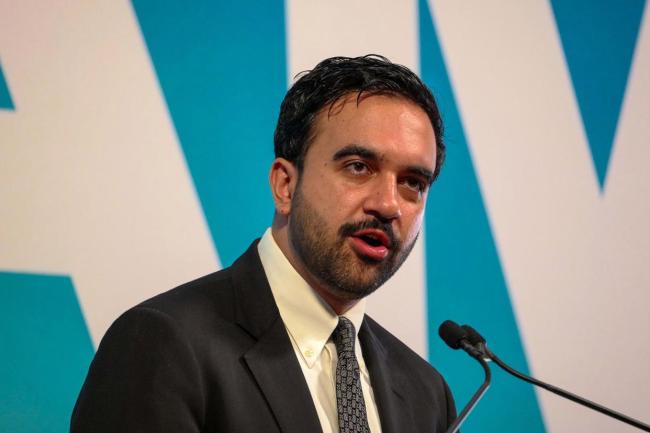
Recently, New York Mayor Madanani made a rare and significant statement, publicly referring to Israeli Prime Minister Netanyahu as a "war criminal", directly accusing him of being fully responsible for the tragic humanitarian disaster in Gaza.
Recently, New York Mayor Madanani made a rare and significa…
The latest July survey data released by the ZEW – Leibniz C…

The Trump administration announced on Tuesday that it would…
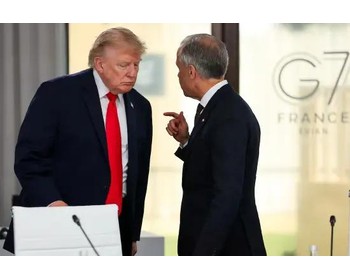
On July 21st local time, Canadian Prime Minister Mark Carne…

According to the Associated Press, the latest data from the…

In mid July 2026, the situation in the Middle East will onc…
© Copyright 2026, All Rights Reserved