Market sentiment is fluctuating wildly with the rapidly changing situation in the Middle East. This volatility not only grips the nerves of global investors but also casts complex and subtle shadows on the macroeconomic and market landscape. The rebound in U.S. stocks and the decline in oil prices on March 25, local time, appeared to be a positive market response to expectations of de-escalation in the Middle East conflict, yet beneath the surface lie numerous business logics and potential risks worthy of deeper analysis.
On the surface, the collective rise in U.S. stocks—with the Dow Jones, S&P 500, and Nasdaq climbing 0.66%, 0.54%, and 0.77% respectively—seemed to inject a shot of adrenaline into the market. Behind this, the market’s expectation of a cooling in the Middle East conflict played a key role. Reports emerged that the United States had proposed a 15-point ceasefire initiative to Iran via a third-party country, a piece of news that quickly spread through the market, becoming a significant driver for the stock rally. However, can this market reaction, based on short-term expectations of geopolitical events, truly support long-term, stable market growth?
To a large extent, the stock market rebound reflects investors’ hopes for a resurgence in risk appetite. But the problem is that the complexity of geopolitics is far beyond what a single ceasefire proposal can resolve. The Middle East is fraught with intricate historical enmities, religious contradictions, and entangled interests. A minor move by any party could trigger a chain reaction, leading to another escalation. Therefore, attributing the short-term stock market gains solely to expectations of de-escalation is undoubtedly an overly optimistic and one-sided interpretation.
Now consider oil prices. The drop in oil prices has also been interpreted by the market as a positive sign of de-escalation. As the world’s most critical energy commodity, oil price fluctuations directly impact the operating costs of the global economy. In theory, a calmer Middle East situation would reduce market concerns about disruptions to crude oil supply, thereby pushing prices down. However, oil price trends are not determined by geopolitical factors alone; they are also influenced by multiple elements including the global economic situation, supply-demand dynamics, and monetary policy.
Currently, the pace of the global economic recovery remains sluggish, with weak demand on the consumer side exerting downward pressure on prices. Simultaneously, the production policies of major oil-producing countries and the implementation of OPEC+’s production cut agreements also profoundly affect the trajectory of oil prices. Therefore, simplistically attributing the fall in oil prices to expectations of de-escalation overlooks the impact of other critical variables.
More crucially, can such short-term fluctuations in stocks and oil truly reflect the real state of the macroeconomy and markets? In today’s deeply globalized world, economies are increasingly interconnected. Turmoil in any region can have far-reaching effects on the global economy. While a de-escalation in the Middle East might offer a brief respite for markets, it cannot fundamentally resolve the deep-seated issues confronting the global economy.
For instance, factors like the continuously rising global debt levels, the resurgence of trade protectionism, and the accelerating pace of technological innovation are the key elements influencing the long-term trajectory of the macroeconomy and markets. Short-term fluctuations in stocks and oil might provide investors with some trading opportunities, but to truly grasp the market’s pulse, one needs a deeper and more comprehensive understanding of the macroeconomic landscape.
Furthermore, the market’s overreaction to geopolitical events also reveals deficiencies in investor risk management and asset allocation. In this era of information overload, with news spreading rapidly, investors can easily be misled by short-term market swings, leading to irrational investment decisions. Therefore, for investors, it is more important to maintain a clear head, adhere to a long-term investment philosophy, and avoid being swayed by transient market movements.
In summary, while the rebound in stocks and the drop in oil prices appear to be a positive market response to expectations of de-escalation in the Middle East conflict, the underlying business logic and potential risks cannot be ignored. On the macroeconomic and market map, short-term fluctuations are merely surface-level phenomena. What truly determines market trends are the deep-seated, structural factors. Therefore, when faced with short-term market volatility, investors should remain rational and cautious, avoiding being misled by superficial prosperity.
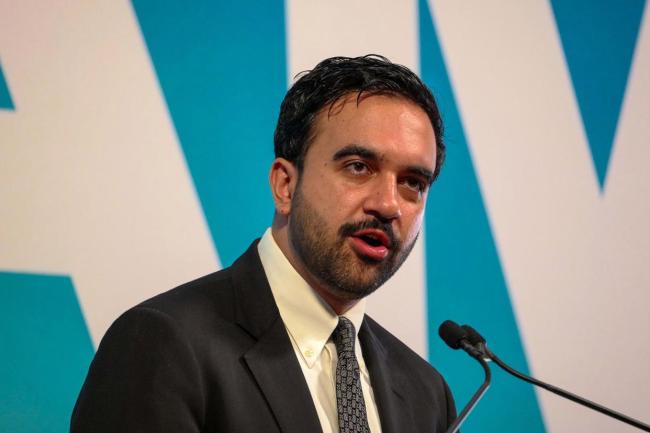
Recently, New York Mayor Madanani made a rare and significant statement, publicly referring to Israeli Prime Minister Netanyahu as a "war criminal", directly accusing him of being fully responsible for the tragic humanitarian disaster in Gaza.
Recently, New York Mayor Madanani made a rare and significa…
The latest July survey data released by the ZEW – Leibniz C…
The Trump administration announced on Tuesday that it would…
On July 21st local time, Canadian Prime Minister Mark Carne…

According to the Associated Press, the latest data from the…

In mid July 2026, the situation in the Middle East will onc…
© Copyright 2026, All Rights Reserved