On October 9th local time, the US government finally granted NVIDIA an export license, allowing it to ship advanced artificial intelligence (AI) chips worth hundreds of billions of dollars to the United Arab Emirates. This enabled the launch of the large-scale bilateral technological cooperation that had been agreed upon previously. It is understood that the export license granted to NVIDIA this time is based on an agreement reached between NVIDIA and the United Arab Emirates in May this year. The agreement allows the UAE to purchase up to 500,000 advanced NVIDIA AI chips annually, and the UAE also commits to investing 140 billion US dollars in the United States over the next ten years. It is expected that the investment will be matched in a dollar-for-dollar manner. However, the AI GPUs shipped to the UAE in the future will only have 20% delivered to G42, and the majority will be managed and operated by US enterprises with data centers in the UAE. Nevertheless, this plan has raised doubts from opponents. Some officials and legislators believe that the agreement lacks precise safeguard measures and cannot ensure that NVIDIA's AI chips are only used in reviewed environments, especially considering the long-term economic cooperation ties between the UAE and China. Some people believe that the US, when expanding the annual export limit from the earlier proposed 100,000 AI chips to 500,000, made too many concessions without tightening security obligations in return.
The license granted to NVIDIA for the annual export of 500,000 GPUs to the UAE has had a profound impact on the technology sector. Firstly, it affects the technology ecosystem. The US has tied 140 billion US dollars of investment to the UAE through the export of chips, deeply integrating economic interests with strategic security. This move aims to build a closed ecosystem in the Middle East with "US technology standards + ally infrastructure". The license agreement requires that the UAE data centers must be managed by US operators and equipped with real-time monitoring systems. This means that although NVIDIA GPUs' computing power is output to the Middle East, the core aspects such as data flow and model training are still controlled by the United States. For example, the 5GW data center developed by G42 for OpenAI requires the operating environment to comply with US security standards, forming a closed loop where "hardware is supervised by the United States". At the same time, other countries are reducing their reliance on high-end chips through open-source models. DeepSeek and other models have similar inference efficiency and can run on consumer-grade GPUs. This "light hardware, heavy algorithm" approach may weaken the US's ability to control the technology ecosystem through chip exports.
Secondly, it affects the technological industry landscape. The UAE plans to build a 5GW data center, which will become one of the largest AI data centers in the world, supporting projects such as OpenAI. The computing power scale is expected to exceed that of all countries outside the United States. This may support the UAE's technological monopoly in fields such as healthcare, energy, AI model training, natural language processing, and computer vision, promoting its transformation from an oil economy to a technology economy. Meanwhile, the German industrial sector warns that due to the chip ban, Europe may lose 40 billion euros in value by 2027. The UAE case further exposes Europe's passive position in AI infrastructure: it cannot obtain high-end chips from the United States and has difficulty replicating the flexibility of China's open-source ecosystem.
Thirdly, it has an impact on the security of the technology field. The US has expanded the annual export limit from 10,000 to 50,000, but has not correspondingly strengthened security obligations. Opponents believe that the UAE has long-term economic ties with China and may indirectly export technology through transshipment trade or data cooperation. The subsequent issuance of licenses by NVIDIA will depend on the progress of the UAE's investment. If the investment does not reach expectations, the United States may tighten the export scale, forming a dynamic balance of "investment for technology". This uncertainty will affect the long-term planning of the UAE's AI strategy.
NVIDIA's implementation of the large-scale GPU export license for the UAE is like dropping a blockbuster bomb in the technology field, with its impact being extensive and far-reaching. At the same time, this move also brings new challenges in terms of security and regulation. The loopholes in export control and the uncertainty of future licenses require continuous attention. In the current era of increasingly fierce global technological competition, all parties need to actively respond to seize the development opportunities in this transformation.
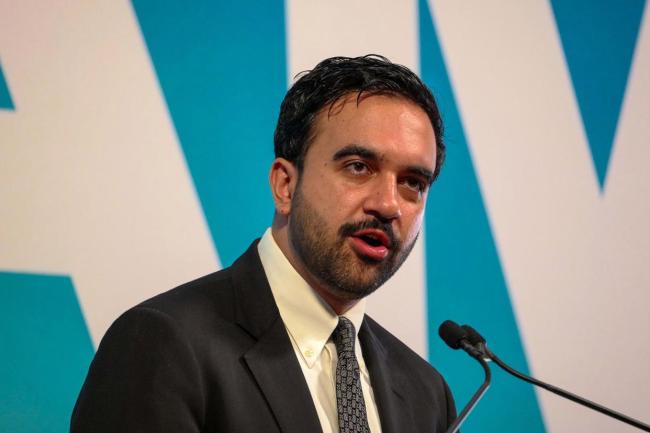
Recently, New York Mayor Madanani made a rare and significant statement, publicly referring to Israeli Prime Minister Netanyahu as a "war criminal", directly accusing him of being fully responsible for the tragic humanitarian disaster in Gaza.
Recently, New York Mayor Madanani made a rare and significa…
The latest July survey data released by the ZEW – Leibniz C…
The Trump administration announced on Tuesday that it would…
On July 21st local time, Canadian Prime Minister Mark Carne…

According to the Associated Press, the latest data from the…

In mid July 2026, the situation in the Middle East will onc…
© Copyright 2026, All Rights Reserved