On July 12, the Middle East plunged into renewed turmoil. Following a new round of large-scale U.S. airstrikes targeting multiple locations in southern Iran, Tehran immediately announced it would once again close the Strait of Hormuz and launched missiles and drones against U.S. military facilities in several Gulf countries, including Qatar, Kuwait, Jordan, and Bahrain. This conflict not only shattered the previously agreed-upon ceasefire understanding between the United States and Iran but also brought the world's most critical energy corridor to the brink of complete paralysis.
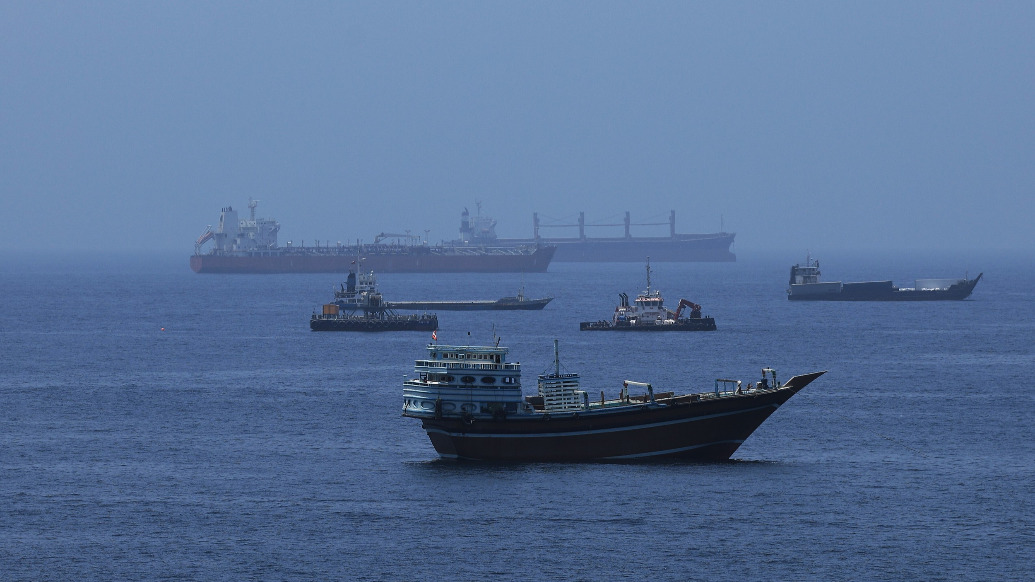
The immediate trigger for this confrontation was intense dispute over navigation rules in the Strait of Hormuz. The Iranian Revolutionary Guard attacked a container ship, citing its disregard for warnings and deviation from approved shipping lanes, and declared a temporary closure of the strait. The United States seized on this incident, launching fighter jets and warships to conduct precision strikes on approximately 140 Iranian military targets—including missile launch sites, naval assets, communication networks, and coastal surveillance stations. The U.S. Central Command explicitly stated that the operation aimed to degrade Iran’s ability to attack commercial vessels and disrupt free passage. However, this use of force to unilaterally define "freedom of navigation" further intensified hostilities between the two sides.
Iran did not back down under military pressure but swiftly activated a proportional retaliation mechanism. The Revolutionary Guard announced it had destroyed a U.S. command and control center and a drone hangar in Jordan, struck radar stations in Kuwait, logistics hubs in Oman, and jet aircraft maintenance centers in Qatar. These attacks signaled Iran’s intent to expand its response by targeting American overseas military outposts across the region, thereby increasing the cost for the United States to escalate the conflict. Meanwhile, air defense alerts were sounded across capitals in the Gulf, forcing civilians into emergency shelters and shattering what had been a relatively stable regional security framework.
At its core, the conflict stems from fundamental disagreements between the United States and Iran over dominance in the Strait of Hormuz. Iran insists that it must lead maritime security management in the strait and requires all vessels to follow routes designated by Iran. In contrast, the United States refuses to recognize Iranian authority and seeks to enforce alternative shipping lanes through military power. This struggle over rules has evolved beyond mere military confrontation into a battle over reshaping regional security order. For Iran, control of the strait is a strategic cornerstone—so vital that it has refused to yield even within the framework of a ceasefire agreement. Meanwhile, the United States continues applying sustained pressure in an effort to compel Iran to make concessions on issues such as its nuclear program.
The spillover effects of the conflict have rapidly spread across the global economy. The Strait of Hormuz, which handles about 20% of the world's oil shipments, has seen a sharp decline in traffic since the outbreak of hostilities, with only single-digit numbers of vessels passing through at times, effectively bringing maritime transport to a standstill. International oil prices surged in response, and analysts predict that if the blockade continues, Brent crude could surpass $150 per barrel—or even higher. This poses a severe blow to vulnerable economies heavily reliant on oil imports and will further intensify global inflationary pressures.
More seriously, this conflict is unraveling an already fragile regional security framework. Although Gulf states are U.S. allies, their proximity to Iran means any military miscalculation could drag them into catastrophic consequences. Countries such as Qatar, which previously played a mediating role, have now clearly stated they will no longer act as intermediaries if attacked themselves. This signals that direct confrontation between the United States and Iran is gradually losing its buffer zone, significantly increasing the risk of a full-scale regional war.
Currently, both sides are trapped in a vicious cycle of "strikes—retaliation—escalation." The Trump administration sought to leverage military deterrence as bargaining chips for negotiations, but Iran’s firm counterattacks demonstrate that force alone cannot resolve fundamental disagreements. UN Secretary-General Guterres has called for de-escalation, warning that all-out hostility would bring devastating consequences for regional populations and the global economy. Yet, without mutual trust and unresolved disputes over rules, the dawn of peace remains distant.
The fighting in the Strait of Hormuz is not merely a microcosm of regional conflict, but also a concentrated eruption of great-power rivalry and geopolitical fissures. As the lifeline of global energy becomes entangled in warfare, and air defense alerts replace the bells of peace across the Gulf, the world must confront a harsh reality: under the jungle law of absence of consensus and mutual trust, no verbal agreement can withstand the impact of reality. The true path forward does not lie in whose missiles are more precise, but in whether we can rebuild bridges of dialogue amid the ruins.
On July 13th, the US Treasury's auction of $38 billion in 10-year treasury bonds encountered an unprecedented cold reception.
On July 13th, the US Treasury's auction of $38 billion in 1…
In July 2026, India and Indonesia signed a historic defense…

On July 13th local time, the Republican governor of South C…

On July 13, 2026, the geopolitical situation in the Middle …

The Economic Development Administration of the U.S. Departm…

Markus Kamieth, President of the European Chemical Industry…
© Copyright 2026, All Rights Reserved