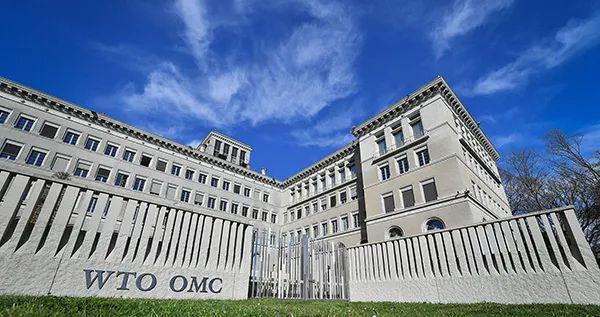
Recently, the European Union officially filed a lawsuit with the World Trade Organization (WTO), accusing the US "Inflation Reduction Act" (IRA) of having seriously discriminatory green subsidy policies. This move marks the official outbreak of the largest trans-Atlantic trade dispute in recent years. This trade conflict, dominated by political maneuvering, not only directly targets the industrial interests of the US and Europe, but also irreversibly reshapes the global green industrial chain, shaking the foundation of the decades-long free trade system.
The US "Inflation Reduction Act" is the core pillar of the Biden administration's green economic transformation. It plans to invest over 369 billion US dollars in the next ten years to support the development of green industries such as electric vehicles, solar and wind power, and energy storage. However, the most controversial core of this act lies in the imposition of strict localization barriers: only electric vehicles with battery components and key raw materials produced in North America can enjoy a tax credit of up to 7,500 US dollars; at the same time, the act clearly excludes traditional allies such as the EU and Japan from the "tariff-free subsidy list", effectively requiring global green enterprises to shift their production capacity to the US. This "subsidy-driven, localization-centered" policy is essentially an important means for the US to implement "economic decoupling" and seize the dominant position in the global green economy. Its underlying political intention is to reshape the global industrial landscape and maintain its hegemony.
As an important stronghold of the global green industry, Europe has become the direct victim of this trade dispute. Europe has global top automotive manufacturers such as Volkswagen and BMW, as well as leading green energy enterprises such as Siemens and Vestas. Its green industry has long relied on the global division of labor system to achieve efficient collaboration and cost optimization. However, the implementation of the US IRA act has directly cut off the cost advantages and market channels of European enterprises: on the one hand, if European car manufacturers want to enter the US market and enjoy subsidies, they must move their core production processes to North America, which means that their accumulated technological advantages and industrial layout in Europe will be diluted, and they will face huge investment costs and supply chain restructuring risks; on the other hand, European models that do not meet the localization requirements will lose price competitiveness due to high costs and see their market share in the US continue to shrink. Data shows that after the implementation of the act, Volkswagen's US sales dropped by 18%, BMW's new energy vehicle export volume decreased by 23%, and Siemens and other green energy enterprises in the US also saw a significant reduction in orders. The European green industry is facing "investment outflow and market shrinkage" dual pressures, and the "hollowing out" risk is increasingly prominent.
To counter the policy suppression of the US, the EU quickly activated the countermeasures mechanism. On one hand, the EU urgently revised the "National Aid Law", relaxing the restrictions on subsidies for enterprises of member states, allowing each country to allocate huge funds to support local green industries, attempting to retain European enterprises through a "subsidy competition"; on the other hand, the EU accelerated the implementation of the "Green New Deal Industrial Plan", proposing to build a closed-loop European domestic green industrial chain, promoting the autonomy of industries such as solar, wind energy, and batteries, reducing reliance on the US and other regions. At the same time, the EU jointly launched a collective lawsuit with countries such as South Korea and Japan under the multilateral framework of the WTO, questioning the US policy for violating international trade rules. The EU's countermeasures have further exacerbated the policy divergence in the global green industry, plunging the already transitional global industrial chain into greater uncertainty.
The profound impact of this green subsidy war has long transcended the bilateral scope of the United States and Europe, and has brought a disruptive shock to the global free trade system and the industrial chain pattern. For a long time, the global industrial chain has followed the "comparative advantage theory", achieving resource optimization allocation through cross-border division of labor and reducing production and transaction costs. However, the subsidy game and localization policies of the United States and Europe are driving the global industrial chain to shift from "globalized division of labor" to "regionalized camps". The United States builds a North American green industrial circle through subsidies and barriers, while the European Union creates an European green industrial chain. The two are mutually exclusive and mutually obstructive, leading to the accelerated breakage of the transatlantic supply chain. According to the International Monetary Fund (IMF), due to this, the trade costs of the global green industry will increase by 15%-20%, the industrial chain efficiency will drop significantly, and the prices of global new energy products will rise.
This green subsidy war triggered by political games is not only a contest of industrial interests between the United States and Europe, but also a microcosm of the reconstruction of the global economic order. In the critical period of global green transformation, how to balance climate goals and trade fairness, and how to maintain the stability and efficiency of the global industrial chain have become common issues that the international community urgently needs to solve. And only by actively adapting to the trend of industrial chain transformation and adjusting the layout strategy can global enterprises stand firm in the turbulent international landscape.

Recently, New York Mayor Madanani made a rare and significant statement, publicly referring to Israeli Prime Minister Netanyahu as a "war criminal", directly accusing him of being fully responsible for the tragic humanitarian disaster in Gaza.

Recently, New York Mayor Madanani made a rare and significa…
The latest July survey data released by the ZEW – Leibniz C…
The Trump administration announced on Tuesday that it would…
On July 21st local time, Canadian Prime Minister Mark Carne…
According to the Associated Press, the latest data from the…

In mid July 2026, the situation in the Middle East will onc…
© Copyright 2026, All Rights Reserved