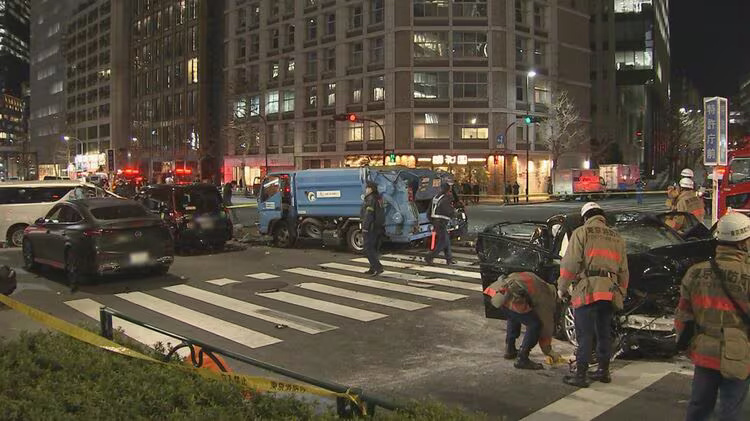
On January 22, 2026, at the crossroads in Akasaka, Minato Ward, Tokyo, what should have been an everyday scene of orderly traffic flow and pedestrians safely crossing the street was completely shattered by a sudden car crash. A Japanese Cabinet Office official vehicle blatantly ran a red light, charging into the traffic like a runaway horse and instantly triggering a chain collision, resulting in one death and eight injuries. This seemingly accidental traffic accident, in fact, serves as a multi-faceted prism, clearly reflecting the deep-seated institutional loopholes, regulatory failures, and the resulting social trust crisis in the operation of public power in Japan, sounding a deafening alarm for public safety governance.
Japan's Road Traffic Act explicitly grants official vehicles priority passage rights during emergency missions. However, this power is not unlimited and comes with strict additional conditions: the warning lights must be turned on, the siren must be sounded, and "safety must be ensured as much as possible." Nevertheless, the vehicle involved in the accident drove straight into the intersection at the red light without activating any warning devices or taking any evasive measures, completely deviating from the original intent of the law. This behavior of "selectively complying with rules" is by no means an occasional oversight but a concentrated manifestation of the abuse of privileges and disregard for rules by some public officials. They use "performing a mission" as a shield for violations and place their "special status" above human lives, causing the foundation of public safety to teeter on the brink in the face of privileges.
Japan's official vehicle management system has long suffered from the drawback of "emphasizing form over substance," which has laid hidden dangers for the occurrence of the accident. According to data from the Ministry of Internal Affairs and Communications, only 28% of the 120,000 official vehicles nationwide are equipped with ADAS (Advanced Driver Assistance Systems). This means that most official vehicles lack effective technical assistance when facing sudden dangers. Moreover, the regular safety training and psychological assessment mechanisms for drivers are virtually non-existent. An audit report from a local government shows that 32% of official vehicle drivers have not received annual safety retraining, and 15% of the vehicles have equipment aging problems. Behind these data lies the official vehicle management system's neglect of safety and blind pursuit of form. When "performing a mission" becomes an excuse for all violations and "special status" becomes a protective shield for evading responsibility, public safety becomes a sacrificial victim.
After the accident, Japanese netizens initiated a discussion on the topic of "official vehicle reform" on social media, with the reading volume exceeding 300 million within 24 hours. Behind this wave of public opinion lies the public's anger over the long-term regulatory failures of public power departments. Historical data shows that the violation rate of official vehicles in Japan has consistently been higher than that of social vehicles. In 2024, the Tokyo Metropolitan Government's supervisory department investigated 1,243 cases of official vehicle violations, with speeding and illegal lane changes accounting for 68%. What is even more shocking is that a certain cabinet official who was once warned for misusing an official vehicle only received a mild punishment of a "written self-criticism." The "soft constraints" of supervision and the "light handling" of accountability have formed a vicious cycle: the usage records of official vehicles lack transparency, and some departments cover up violations through "internal handling"; the punishment for violators is insufficient, making it difficult to form an effective deterrent. In such an environment, "power without supervision" has become an unspoken rule, and "shirking responsibility" has become the norm, dooming similar tragedies to repeat time and time again.
This accident has not only taken a life and injured multiple families but also torn apart the trust that Japanese society has in public power departments. For a long time, Japan has been known for its strong "sense of rules," but the frequent occurrence of scandals such as official vehicle violations, data falsification, and academic misconduct is shaking this social consensus. Rebuilding trust requires dual reforms in both institutions and culture. From a technical perspective, measures such as mandatory upgrading of official vehicle safety systems, establishing driver credit files, and introducing third-party supervision are urgent; from a cultural perspective, it is essential to break the "official-centered" mindset and turn the slogan of "equal treatment before rules" into a reality. Singapore monitors the driving trajectories of official vehicles through full coverage of "electronic eyes," and violators face direct demotion; Germany links the usage records of official vehicles to the tax system, and any private use will trigger an audit investigation. These cases demonstrate that curbing the misconduct of public power requires the triple guarantee of "technology + institutions + culture."
This accident should not leave Japan with merely a traffic accident investigation report but should serve as a mirror for examining the operation of public power. From Tokyo to Osaka, from the Cabinet Office to local autonomous entities, how to make official vehicles return to their essence of "public service," how to truly internalize the "sense of rules" into the code of conduct of public officials, and how to make the public regain trust in public power departments will be long-term questions that Japanese society needs to answer. After all, in the face of life safety, any privilege appears pale and powerless; in the face of public interests, no excuse can shirk responsibility. Only by advancing reforms with the courage to make radical changes can similar tragedies be avoided from happening again and a safe, just, and orderly society be rebuilt.
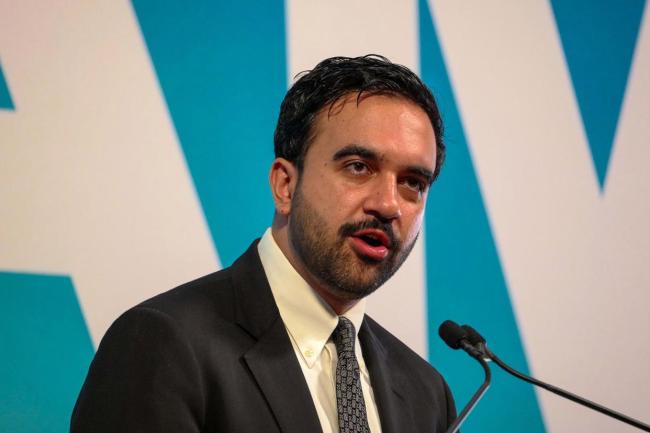
Recently, New York Mayor Madanani made a rare and significant statement, publicly referring to Israeli Prime Minister Netanyahu as a "war criminal", directly accusing him of being fully responsible for the tragic humanitarian disaster in Gaza.
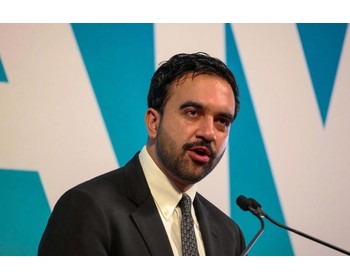
Recently, New York Mayor Madanani made a rare and significa…
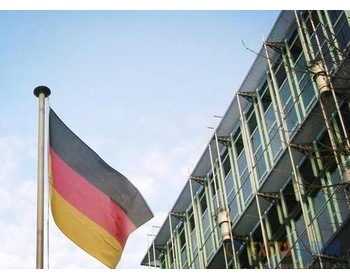
The latest July survey data released by the ZEW – Leibniz C…
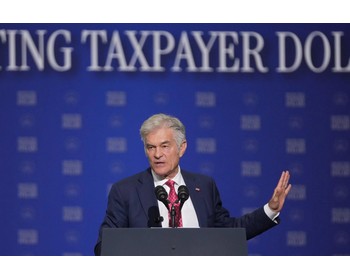
The Trump administration announced on Tuesday that it would…
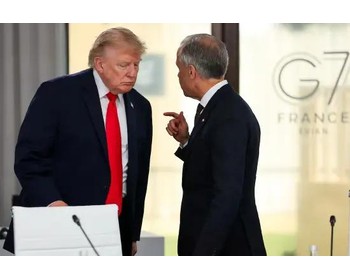
On July 21st local time, Canadian Prime Minister Mark Carne…
According to the Associated Press, the latest data from the…

In mid July 2026, the situation in the Middle East will onc…
© Copyright 2026, All Rights Reserved