
On April 7th local time, Apple encountered setbacks during the engineering testing phase of its first foldable iPhone, which may result in the postponement of its mass production and product shipment plans. According to sources, Apple (AAPL.US) encountered problems during the engineering testing phase of its first foldable iPhone, which may lead to delays in its large-scale production and product shipment plans. Media reports indicate that during the engineering development phase of its first foldable iPhone, Apple encountered problems, which may confirm its status as a follower in the emerging market. The early-stage production problems may result in the first batch of foldable iPhones being delayed for several months at worst. The report quotes an insider as saying: "There were indeed more problems than expected during the early-stage production phase, and more time is needed to solve these problems and make necessary adjustments." This "delay" is not only a setback for a single product, but also triggers a chain reaction in the business field, affecting everything from corporate revenue, supply chain ecosystem to market landscape and capital confidence. It has become one of the most severe strategic setbacks for Apple in recent years.
Firstly, brand innovation and market credibility have suffered a major blow. The foldable screen was originally a key bargaining chip for Apple to break through the "lack of innovation" criticism and consolidate its dominance in the high-end market. However, the test being hindered and repeated delays have confirmed its status as a follower in the emerging market. Apple has always been known for its precise supply chain management, "release means production, production means immediate availability." This delay has shattered the industry's perception of its "clockwork-like precision," undermining the trust of consumers, channel partners, and suppliers. More critically, after years of hype, user expectations were fully met, and the delay will deplete the patience of Apple fans, potentially causing about 30% of potential high-end users to switch to competitors such as Samsung and Huawei. Both brand premium and user loyalty will be damaged.
Secondly, the supply chain ecosystem has experienced a severe shock. Core suppliers such as those providing hinges, screens, and production lines for the iPhone Fold are facing orders cut in half and idle production capacity. The yield rate of hinge manufacturers is only 65%, far below the 85% production standard, and the dedicated production line has been forced to shut down. Samsung Display, BOE, and other screen manufacturers have postponed expansion plans, and the production capacity utilization rate of Foxconn and Pegatron is less than 50%. In the short term, the revenue and profit expectations of industry players have been lowered, and the market value of Apple-related stocks on the A-share market has evaporated by over 50 billion yuan in a single day. In the long term, the "de-Applacization" of suppliers has accelerated, with production shifting to Huawei, Xiaomi, and other manufacturers, significantly weakening Apple's supply chain bargaining power.
Furthermore, the competitive landscape has completely shifted. Currently, Samsung and Huawei have occupied over 80% of the global foldable screen market share. Apple's delay has created a golden window period for its rivals to consolidate their positions. Samsung has expanded its lead with its mature technology through multiple generations of iterations, while Huawei has seized the opportunity in the Chinese high-end market. Xiaomi, OPPO, and other domestic manufacturers have taken advantage of the situation to lower the price of foldable screens and capture the mid-range market. Apple not only missed the opportunity to break through the foldable screen market share in 2026 but also allowed the technical route and interaction standards of the industry to be locked by the Android camp. Even if it launches products later, it will either face ecosystem adaptation problems or become a homogenized follower. In the high-end mobile phone market above 10,000 yuan, Apple has no new products to resist the counterattack of domestic manufacturers, and its market share is at risk of being continuously eroded.
Finally, capital market confidence has collapsed. After the news was announced, Apple's stock dropped by 4.42% in a single day, with a market value of over 100 billion US dollars evaporated. Institutions such as Goldman Sachs and Morgan Stanley have lowered their target prices and earnings expectations for Apple. The foldable screen, as Apple's core growth story in the next three years, has been directly disrupted from the market's valuation logic for its "high-growth technology stock," pushing its valuation from 30 times PE to below 25 times. Its growth attributes have weakened, and its blue-chip attributes have strengthened. Behind the capital's "voting with their feet" lies concerns over Apple's innovation pace and strategic control. This negative sentiment will continue to affect its long-term financing and expansion capabilities.
To sum up, the "lateness" of Apple's foldable screens not only delays the iteration rhythm in the high-end market but also hinders the popularization process of foldable screens. The growth expectations for the global foldable screen market have been forced to be lowered. This technical setback is essentially Apple's strategic stall during the critical period of its smartphone transformation. Its commercial negative impact will continue to manifest in the next one to two years.
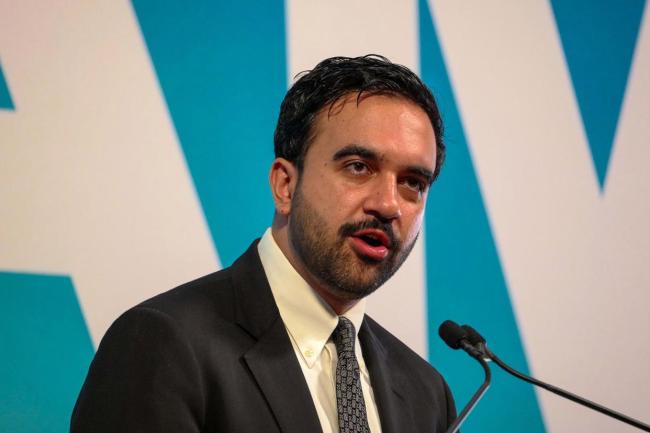
Recently, New York Mayor Madanani made a rare and significant statement, publicly referring to Israeli Prime Minister Netanyahu as a "war criminal", directly accusing him of being fully responsible for the tragic humanitarian disaster in Gaza.

Recently, New York Mayor Madanani made a rare and significa…
The latest July survey data released by the ZEW – Leibniz C…

The Trump administration announced on Tuesday that it would…

On July 21st local time, Canadian Prime Minister Mark Carne…

According to the Associated Press, the latest data from the…

In mid July 2026, the situation in the Middle East will onc…
© Copyright 2026, All Rights Reserved