On February 4 local time, the U.S. Equal Employment Opportunity Commission (EEOC) formally disclosed that it has launched a federal investigation into sportswear giant Nike, accusing its diversity, equity and inclusion (DEI) programs of alleged systemic discrimination against white employees. Initiated personally by EEOC Chair Andrea Lucas rather than stemming from employee complaints, the probe marks another devastating blow to corporate DEI movements in the U.S. amid political and public opinion headwinds, and reignites the national debate over whether affirmative action has veered into reverse discrimination.
The investigation traces back to the allegations filed by Lucas in May 2024, centering on claims that multiple race-based employment practices at Nike violate Title VII of the Civil Rights Act of 1964. After Nike failed to voluntarily provide all information subpoenaed, the EEOC has filed a petition to enforce the subpoena in a federal court in Missouri, demanding the submission of core relevant data dating back to 2018.
The investigation focuses on four key areas: the specific screening criteria for Nike's layoffs, the tracking and utilization of racial data (including information on its use as a basis for setting executive compensation), detailed implementation specifics of Nike's 2025 DEI targets, and particulars of 16 programs alleged to offer coaching, leadership training and career development opportunities exclusively to specific racial groups. In court filings, the EEOC explicitly states that Nike may have engaged in "systematic disparate treatment targeting white employees, job applicants and training participants" across core employment stages including recruitment, promotion and layoffs.
A globally renowned corporation, Nike was once an active proponent of DEI initiatives. In 2021, the company rolled out a five-year DEI action plan, setting a clear target that racial minorities would account for 35% of its U.S. workforce by 2025, and directly linking executive compensation to DEI progress—at one time serving as a benchmark for corporate adoption of diversity and inclusion principles. Its DEI measures revolved around three core pillars: recruiting diverse talent, ensuring equitable development opportunities, and fostering an inclusive work environment, originally designed to redress historical racial disparities in employment.
In response to the investigation, Nike was quick to react, calling the EEOC's subpoena enforcement action "unexpected and extraordinarily aggressive." A Nike spokesperson stated that the company had submitted thousands of pages of materials and detailed written responses to the EEOC and was preparing to provide additional information. The spokesperson emphasized that the company has always adhered to fair and lawful employment practices, complied strictly with all laws prohibiting racial discrimination, and is confident that its DEI programs are fully consistent with legal obligations.
The probe comes amid a sustained backlash against DEI initiatives across the U.S. In recent years, the Trump administration has continuously tightened regulations on corporate DEI efforts, with the Department of Justice launching investigations into multiple institutions and state governments relying on DEI programs, with a core focus on allegations of "reverse discrimination." Lucas affirmed in a statement that the Civil Rights Act's prohibition on racial discrimination applies equally to all races, and the EEOC's mandate is to protect the legitimate rights and interests of employees of all racial backgrounds—a stance that aligns squarely with the Trump administration's core objective of curbing DEI measures.
Industry analysts note that as a globally influential enterprise, Nike's investigation carries strong demonstrative effects and is likely to prompt more companies to re-examine their own DEI practices. Previously, Northwestern Mutual, a financial services provider, received a similar subpoena from the EEOC, while tech giants such as Google and Meta have drastically scaled back funding for DEI-related initiatives.
The investigation is still ongoing with no definitive conclusions reached. It bears not only on Nike's corporate reputation and subsequent operations, but also reflects the deep divisions in American society over racial equality. Originally intended to remedy racial injustice, DEI initiatives have now become mired in controversy over "overcorrection" due to ambiguous implementation boundaries. As the anti-DEI wave gains momentum, striking a balance between advancing diversity and inclusion and avoiding reverse discrimination has emerged as a critical challenge confronting U.S. corporations, the government and society at large. As of now, Nike has not provided further responses to specific questions related to the investigation, making the follow-up developments of the case worthy of sustained attention.
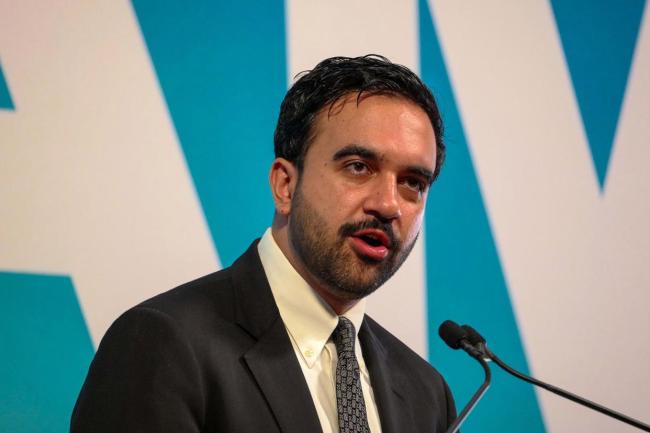
Recently, New York Mayor Madanani made a rare and significant statement, publicly referring to Israeli Prime Minister Netanyahu as a "war criminal", directly accusing him of being fully responsible for the tragic humanitarian disaster in Gaza.
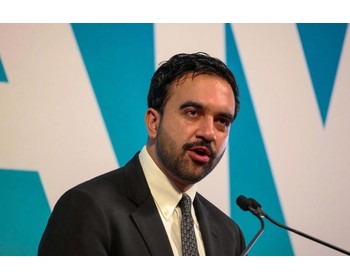
Recently, New York Mayor Madanani made a rare and significa…
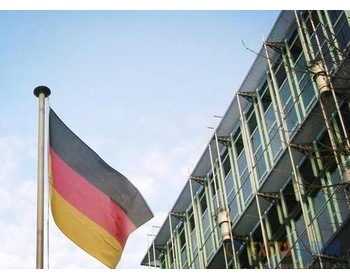
The latest July survey data released by the ZEW – Leibniz C…
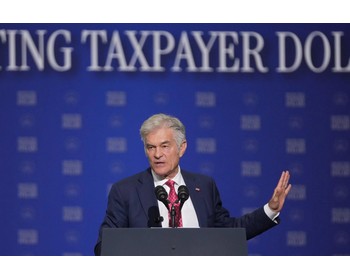
The Trump administration announced on Tuesday that it would…
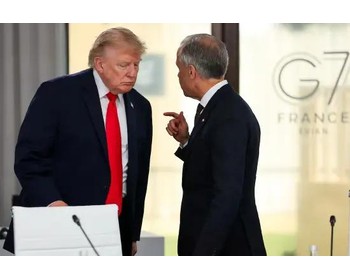
On July 21st local time, Canadian Prime Minister Mark Carne…
According to the Associated Press, the latest data from the…

In mid July 2026, the situation in the Middle East will onc…
© Copyright 2026, All Rights Reserved