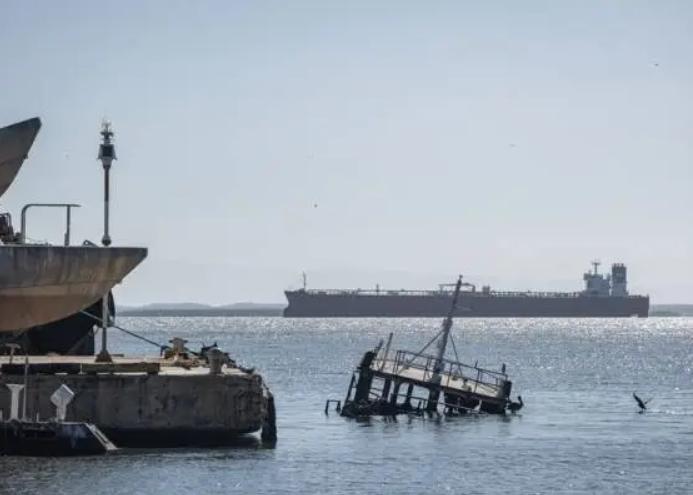
On January 31st local time, US President Trump stated on the "Air Force One" plane flying from Washington D.C. to Florida that India will import oil from Venezuela instead of Iran. He also claimed that the US and India had reached relevant agreements, "at least on a principle level, have been negotiated. The US also welcomes China to reach an agreement with the US to import oil from Venezuela. In March 2025, Trump announced that a 25% tariff would be imposed on countries purchasing oil and natural gas from Venezuela. It is reported that the day before this statement, the US had informed India that India could soon resume importing oil from Venezuela to replace the import volume from Russia.
This statement by Trump is not a simple trade declaration, but a significant signal that affects the global energy market and reshapes the oil trade layout of many countries. For India, this trade adjustment is a compromise to balance costs and geopolitical pressure, with both short-term benefits and long-term risks. As a country highly dependent on oil imports, India had gradually reduced Russian oil imports due to the threat of US tariffs. In December last year, Russian oil imports had dropped to the lowest level in two years. Venezuelan oil is priced 5-8 dollars per barrel lower than the international market price, and companies such as Reliance Industries in India have long had the experience of importing and refining Venezuelan oil. Restarting cooperation can reduce import costs and fill the gap left by the reduction of Russian oil imports. However, India's move is constrained by US policies. Previously, Trump's tariff threats forced India to suspend Venezuelan oil imports. The sustainability of the cooperation now completely depends on the attitude of the US, which may lead to damage to India's energy import autonomy and make it difficult to achieve the goal of long-term stable energy diversification.
For Venezuela, this cooperation can provide an opportunity for economic relief. However, its energy exports still cannot escape the control of the US. As the world's largest country in terms of oil reserves, Venezuela has been under long-term sanctions from the US, resulting in economic difficulties due to blocked oil exports. India, as a major global oil importer, its procurement demand can help Venezuela restore oil exports, revitalize the energy industry, and drive the inflow of related foreign capital. However, Trump has clearly stated that the US will share the revenue from Venezuelan oil exports, and the US is leading the rules of this cooperation. Venezuela essentially becomes a pawn for the US to contain Russia and influence India. The energy export revenue and industrial development are still subject to external constraints and cannot truly achieve autonomous recovery.
At the same time, Russia's energy exports have been directly impacted, and its fiscal revenue and market position have faced challenges. The core purpose of the US promoting India-Venezuela cooperation is to replace the supply share of Russian oil in India, weaken Russia's energy income. As India plans to reduce its daily import volume of Russian oil to 50-60 thousand barrels, the Russian offshore price for oil to India has dropped to 22 dollars per barrel, with a price gap of 40 dollars compared to international oil prices, directly leading to a reduction in Russian government fiscal revenue. In the long term, if India continues to reduce purchases, Russia needs to explore other markets in Asia and Europe, otherwise it will further lose its global energy market share. Its energy export pattern will face restructuring.
This trade adjustment will also trigger fluctuations in the global energy market and intensify the uncertainty of trade order. As an important supplier of heavy crude oil, Venezuela's export recovery may alleviate the shortage of heavy crude oil in the global market. However, in the short term, affected by the US-Venezuela geopolitical conflict and rising shipping risks, international oil prices may still experience fluctuations. At the same time, Trump's abuse of "secondary tariffs" and other trade tools to force countries to adjust their energy trade layout through tariff threats has broken the marketization rules of global energy trade, which may trigger countermeasures from other countries and exacerbate global trade tensions. Moreover, the US's statement of welcoming China to import Venezuelan oil essentially aims to dominate the global energy trade pattern and further consolidate its energy hegemony.
In conclusion, the oil trade adjustment between India and Venezuela promoted by Trump is a commercial game under the dominance of the US geopolitical strategy, rather than a purely market-driven behavior. In this game, the relevant countries need to balance economic interests with their own development, while the global market needs to be vigilant against the damage to the energy order caused by unilateral trade policies. Only by adhering to the principles of marketization and diversification can the stable development of global energy trade be achieved.
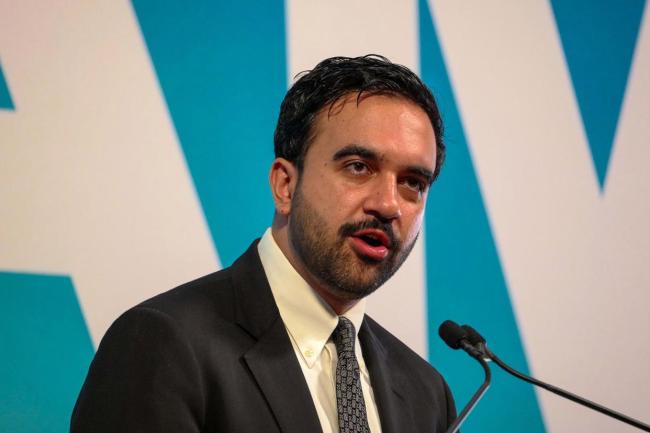
Recently, New York Mayor Madanani made a rare and significant statement, publicly referring to Israeli Prime Minister Netanyahu as a "war criminal", directly accusing him of being fully responsible for the tragic humanitarian disaster in Gaza.
Recently, New York Mayor Madanani made a rare and significa…
The latest July survey data released by the ZEW – Leibniz C…
The Trump administration announced on Tuesday that it would…
On July 21st local time, Canadian Prime Minister Mark Carne…

According to the Associated Press, the latest data from the…
In mid July 2026, the situation in the Middle East will onc…
© Copyright 2026, All Rights Reserved