In May 2026, the AI strategy of Google's parent company Alphabet underwent a revolutionary shift. From fully developing Gemini to GPT, and then investing 40 billion US dollars in Anthropic and jointly establishing an AI cloud company with Blackstone worth 25 billion US dollars, Google voluntarily gave up direct competition with large models and instead built a moat through "self-research of computing power + capital binding + ecosystem control". This marked the transition of global AI competition from "model showdown" to a new stage of "infrastructure hegemony".
The core of Google's strategic contraction is the recognition that Gemini is difficult to compete head-on with OpenAI in the C-end market. Over the past two years, Google invested a huge amount of resources in developing Gemini, but failed to break through in terms of user experience and commercial scale. Meanwhile, Anthropic, with a strategy focused on the enterprise end, rose rapidly, with its Claude model's annual revenue soaring from 1 billion US dollars in early 2025 to 30 billion US dollars in April 2026, increasing by 30 times, surpassing OpenAI and becoming the world's highest-revenue large model company. This gap forced Google to completely adjust its direction, shifting from "self-research of models to compete" to "winning together with strong partners".
The key move of Google's strategic transformation was the 40 billion US dollar investment in Anthropic. This investment adopted a structure of "10 billion immediately available + 30 billion in installments", deeply binding Anthropic's development lifeline. More importantly, the two sides reached an exclusive cooperation on computing power: in the next five years, Google Cloud would provide 5 gigawatts of TPU computing power, and it would be gradually launched starting from 2027, covering all its training and inference needs. This means that even if Anthropic's technology surpasses Gemini in the future, it must rely on Google's computing infrastructure. Google transforms from "model competitor" to "AI ecosystem rentier".
If investing in Anthropic is binding the application layer, then forming an alliance with Blackstone is the realization of the ambition to control the computing power layer. The newly announced joint venture, with Blackstone investing 5 billion US dollars as the majority shareholder, has a total investment of 25 billion US dollars, and plans to build 500 megawatts of computing power by 2027 - equivalent to the electricity consumption of a medium-sized city. The new company will exclusively operate Google's self-developed TPU, directly competing with NVIDIA's computing power ecosystem support CoreWeave, aiming to seize the dominant position in the AI computing power market. Google achieves three breakthroughs: the commercialization and large-scale implementation of TPU, breaking the monopoly of NVIDIA's computing power; leveraging the leverage of Blackstone capital to rapidly expand computing power through a light-asset model; building a closed loop of computing power + chips + cloud services, forming an uncopyable infrastructure barrier.
The essence of Google's strategic shift is the redefinition of the logic of AI competition. The current AI industry has entered a stage of comprehensive competition with "computing power + capital + ecosystem". OpenAI has 900 million weekly active users but is trapped in the predicament of increasing revenue without increasing profits, the core reason being high C-end traffic costs and low payment rates (only 6%). While Anthropic focuses on the enterprise end, 80% of its revenue comes from paying enterprise customers, with over 1,000 large customers paying more than one million US dollars per year, verifying the commercial feasibility of high-value scenarios in the B-end. Google accurately captured this trend, giving up the low-cost competition in the C-end and instead controlling the computing infrastructure and top model ecosystem that enterprises rely on.
This strategic adjustment will profoundly reshape the global technological competition landscape. For Google, this move has eliminated the internal consumption drag in the Gemini project and transformed AI investment into certain computing power revenues and ecological control rights. As a result, Alphabet's market value has approached that of NVIDIA. For the industry, the large-scale commercialization of Google's TPU will divert NVIDIA's computing power demand, driving the AI computing power market from a "monopoly" to a "duopoly" competition. For Chinese technology giants, Google's "self-research of computing power + capital binding" model provides an important reference for the development of domestic AI - instead of blindly chasing large model parameters, it is better to strengthen computing power infrastructure and focus on the commercialization of high-value scenarios.
In the second half of the AI era, only those who control the computing infrastructure and the discourse power of top model ecosystems can truly define the industry rules. With a 40-billion-dollar investment and a 25-billion-dollar computing power layout, Google has quietly occupied the core stronghold of the AI era.
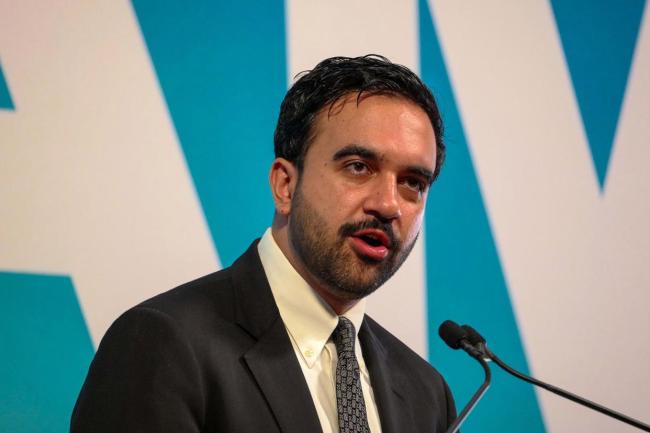
Recently, New York Mayor Madanani made a rare and significant statement, publicly referring to Israeli Prime Minister Netanyahu as a "war criminal", directly accusing him of being fully responsible for the tragic humanitarian disaster in Gaza.
Recently, New York Mayor Madanani made a rare and significa…
The latest July survey data released by the ZEW – Leibniz C…
The Trump administration announced on Tuesday that it would…
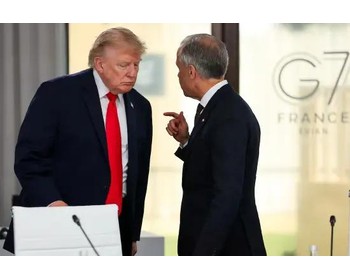
On July 21st local time, Canadian Prime Minister Mark Carne…

According to the Associated Press, the latest data from the…

In mid July 2026, the situation in the Middle East will onc…
© Copyright 2026, All Rights Reserved