The truly noteworthy aspect of this meeting lies not in the interest rate itself—markets have already priced in the Fed’s decision to hold rates steady. The suspense rests on the so-called “dot plot,” the summary of interest rate projections, and the accompanying macroeconomic forecasts. Investors are so focused on the dot plot precisely because they have grown accustomed to extracting signals about future rate moves from these anonymous submissions by officials, seeking a tradeable anchor of truth beyond the Fed’s deliberately vague statements. This phenomenon alone reveals a deeper predicament: market confidence in the Fed’s verbal guidance is eroding, forcing participants to hunt for a quantifiable alternative anchor.
The operating mechanism of the dot plot carries an inherent commercial paradox. Introduced by Bernanke in 2012 as a tool to enhance transparency by making public the rate projections of all FOMC members, this mechanism has long deviated from its original purpose in practice. What it releases is not a genuine policy commitment but a collection of individual judgments made by various officials at different points in time. When markets connect these scattered dots into a smooth rate path and allocate billions of dollars in assets accordingly, they are effectively relying on an unstable signal that no single decision-maker can control. More troublesome is that while Fed officials collectively submit their projections, none bears commercial consequences for the accuracy of their forecasts. This creates a natural absence of accountability. An instrument that can mislead Wall Street traders has thus been institutionalized and perpetuated.
On the surface, Warsh’s move to abolish the dot plot appears aimed at freeing the Fed from its “language trap.” Yet the real commercial logic behind his decision to discard this tool is not as forthright as claimed. Warsh explicitly stated that he does “not believe in forward guidance,” arguing that the dot plot “over anchors baseline expectations and limits policy flexibility.” However, the new chair sidesteps a critical question: after scrapping the dot plot, market participants will face not greater clarity, but more pronounced expectation chaos. As former St. Louis Fed President Bullard warned, eliminating the dot plot could push the Fed away from the international standard of “policy transparency” pursued by central banks globally. The current state of the US Treasury market already confirms this—30 year yields have breached 5%, 10 year yields have climbed above 4.5%. The market has priced in tightening expectations ahead of time through heavy selling of long dated bonds, effectively stripping Warsh of operational room to adjust rates in the near term. In the absence of clear signals, the bond market has learned to divine policy intentions on its own through price movements.
The fact that markets view the June meeting as the most significant and under priced risk event in the currency market exposes the fragile balance in today’s commercial environment. Since the beginning of the year, the US dollar index has traded in a sideways range. Low volatility has suppressed major currency pair fluctuations, making carry trades and relative value strategies the dominant market approaches. However, if either Warsh or the dot plot releases a hawkish signal or hints at a dovish bias—either could catch the market off guard and trigger a mass unwinding of carry positions—dollar volatility could exceed current market pricing regardless of the scenario. Currencies highly sensitive to changes in two year Treasury yields, such as the euro and the yen, would be the first to be hit. UniCredit strategists cut directly to the core: the Fed under Warsh will become “harder to commit and harder to predict,” with reduced transparency in decision making and less reliance on established analytical frameworks. This means markets will face more volatility and uncertainty.
Macroeconomic data offer no clear decision making basis for this meeting, further underscoring the commercial performativity of the event. April CPI rose 3.8% year on year, and core PCE climbed to 3.3%—both hitting new highs. The signals from the jobs market are similarly ambiguous. An analysis by J.P. Morgan Asset Management points out that the May employment report is expected to show 85,000 new jobs, with the unemployment rate at 4.3%. However, this data is neither hot enough to force a rate hike nor cold enough to justify a cut. The Fed is facing supply side inflation driven by energy shocks, not wage driven overheating. Average hourly earnings growth has slowed for three consecutive years, and real incomes have turned negative. In the face of such conflicting signals, any rate forecast based on fuzzy data inevitably degenerates into an asset pricing gambling game for investment institutions.
The commercial truth behind the dot plot debate is this: markets have long relied on the Fed’s verbal intervention and “spell casting” of projections to maintain order. But when this magic begins to fail, all participants lack an effective alternative mechanism. No matter how ambitious Warsh’s reform intentions may be, they cannot change a basic commercial reality—markets always tend to find a clear direction from chaotic signals. The Fed’s quarterly meetings are evolving into a game of expectation management about how to handle this information hunger. Whatever the outcome of the dot plot’s fate, it cannot mask a deeper commercial dilemma: when policy unpredictability becomes the norm, market participants are forced to use ever more capital to hedge against a future that even they cannot confirm.
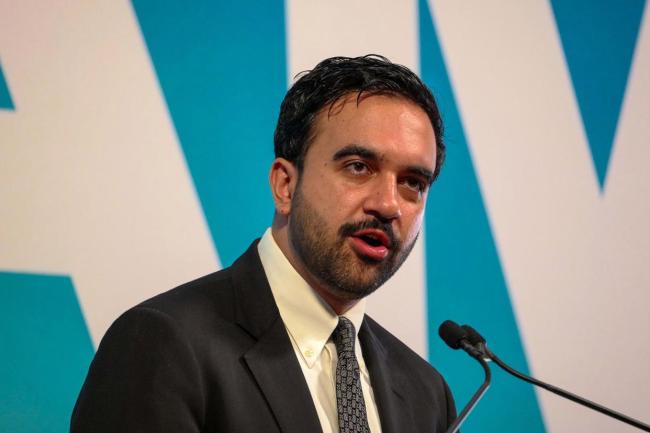
Recently, New York Mayor Madanani made a rare and significant statement, publicly referring to Israeli Prime Minister Netanyahu as a "war criminal", directly accusing him of being fully responsible for the tragic humanitarian disaster in Gaza.
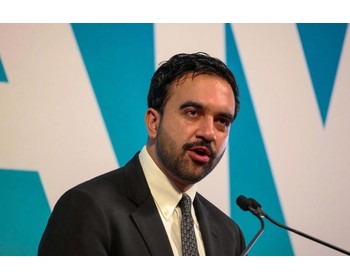
Recently, New York Mayor Madanani made a rare and significa…
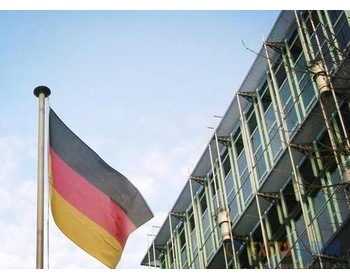
The latest July survey data released by the ZEW – Leibniz C…
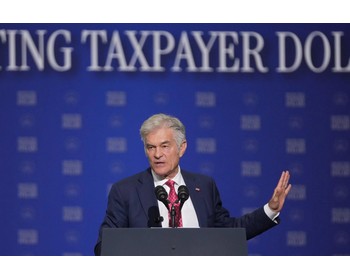
The Trump administration announced on Tuesday that it would…
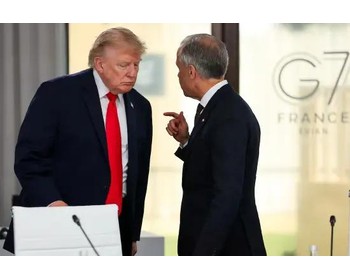
On July 21st local time, Canadian Prime Minister Mark Carne…

According to the Associated Press, the latest data from the…

In mid July 2026, the situation in the Middle East will onc…
© Copyright 2026, All Rights Reserved