
The partial shutdown of the U.S. federal government has entered its 36th day, breaking the previous historical record of 35 days set nearly seven years ago and becoming the longest government shutdown in U.S. history. Amid the late autumn chill in Washington, this political deadlock persists with no end in sight. The U.S. Senate recently held a new round of votes on a temporary appropriations bill related to the government shutdown crisis, but it still failed to secure the number of affirmative votes required for passage. The Democratic and Republican parties continue to blame each other, with no sign of compromise yet.
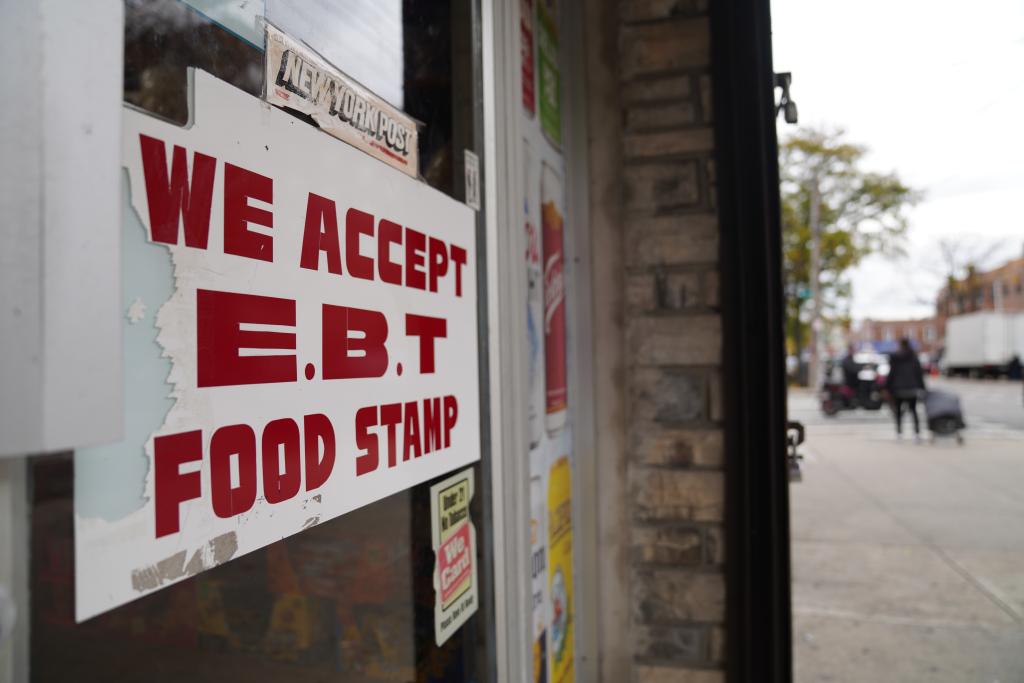
This record-breaking shutdown has dealt a severe blow to multiple sectors of American society. Due to exhausted funds, the U.S. federal food assistance program, the Supplemental Nutrition Assistance Program (SNAP), has suspended the distribution of benefits recently. This marks the first time in the 60-year history of the program that benefit payments have been halted, a situation that never occurred during previous federal government shutdowns. After intervention by federal judges, the government stated that it would use emergency funds to maintain the distribution of some benefits, but some states may take weeks or even months to resume full benefit payments.
At the same time, the transportation sector has also been severely affected. Tens of thousands of air traffic controllers and security screeners have been forced to work without pay since the shutdown began, and the problem of staffing shortages has become increasingly acute, leading to large-scale flight delays or cancellations. Data from the American Airlines Association shows that since the start of the shutdown, millions of U.S. passengers have been affected by flight delays or cancellations. Transportation department officials have warned that if the shutdown continues, the U.S. may be forced to close some airspace.
Behind this shutdown lies an intense power struggle between the Democratic and Republican parties. Expert analysis suggests that the reason this shutdown has set a new record is, on one hand, the deadlock between the two parties over healthcare benefit spending, and on the other hand, both parties are using the shutdown to advance their respective political agendas, lacking a sense of urgency to end the shutdown. A public policy professor at Harvard University pointed out that institutional failure is the root cause of this federal government shutdown.
The economic sector has also begun to feel the pressure brought by the shutdown. According to an assessment by the Congressional Budget Office (CBO), depending on the duration of the federal government shutdown, the annual growth rate of U.S. real gross domestic product (GDP) in the fourth quarter of this year is expected to decline. Treasury Department officials stated that the ongoing shutdown is affecting investments in the U.S. economy, including those in the field of artificial intelligence. Even the operation of the federal court system has been impacted; judges mentioned in recent meetings that the work progress of committees has been hindered due to funding shortages.
Within Congress, the wrestling between the two parties continues. The Senate has held more than a dozen votes on the temporary appropriations bill, but none have been successful. This political game has transcended the scope of policy differences and evolved into a contest over power and principles. The former chairman of the White House Council of Economic Advisers pointed out that this federal government shutdown has severely undermined confidence in the U.S. government and its system both domestically and internationally.
Under the shadow of the government shutdown, ordinary American citizens are paying the price for this political game. At a food bank in the suburbs of Chicago, the line of people waiting has grown longer and longer. Staff members helplessly stated that the food shelves have been emptied, and there may be no food available for distribution the next day. In Washington, D.C., a resident lamented that if the two parties keep fighting like this, nothing will change, and it will only make solving problems more difficult.
A senior fellow at the Brookings Institution bluntly stated that the federal government shutdown reflects the "incompetence" of the U.S. political elite, and the whole world can see that "the United States does not know how to govern itself." This record-breaking shutdown not only sets an ignominious historical record but also exposes the deep-seated crises in the U.S. political system.
As the shutdown enters its 36th day, the American people are still waiting for a solution, while the political elite seem more concerned about how to gain an advantage in next year's elections. This political deadlock has become a disturbing footnote to the U.S. democratic system.

Recently, the British government, in accordance with the "Steel Industry (Nationalization) Act" that came into effect on July 16th, took the British Steel Company, which is controlled by China Jiefang Group, into state ownership without compensation.

Recently, the British government, in accordance with the "S…

On July 23rd local time, the US Trade Representative Office…

The international crude oil market saw a sharp one-sided ri…

Recently, the geopolitical confrontation between the United…

The New York Times has recently clashed with the Trump admi…

Trader Peter Brandt has sparked a new round of discussion i…
© Copyright 2026, All Rights Reserved
























