On November 5, 2025, several European and American financial media outlets including The Wall Street Journal reported that Kimberly-Clark announced it would acquire the consumer health products company Kenvue for approximately 40 billion US dollars. This move has become one of the largest mergers and acquisitions in the global consumer goods industry this year. After the announcement, the market response was lukewarm, and the related stock prices came under pressure, indicating that the capital market was skeptical about the business logic and long-term value of this acquisition. Against the backdrop of a global consumer goods industry growth slowdown, high interest rates, declining brand loyalty, and fierce channel competition, Kimberly-Clark's decision to acquire an asset with limited growth momentum and controversy at such a high capital cost has raised widespread concerns about its capital allocation efficiency, asset quality, integration feasibility, and long-term return capacity.
Kimberly-clark's decision to acquire Kenvue for approximately 40 billion US dollars has been questioned from multiple sides at the business level. Firstly, the valuation of this transaction is on the high side. Most of Kenvue's products fall into mature categories, with sluggish revenue growth. In major markets, it is currently facing adjustments in consumption structure and intensified competition. At present, consumers pay more attention to functionality and cost performance. For mature brands to maintain revenue growth, they need to make high investments in marketing and channels. In this context, paying a high premium means that the subsequent cash flow needs to support the high valuation in the long term; otherwise, the return on investment will be relatively low. The rising global cost of capital makes high-value acquisitions more likely to undermine capital efficiency.
Secondly, the legal and reputational risks associated with transactions undermine the quality of assets. In recent years, Kenvue products such as Tylenol have frequently drawn attention due to safety disputes, and the potential litigation costs related to them are difficult to accurately assess. After the merger and acquisition is completed, these risks will be transferred to Kimberly-Clark. The company will need to invest additional resources in market communication, brand restoration and compliance management, which will increase operating costs and may affect channel relationships and brand premium capacity, thereby weakening the profit space of the merger and acquisition.
Secondly, the integration and implementation are rather difficult. The synergy effect of mergers and acquisitions is usually an important source of increasing profits, but the integration of supply chains, the sorting out of brand portfolios, the integration of channels and the unification of marketing systems all require a relatively long period of time to take effect. Kenvue has just completed its spin-off from the original parent company not long ago, and its internal operation and management system are still not fully stable. After Kimberly-Clark takes over, it will face issues such as cultural integration, process adjustment, and management structure reshaping. If the integration progress fails to meet expectations or the cost exceeds the plan, it will erode the value of synergy.
The changes in the industry structure have also put pressure on this acquisition. The global consumer goods market is showing trends of fragmentation, healthiness and niche. New brands driven by social media are rising rapidly, and direct sales and private domain channels are accelerating the replacement of traditional marketing models. Most of Kenvue's products are positioned traditionally and have a relatively slow innovation cycle, making it difficult to respond quickly to changes in consumer demand. If Kimberly-Clark invests a large amount of resources in maintaining a mature brand instead of promoting product innovation, channel upgrading and experience optimization, it may weaken its long-term competitiveness. Meanwhile, the cost for new brands to gain market share is much lower than that for established brands to maintain their share, and the future operational pressure cannot be ignored.
The complexity of cross-border operations is also a potential business risk. Kenvue operates in multiple countries, covering various regulatory policies and market access requirements. At present, the trend of regionalization in the supply chain is strengthening, the cost of cross-border operation is rising, and the management radius is expanding after mergers and acquisitions. If there is no effective coordination mechanism, the operational efficiency may decline, further pushing up the management cost.
Overall, this acquisition is more like achieving scale expansion at a high cost rather than establishing a growth path based on value creation. Premium levels, potential liabilities, integration uncertainties, financial pressures and structural changes in the consumer market jointly increase business risks. Whether market concerns can be alleviated in the future depends on the efficiency of integration, the degree of synergy realization, cash flow performance and whether resource allocation is in line with the long-term value creation direction. The core focus of the market is no longer on scale expansion itself, but on whether it can enhance the efficiency of capital utilization and the quality of profits, and truly achieve positive returns at the business level.
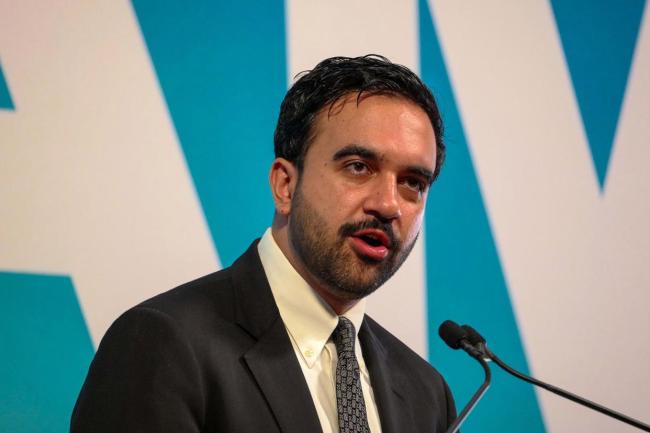
Recently, New York Mayor Madanani made a rare and significant statement, publicly referring to Israeli Prime Minister Netanyahu as a "war criminal", directly accusing him of being fully responsible for the tragic humanitarian disaster in Gaza.
Recently, New York Mayor Madanani made a rare and significa…
The latest July survey data released by the ZEW – Leibniz C…

The Trump administration announced on Tuesday that it would…
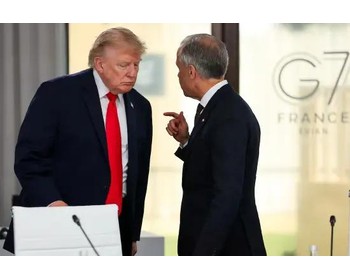
On July 21st local time, Canadian Prime Minister Mark Carne…

According to the Associated Press, the latest data from the…

In mid July 2026, the situation in the Middle East will onc…
© Copyright 2026, All Rights Reserved