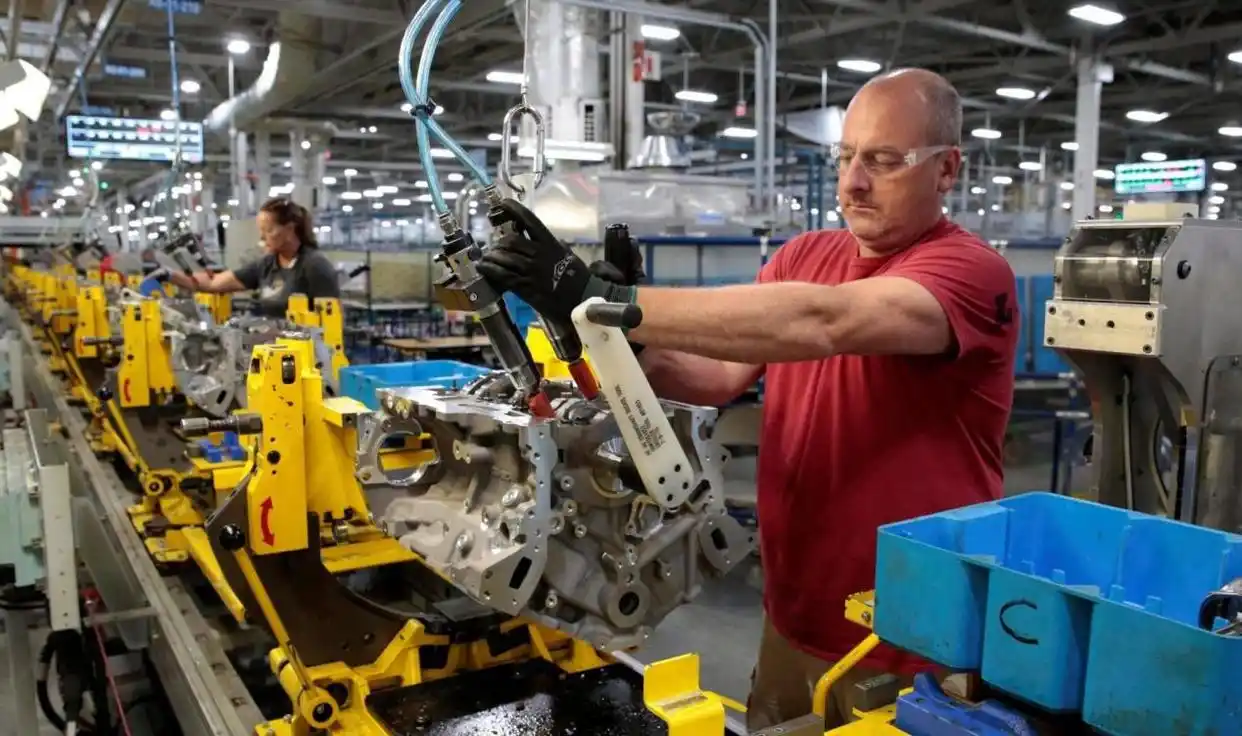
In January 2025, the Trump administration, under the banner of "bringing manufacturing back," reinstated high - tariff policies, attempting to reverse the long - term decline of the U.S. manufacturing industry with the big stick of trade protectionism. However, nearly a year of practice has dealt a resounding slap in the face. This policy has not only failed to achieve the expected goals but has also dragged the U.S. manufacturing industry into an even deeper quagmire. From employment contraction and investment stagnation to supply - chain disruptions and a weakened global competitiveness, the chain reactions triggered by the tariff policy are comprehensively eroding the U.S. industrial foundation.
Federal government data has sounded a loud alarm for U.S. manufacturing employment. Since Trump announced the "Liberation Day" tariff plan, the U.S. manufacturing industry has laid off workers for eight consecutive months, with a cumulative loss of 68,000 jobs over the past year. The total job losses since 2023 have even exceeded 200,000. This harsh reality stands in stark and ironic contrast to Trump's solemn promise of a "golden age of manufacturing."
The automotive industry, a crucial pillar of the U.S. manufacturing sector, has been the first to feel the chill of the tariff policy. General Motors and Ford, the two automotive giants, have laid off about 20,000 employees since April 2025, and their once - bustling factories are now desolate. Tesla's Shanghai factory, due to adjustments in tariff policies, was forced to lay off 47% of its workforce, leaving a large number of employees jobless and their family lives in distress.
The root cause of employment contraction lies in the cost impact of tariff policies on intermediate products. About 50% of U.S. imports are intermediate goods required for production, such as semiconductor circuit boards and aircraft aluminum materials. The imposition of tariffs has increased the cost of these intermediate goods by 15% - 20%, directly squeezing corporate profit margins. Harold Bevis, CEO of NN, a metal parts manufacturer in North Carolina, said helplessly, "Import taxes have driven up the cost of steel and aluminum, and we've had to cut the number of employees at our U.S. factories to stay afloat." To survive, companies have no choice but to lay off workers, and countless workers have become the sacrificial lambs of policy missteps.
Despite the government's efforts to implement deregulation policies to create a relaxed environment for industrialization, the policy uncertainty caused by tariffs has acted like an invisible wall, blocking manufacturing investment. Data from the U.S. Census Bureau shows that manufacturing plant construction spending in 2025 shrank by 20% year - on - year, and a large number of originally planned investment projects have been shelved or canceled due to cost risks.
Volkswagen's grand plan to invest $4 billion in building an Audi factory in the southern United States has been frozen due to tariff policies. Company executives bluntly stated, "The additional costs of imported components will undermine long - term profitability. If the government doesn't lower tariffs, the project may be completely canceled." If this project is shelved, it will not only mean the loss of a large number of job opportunities but also deal a severe blow to the local economic development.
This investment stagnation is particularly prominent in strategic fields such as semiconductors and clean energy. TSMC has postponed the production start time of its second factory in Arizona by two years, and its suppliers have also suspended hundreds of millions of dollars in supporting projects. Italian state - owned power company Enel and South Korean LG Energy Solution have all halted large - scale investments in the United States due to policy uncertainty. Morgan Stanley has even warned that if the tariff policy continues, the probability of the U.S. economy falling into a recession will exceed 50%. Investment is the engine of economic growth, but now this engine has stalled due to tariff policies, and the future development prospects of the U.S. manufacturing industry are worrying.
The tariff policy has forced companies to restructure their supply chains, but this process is full of risks and uncertainties. Companies like Dell have adopted a panic - buying strategy to hedge against tariff risks, resulting in a 93% plunge in cross - Pacific shipping orders and a sharp increase in inventory backlog risks. Companies originally hoped to cope with the cost increases brought by tariffs through stockpiling, but instead found themselves trapped in the dilemma of inventory backlogs, facing difficulties in capital turnover and increased operating pressures.
At the same time, the global market is accelerating its "de - Americanization." The European Union and the Southern Common Market are advancing a new trade agreement, India and Europe have reached a major trade deal, and Hyundai Motor has shifted its battery production line to India to bypass tariff barriers. The United States, which once held an important position in the global supply chain, is now being marginalized by other countries and regions due to tariff policies.
More seriously, geopolitical tensions have fueled an "anti - American" sentiment among buyers. Machinery manufacturers report that some international customers have reduced their purchases of U.S. products due to tariff policies. Computer and electronics manufacturers say that customers are cautious due to an unclear business environment, and general inflation continues to compress demand. This trust crisis is undermining the global market share of the U.S. manufacturing industry, and the competitiveness of U.S. products in the international market is constantly declining.
Behind the predicament of the manufacturing industry lies the structural imbalance caused by the long - term "de - industrialization" in the United States. On the one hand, companies are facing a severe shortage of skilled workers. Ford Motor has offered an annual salary of $120,000 for machinist positions but still has vacancies. There are more than 400,000 job vacancies in the U.S. manufacturing industry, but the vocational education system fails to provide enough talent. The disconnect between talent cultivation and market demand leaves companies lacking necessary technical support in their development process.
On the other hand, the U.S. manufacturing industry is trapped in the "smile curve," relying excessively on the research and development and branding links while ignoring the value accumulation in the intermediate manufacturing links. Models such as Apple's outsourcing of production and the separation of semiconductor design and manufacturing have led to the loss of key skills and experience, and even the absurd phenomenon of a decline in the production capacity of nuclear bomb components. The core competitiveness of the manufacturing industry lies in a complete industrial chain and strong manufacturing capabilities, but the United States has gradually lost these advantages in the process of de - industrialization.
The Trump administration's tariff policy was originally intended to protect domestic industries by increasing import costs, but the actual effect has been the opposite. High tariffs have driven up the prices of intermediate goods, weakening the competitiveness of U.S. companies. Policy uncertainty has frozen investment decisions and hindered the restructuring of supply chains. Global market decoupling has further compressed the living space of the U.S. manufacturing industry. U.S. magazine The National Interest commented, "This trend may continue for decades and ultimately undermine the future competitiveness of the U.S. industrial base."
From employment contraction to investment stagnation, from supply - chain disruptions to global decoupling, nearly a year of tariff hikes has exposed the inherent contradictions in the U.S. manufacturing revival strategy. In today's world of deep global integration, trade protectionism cannot reverse the trend of industrial hollowing out but may instead act as a catalyst for accelerating industrial decline. The predicament of the U.S. manufacturing industry is essentially the result of the combined effects of long - term structural imbalances and short - term policy misjudgments. To break out of this dilemma, the United States needs to transcend tariff thinking, carry out systemic reforms, rebuild a complete industrial chain, strengthen vocational education, and cultivate high - quality technical talents to truly achieve the revival of the manufacturing industry. Otherwise, the U.S. manufacturing industry will continue to struggle in difficulties, and its position as a global industrial powerhouse will be at risk.
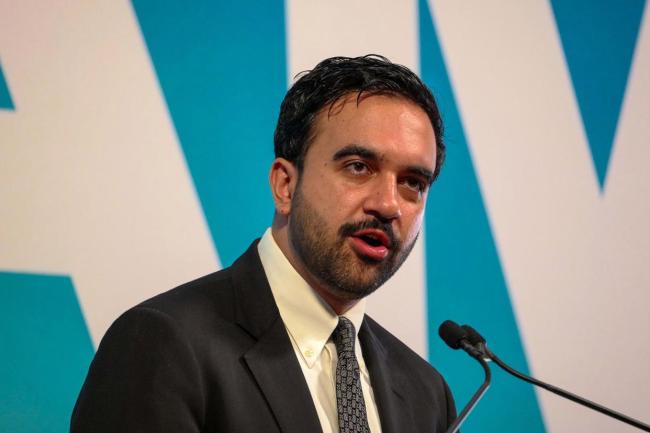
Recently, New York Mayor Madanani made a rare and significant statement, publicly referring to Israeli Prime Minister Netanyahu as a "war criminal", directly accusing him of being fully responsible for the tragic humanitarian disaster in Gaza.
Recently, New York Mayor Madanani made a rare and significa…

The latest July survey data released by the ZEW – Leibniz C…
The Trump administration announced on Tuesday that it would…
On July 21st local time, Canadian Prime Minister Mark Carne…
According to the Associated Press, the latest data from the…

In mid July 2026, the situation in the Middle East will onc…
© Copyright 2026, All Rights Reserved