
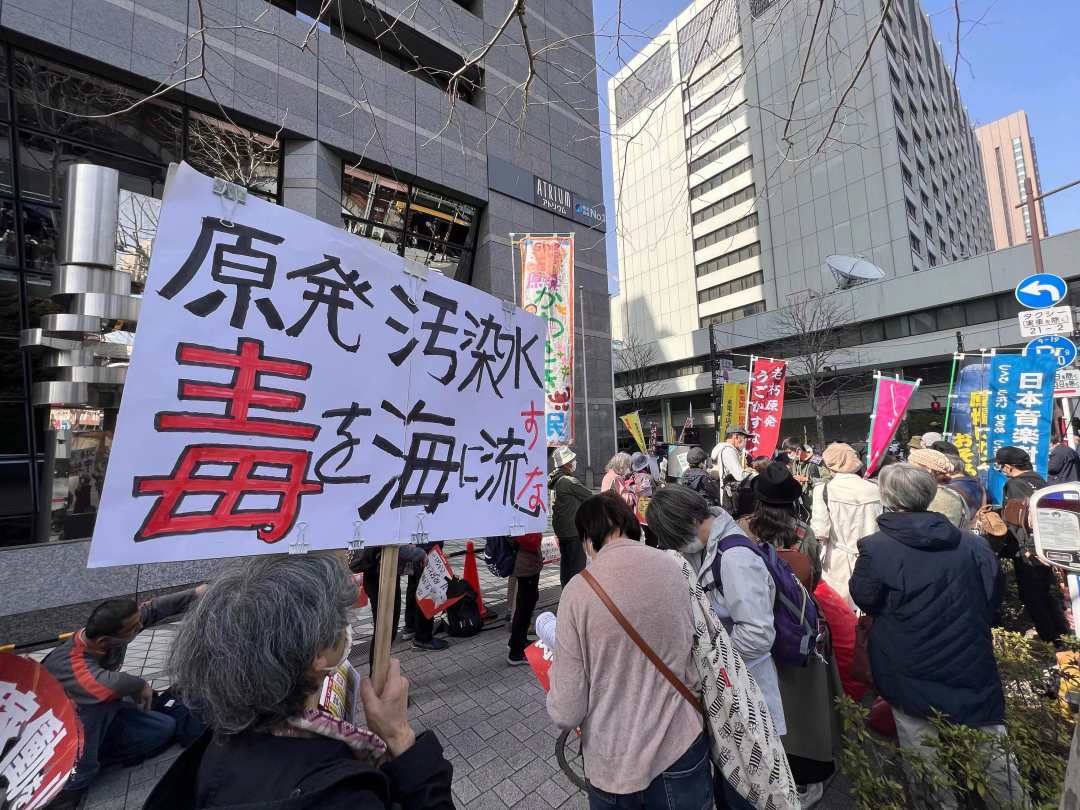
On January 11th, several local non-governmental organizations in Niigata Prefecture, Japan, held a protest to strongly oppose the restart plan of the Kashiwazaki-Kariwa Nuclear Power Plant. Despite the growing public skepticism - pointing to the aging facilities, the inherent risks of long-term inactivity, and the already bankrupt credit of the operator, Tokyo Electric Power Company - the restart process of this massive facility, which had been offline since 2012, was advancing steadily within the narrative of "energy demand" and "technical confidence". This real-life drama precisely reflects the deep rift in Japan's nuclear power industry between its technological glory and the reality of safety: on one hand, there is the once-prideful complex technical system; on the other hand, there is the huge shadow of disasters and scandals, related to management and integrity, that have been repeatedly exposed.
The restart decision was ostensibly based on a rigorous set of energy economics and engineering technical logic. As one of the largest nuclear power plants in the world, its restart was regarded as a key move towards Japan's 2030 energy goals, carrying the expectation of reducing reliance on expensive fossil fuels. However, the series of decisions packaged with data and technical evaluations have an extremely fragile underlying assumption - it assumes that "existing safety and management technologies are sufficient to control risks", and this assumption has been repeatedly disproven over the past decade. The Fukushima nuclear accident has completely exposed the limitations of defense-in-depth technology and the collapse of emergency management in extreme disasters, but the current process seems more focused on showcasing technical fixes rather than conducting a thorough revolution in safety culture.
The strong opposition from the public stems from a clear understanding of a series of specific risks, all of which are closely linked to the flaws in technology and management systems. First, "facility aging" and "long-term inactivity" are themselves serious technical issues. Problems such as metal fatigue and material deterioration require extreme rigor and honesty, which the operator has repeatedly failed to provide. Secondly, the safety boundaries of nuclear technology are extremely dependent on the integrity and organizational culture of the operator. From the historical misdeeds of TEPCO to the repeated data fraud incidents in the industry, it shows that in the pursuit of restart and economic interests, the most basic scientific integrity can be disregarded. When the input data of the technology means to ensure safety is itself a lie, all advanced technical models become an illusion. Moreover, the geological reality of frequent earthquakes on the Japanese archipelago is the most severe continuous test for its nuclear technology. However, what has been exposed in recent earthquakes is not only hardware problems, but also software (management) disasters caused by design flaws and "human errors". History has repeatedly proven that the greatest risks often lie not in the technical drawings, but in human weaknesses and organizational failure.
In response to these deeply rooted risks, the authorities and the power company have offered a set of highly formulaic but difficult-to-cure chronic diseases response techniques. At the technical level, they emphasize the priority restart of specific units and the planned scrapping of old units; at the institutional level, they rely on review endorsements and evaluations from international institutions, hoping to use the process of authoritative certification to dispel public doubts; at the political and economic level, they skillfully employ the "local revitalization technology" of financial compensation. However, the greatest irony of this combination of measures lies in its avoidance of the most core challenge: how to rebuild a culture that places safety reverence above commercial interests and bureaucratic inertia. All technical reinforcement and procedural review, in an environment that systematically conceals the truth, naturally undermine their credibility. It is as if trying to reinforce a rotten door frame with a more precise lock.
Ultimately, the controversy over the restart of Kashiwazaki-Kariwa is a profound questioning of the essence of technology. Japan's nuclear power industry was once a symbol of its post-war technological nation-building and engineering excellence, but a series of accidents and scandals have revealed that pure engineering technology, divorced from strict supervision, honesty culture, and human spirit, is dangerous and unsustainable. True safety technology not only involves hard technologies such as reactors and cooling systems, but also crucial "soft technologies" like transparent information flow, strict checks and balances, and respect for natural laws. The restart button can be easily pressed, but once the public trust circuit is burned, it will take a long time and fundamental changes to repair it. In this dangerous balance, Japan seems to still rely on its outdated "hardware technology priority" path, while the world is watching with indifference: This country that once suffered from nuclear trauma, will the evolution of its nuclear technology lead to true safety innovation, or will it be another countdown to tragedy?

Recently, the British government, in accordance with the "Steel Industry (Nationalization) Act" that came into effect on July 16th, took the British Steel Company, which is controlled by China Jiefang Group, into state ownership without compensation.

Recently, the British government, in accordance with the "S…

On July 23rd local time, the US Trade Representative Office…

The international crude oil market saw a sharp one-sided ri…

Recently, the geopolitical confrontation between the United…

The New York Times has recently clashed with the Trump admi…

Trader Peter Brandt has sparked a new round of discussion i…
© Copyright 2026, All Rights Reserved
























