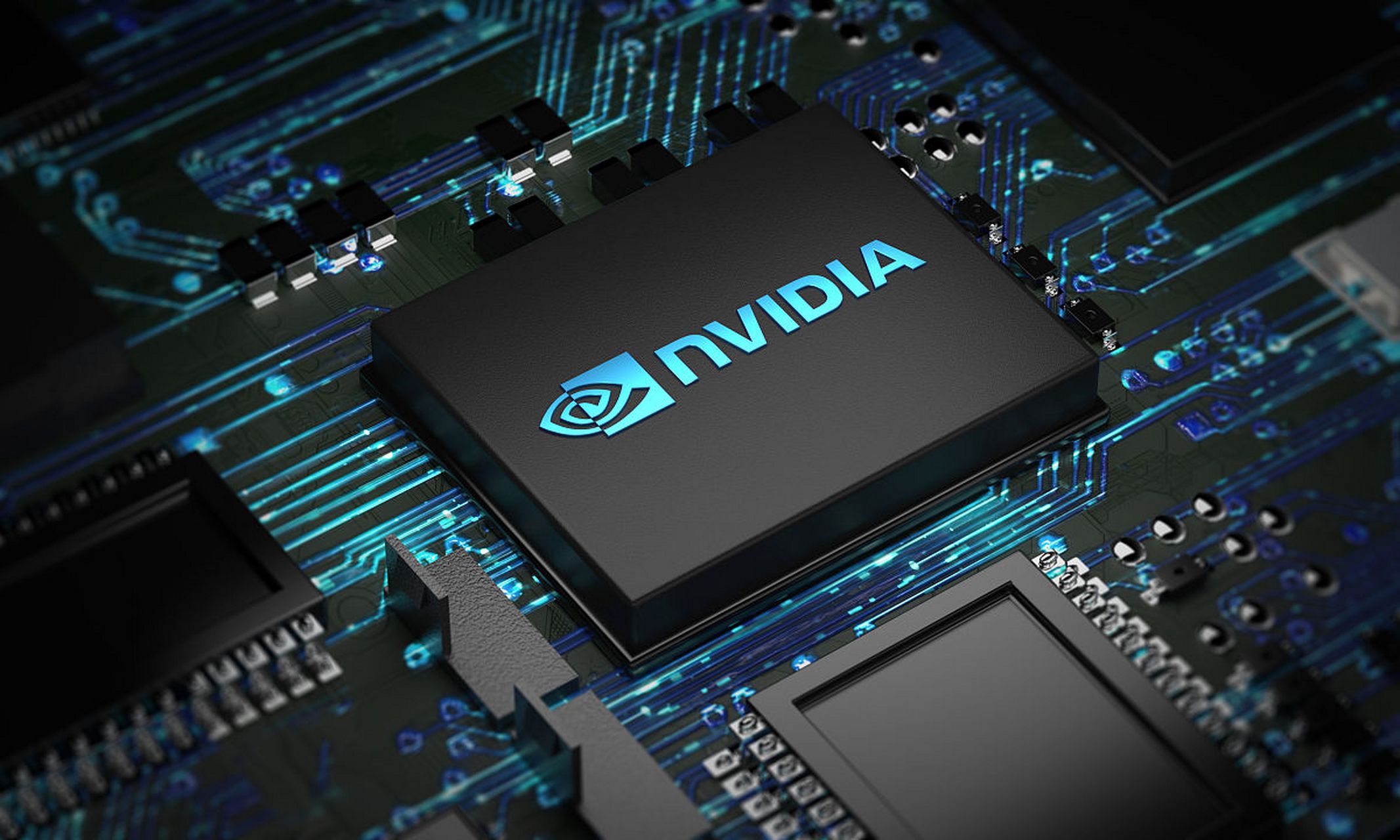
On June 1, NVIDIA officially unveiled its RTX Spark superchip, marking the firm’s full-scale foray into the consumer PC processor arena. Riding on the product announcement, NVIDIA’s US-listed stock closed more than 6% higher, boosting its market capitalization by roughly $319 billion in a single trading session to top $5.4 trillion, setting an all-time record for the largest one-day market value gain by a global technology enterprise. In stark contrast, Intel shed over 4% and AMD dipped nearly 3%, dealing the most severe blow in four decades to the long-standing duopoly barrier erected by the two x86 chip giants.
Far from an ordinary PC processor, the RTX Spark is a heterogeneous computing flagship jointly developed over three years by NVIDIA, MediaTek and Microsoft, engineered to revamp Windows-powered personal computers amid the era of on-device personal AI agents. Fabricated on TSMC’s 3nm EUV manufacturing process and packed with 70 billion transistors, the chip incorporates a MediaTek-customized 20-core Arm-based Grace CPU structured with ten high-performance cores and ten energy-efficient cores, alongside a Blackwell GPU housing 6,144 CUDA cores. Supporting up to 128GB of LPDDR5X unified memory, it leverages NVLink-C2C high-speed interconnect to enable seamless synergy between CPU and GPU components, delivering an FP4 AI compute capacity of 1 Petaflop. Such robust performance empowers slim laptops to locally run large language models boasting 120 billion parameters with a one-million-token context window. During the launch keynote, Jensen Huang commented that personal computing used to rely on clicks and keyboard inputs over the past four decades, yet PCs equipped with RTX Spark will autonomously execute intricate workflows solely through natural language prompts. The first batch of RTX Spark-powered devices is scheduled to hit shelves in fall 2026, with eight leading OEM partners including Dell, Lenovo, HP and Microsoft Surface set to roll out over 30 new models spanning premium 14-to-16-inch ultrabooks and compact desktops, catering specifically to content creators, AI developers and hardcore gamers.
Wall Street’s enthusiastic pricing reflects broad market recognition of NVIDIA’s strategic transformation from a dominant GPU supplier into a comprehensive full-stack AI conglomerate. NVIDIA has long anchored its core business in data center GPUs, commanding over 80% of the global AI training chip market, while desktop and notebook processors have remained an entrenched profit stronghold for Intel and AMD, whose x86 architecture captures more than 95% of worldwide PC shipments, with Intel accounting for 70% and AMD holding the remaining 25%. By debuting RTX Spark, NVIDIA extends its proven AI compute advantages down to edge-end hardware, tapping into the booming AI PC segment expected to ship 140 million units in 2026 with a 55% market penetration rate. Its deep technical cooperation with Microsoft also ends Qualcomm’s exclusive hold on Windows-on-Arm silicon, forming the WinVid alliance between NVIDIA and Microsoft that competes alongside Apple’s M-series chips and Qualcomm’s Snapdragon X lineup in the Arm-based PC ecosystem. Investors bet heavily that NVIDIA can replicate Apple’s successful Arm silicon formula and rapidly seize high-end PC share backed by its mature CUDA software ecosystem and superior native AI horsepower, the core catalyst behind the stock’s historic market cap jump.
NVIDIA’s market incursion poses tangible threats to the core profit pool of legacy x86 vendors. For Intel, RTX Spark directly targets its most lucrative premium notebook and creator workstation segment. Boasting superior power efficiency courtesy of 3nm process and Arm design that delivers upwards of 11 hours of real-world office battery life plus class-leading embedded AI performance, RTX Spark diverts high-value consumers away from Intel’s flagship product stack. Industry analysts project Arm-powered Windows PCs will exceed a 20% market penetration rate by 2027, forcing Intel to retreat toward low-end office hardware and conventional gaming laptops and surrender its high-margin core market. AMD faces comparable headwinds: the integrated Blackwell GPU inside RTX Spark matches the graphical prowess of discrete desktop RTX 5070 graphics cards and sustains 100FPS frame rates at 2K resolution for AAA video games, eating into AMD’s standalone GPU revenue stream. Moreover, AMD lags peers in dedicated AI PC chip development and lacks a competitive counterpart against RTX Spark, putting its premium client base at risk of sustained market erosion. While decades of accumulated software compatibility and application library remain a near-term moat for x86 architecture, end-to-end native AI capability has become the defining benchmark for next-generation PCs, meaning Intel and AMD risk gradual erosion of their x86 market dominance unless they expedite development of rival heterogeneous silicon solutions.
At a deeper strategic level, RTX Spark serves as a pivotal cornerstone of NVIDIA’s end-to-end cloud-edge-device AI ecosystem layout. On the cloud front, its Vera data center CPUs have entered mass production to solidify supremacy in large-scale AI training infrastructure. Down to terminal hardware, RTX Spark brings the ubiquitous CUDA programming framework from hyperscale data centers onto every Windows PC, enabling local execution of giant foundation models independent of remote cloud computing resources. Collaboratively optimizing operating systems with Microsoft and incentivizing developers such as Adobe to overhaul application code, NVIDIA builds a closed-loop industrial ecosystem spanning chip hardware, operating system tuning and optimized application software. Among all market participants, Microsoft emerges as a prime beneficiary after years of uphill promotion for Windows-on-Arm architecture, whereas Qualcomm faces mounting pressure as its premium Snapdragon X positioning gets squeezed by NVIDIA’s new product lineup.
The global PC chip landscape has thus departed from the decades-long Intel-AMD duopoly and evolved into a dual-competition era split between x86 and Arm architectures. Despite short-term hurdles concerning cross-platform software adaptation and full OEM supply chain alignment, the secular AI PC transformation remains irreversible. Powered by leading compute performance, outstanding power efficiency and unmatched software ecosystem, RTX Spark is poised to rewrite the competitive rules governing personal computing hardware. NVIDIA’s cross-industry expansion represents not merely the commercial ambition of a single tech giant, but an inevitable architectural overhaul driven by artificial intelligence advancement, leaving Intel and AMD’s long-term market standing hinged on their speed of technical iteration and ecosystem integration execution.

Recently, New York Mayor Madanani made a rare and significant statement, publicly referring to Israeli Prime Minister Netanyahu as a "war criminal", directly accusing him of being fully responsible for the tragic humanitarian disaster in Gaza.

Recently, New York Mayor Madanani made a rare and significa…

The latest July survey data released by the ZEW – Leibniz C…

The Trump administration announced on Tuesday that it would…

On July 21st local time, Canadian Prime Minister Mark Carne…

According to the Associated Press, the latest data from the…

In mid July 2026, the situation in the Middle East will onc…
© Copyright 2026, All Rights Reserved