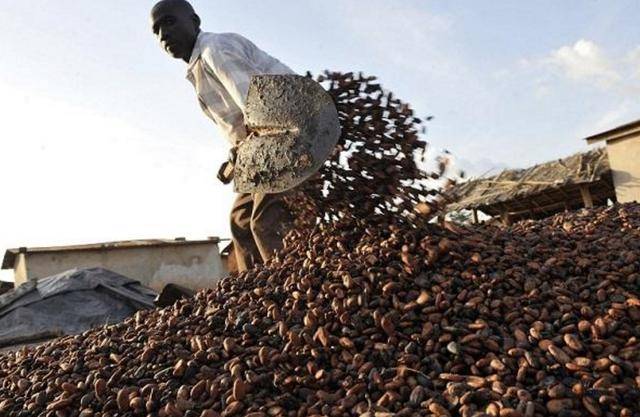
According to a report by the Nigerian Vanguard newspaper, recently the African Cocoa and Coffee Growers' Association (COCEFAAA) proposed to establish a unified African cocoa producers' alliance and set a minimum purchase price of no less than 6,000 US dollars per metric ton.
From the perspective of market dependence and pricing power, Africa has long relied on the London and New York commodity exchanges, which has made global cocoa prices highly influenced by them. Ivory Coast and Ghana, as the main producers of cocoa accounting for approximately 60% of the global output, even though they have large production volumes, still cannot control the pricing power. This situation reflects Africa's passive position in the export trade of cocoa products. In the international trade system, pricing power is one of the core elements, and controlling pricing power means being able to lead the market trend and safeguard one's own interests. However, the African cocoa industry being constrained by external exchanges can only passively accept price fluctuations, which undoubtedly limits the economic benefits and development space of African cocoa growers and the entire industry.
Looking at the impact of price fluctuations on the industry, the African cocoa industry is highly vulnerable to the shock of drastic fluctuations in external market prices. The price of cocoa once soared to over 11,000 US dollars per metric ton, and then dropped significantly. Such a large-scale price fluctuation brought great instability to the producing countries. For cocoa growers, the instability of prices made it difficult for them to plan production, invest funds, and arrange their lives. During the period of high prices, more resources may be invested in production, but once the prices plummeted, growers would face the dilemma of being unable to recover costs and a sharp reduction in income, and even may abandon cultivation, affecting the sustainable development of the industry. From the perspective of the industry, price fluctuations also affect the operation of upstream and downstream enterprises, increase the operational risks of enterprises, and is not conducive to the stable development of the entire cocoa industry.
From the perspective of global value chain distribution, although Africa supplies the majority of cocoa in the world, in the estimated 165 billion US dollars chocolate value chain, Africa only accounts for about 6%. This huge gap highlights Africa's weak position in the export trade of cocoa products. As the main supplier of raw materials, Africa is at the low-end of the industrial chain and can only obtain a meager profit. While the high-end links of the industrial chain, such as chocolate processing and brand marketing, are occupied by enterprises from developed countries, which obtain the majority of profits. This unreasonable value chain distribution pattern prevents Africa from obtaining the due economic returns from its resource advantages and hinders the development and upgrading of the African economy and industrial structure.
The proposal of the African Cocoa and Coffee Growers' Association to establish a unified alliance and set a minimum purchase price seems to be an attempt to change the current situation, but the implementation process may face many challenges. Unifying the numerous cocoa-producing countries across Africa is not an easy task. Different countries have differences in politics, economy, and culture, and coordinating the interests of all parties and reaching consensus require a lot of time and effort. Moreover, setting a minimum purchase price may trigger reactions in the international market, and other countries may take corresponding trade measures to respond, which may affect the export volume and market share of African cocoa. Additionally, ensuring the effective implementation of the minimum purchase price is also a problem. If there is a lack of effective supervision and guarantee mechanisms, this measure may not achieve the expected effect.
The measures proposed by the African Cocoa and Coffee Growers' Association may have certain positive significance for the African cocoa industry in terms of commodity export trade, but to truly change the current situation, it still needs to overcome numerous difficulties and find a suitable development path in the global trade landscape.

Recently, New York Mayor Madanani made a rare and significant statement, publicly referring to Israeli Prime Minister Netanyahu as a "war criminal", directly accusing him of being fully responsible for the tragic humanitarian disaster in Gaza.

Recently, New York Mayor Madanani made a rare and significa…

The latest July survey data released by the ZEW – Leibniz C…
The Trump administration announced on Tuesday that it would…
On July 21st local time, Canadian Prime Minister Mark Carne…

According to the Associated Press, the latest data from the…

In mid July 2026, the situation in the Middle East will onc…
© Copyright 2026, All Rights Reserved