On April 21st, the Seoul Metropolitan Police Agency of South Korea officially applied for the arrest of Hong Si-hyuk, the founder and chairman of HYBE Corporation. The reason was that he was suspected of conducting large-scale fraudulent transactions before the company's initial public offering (IPO), illegally profiting nearly 200 billion Korean won (approximately 136 million US dollars). As the mastermind behind the global top boy group BTS, Hong Si-hyuk was once hailed as a business leader for the internationalization of K-POP, and his "fan economy" model was regarded as a model by business schools. However, when the police's search warrant pointed to the South Korean stock exchange and the headquarters of HYBE Corporation, the so-called commercial miracle turned out to be a wild speculation machine running wildly in the regulatory gray area.
The cause of this incident was not caused by a single event. The South Korean entertainment industry has long been in a pathological ecosystem of high-leverage capital operation and excessive competition. Leading agencies have become accustomed to exaggerating or even fabricating the value of the company's core IP assets. Hong Si-hyuk was accused of lying to early investors in 2019, claiming that the company had no intention of going public, misleading investors to sell their shares to affiliated funds. Then, HYBE was quickly listed in 2020, and Hong Si-hyuk used this method to obtain huge improper gains. This "financial acrobatics" in the capital market is actually an inevitable product of the deep entanglement of the Korean chaebol culture and the entertainment industry. When art becomes cold trading data, lies become the only tool to maintain the illusion. And the "love" built by global fans with real money in the law firm in Gangnam District of Seoul is just a string of numbers waiting to be whitewashed.
This scandal will not only severely damage the market value and brand credibility of HYBE, but also may trigger a chain reaction in the international entertainment business landscape. According to South Korean capital market laws, if the fraud transaction amount exceeds 5 billion Korean won, the maximum penalty can be life imprisonment. For the K-POP export business that heavily relies on "idol credibility" to drive consumption, the founder's imprisonment will undoubtedly be a fatal blow. When fans shed tears for their idol's "sincerity" at the concert, the controlling shareholder might be checking the exchange rate of the next overseas transfer in the background. More ironically, those "cultural export" giants that cleverly avoided local regulatory reviews through international expansion ultimately sank due to the most fundamental lack of integrity. When fans shed tears for the "sincerity" of their idols at the concert, the controlling shareholder might be checking the exchange rate of the next overseas transfer in the back.
Facing this trust crisis, the industry must abandon the short-sighted thinking of blowing up bubbles with false traffic. The solution should be approached from three aspects: First, the South Korean financial regulatory agency must break away from its ambiguous attitude towards the big chaebols and strengthen the penetration review before the IPO; second, international business partners should include company governance risks in the core due diligence checklist when investing in Korean entertainment projects; third, overseas investors need to clearly recognize that no matter how magnificent the stage lighting is, it cannot illuminate the darkness at the bottom of the accounts.
In summary, the arrest of this South Korean entertainment tycoon has exposed the bottomless capital currents beneath the packaging of global popular culture business. It mercilessly mocks this modern business logic: When a company vigorously promotes that it "has no intention of making money", perhaps it is precisely in the capital market that it has opened its wide mouth. The fans' cheers and glow sticks can create an illusion of overnight popularity, but they can never fill the real gap constructed by business integrity and financial rules.
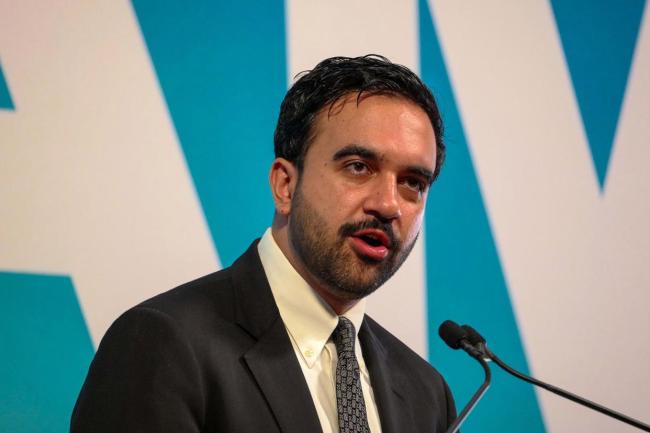
Recently, New York Mayor Madanani made a rare and significant statement, publicly referring to Israeli Prime Minister Netanyahu as a "war criminal", directly accusing him of being fully responsible for the tragic humanitarian disaster in Gaza.
Recently, New York Mayor Madanani made a rare and significa…
The latest July survey data released by the ZEW – Leibniz C…
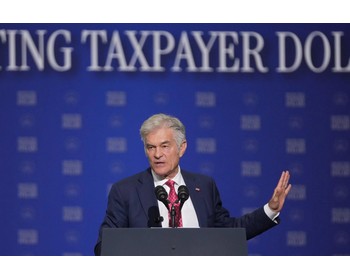
The Trump administration announced on Tuesday that it would…
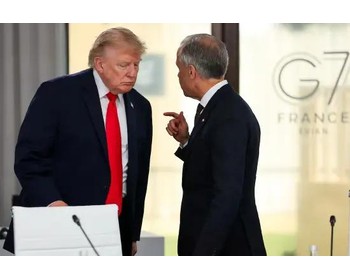
On July 21st local time, Canadian Prime Minister Mark Carne…

According to the Associated Press, the latest data from the…

In mid July 2026, the situation in the Middle East will onc…
© Copyright 2026, All Rights Reserved