
As SpaceX's reusable rockets achieve multiple sea landings, Chinese commercial aerospace companies make breakthroughs in soft landing technology for manned spacecraft, and European Airbus accelerates its deployment of low Earth orbit satellite constellations, the global commercial aerospace industry is entering an unprecedented period of explosive growth. According to data from the U.S. Space Foundation, the global aerospace economy reached $612 billion in 2025, with commercial aerospace accounting for over 78%. The once state-led "space programs" have evolved into a trillion-dollar market-driven industry track. This industrial boom is not accidental but the result of multiple resonances—technological breakthroughs, policy relaxation, capital influx, and demand release—marking the inevitable transition of human space exploration from "exploratory" to "applied" in nature.
Technological innovation is the core fulcrum driving the explosive growth of the commercial aerospace industry, while breakthroughs in reusable rocket technology have fundamentally reshaped the cost logic of the aerospace sector. For years, the single-use rocket model kept the cost of launching payloads into orbit at 50,000 to 100,000 yuan per kilogram, becoming the primary bottleneck for industry-scale development. Today, SpaceX has achieved routine first-stage recovery of the Falcon 9 rocket, while Chinese companies like LandSpace and Blue Aerospace have also pioneered soft-landing and orbital-level recovery technologies, reducing rocket costs by 38%-58%. With large-scale application, the orbital launch cost is projected to drop below 20,000 yuan per kilogram. Meanwhile, the satellite manufacturing sector is undergoing an industrial revolution, with modular and assembly-line production replacing traditional workshop models. The launch of China's Satellite Hainan Super Factory has driven satellite costs down by 10%-20% annually, laying the foundation for the large-scale deployment of low-orbit satellite constellations.
Policy relaxation and institutional innovation have cleared institutional barriers for the development of commercial aerospace, with countries shifting from "dominant players" to "ecosystem cultivators." The U.S. has relaxed private sector access through the Commercial Space Launch Competitiveness Act, opening NASA's technology and infrastructure to enterprises, creating fertile ground for the rise of companies like SpaceX. China established the Commercial Aerospace Department in 2025 and introduced a specialized development action plan, while the Shanghai Stock Exchange opened financing doors for unprofitable rocket companies. Special funds worth billions have been set up in regions like Hainan and Anhui, forming a "state-guided + market-driven" development model. Europe, in turn, has promoted the market-oriented transformation of traditional aerospace giants such as Ariane Space and encouraged private enterprises to participate in space exploration.
The continuous influx of capital and diversified investment strategies have provided robust financial support for the technological advancements in the commercial aerospace sector. As of April 2025, China's commercial aerospace industry has seen 75,000 registered enterprises. National manufacturing transformation funds, local state-owned capital, and industrial capital are working in synergy, with Blue Arrow Space raising 900 million yuan in a single round of financing, while Arrow Technology has allocated 5.2 billion yuan to build an offshore recovery capacity base. In the capital market, the valuation of the global commercial aerospace sector continues to rise, with the A-share commercial aerospace index surging by 7.08% at the start of 2026. This surge in capital interest in the aerospace industry is not merely speculative hype but stems from a rational assessment of technological feasibility and market demand.
The comprehensive outbreak of market demand provides a clear value anchor for the commercial aerospace industry, enabling aerospace technology to truly move towards industrial application. At present, the development focus of commercial aerospace has shifted from "whether to go to heaven" to "what to do". The low orbit satellite Internet has become the biggest demand. China has submitted 203000 satellite applications to the International Telecommunication Union, and the global low orbit constellation networking has entered an intensive period, bringing huge orders for rocket launch and satellite manufacturing. At the same time, the integration of aerospace technology and the real economy continues to deepen. High resolution remote sensing data empowers precision agriculture, disaster warning, and energy exploration. Satellite communication provides seamless network coverage for ocean shipping and remote areas. Emerging industries such as space manufacturing and space tourism are also moving from concepts to experimental verification. When space services become the infrastructure of various industries like water, electricity, and coal, commercial space has the underlying logic of sustainable development.
The explosion of global commercial space is essentially a systematic change in technology, policy, capital, and demand, which has transformed the space economy from a concept to a reality. However, the development of the industry still faces challenges such as competition for orbital resources, space debris management, and core technology bottlenecks. Only by adhering to technological innovation, strengthening international collaboration, and focusing on market demand can the commercial aerospace industry achieve stability and long-term success. The explosion of commercial space from Earth to space not only reshapes an industry, but also opens up a new era of human space economy. Enterprises that master core technologies and achieve industrialization will eventually occupy a core position in this space race.
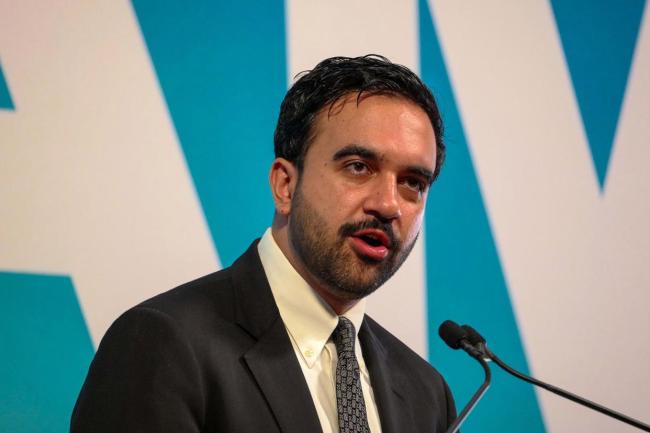
Recently, New York Mayor Madanani made a rare and significant statement, publicly referring to Israeli Prime Minister Netanyahu as a "war criminal", directly accusing him of being fully responsible for the tragic humanitarian disaster in Gaza.
Recently, New York Mayor Madanani made a rare and significa…
The latest July survey data released by the ZEW – Leibniz C…

The Trump administration announced on Tuesday that it would…

On July 21st local time, Canadian Prime Minister Mark Carne…

According to the Associated Press, the latest data from the…

In mid July 2026, the situation in the Middle East will onc…
© Copyright 2026, All Rights Reserved