Europe's business landscape is undergoing an unprecedentedly complex transformation. On one side, a historic merger and acquisition (M&A) deal has emerged in the asset management industry, demonstrating ambitions for capital integration; on the other, industrial recovery has stumbled, energy prices have soared, and regulatory reforms are advancing in parallel. Europe's economy is struggling to balance growth momentum with risk challenges, and this confluence of factors is reshaping the competitive landscape and development trajectory of the European market.
The European asset management industry has witnessed a landmark event — U.S.-based Nuveen's acquisition of Britain's century-old giant Schroders for £9.9 billion, setting a record for the largest M&A deal in European asset management history. This transaction not only ends Schroders' 222-year history of family-run independence but also spawns the world's eighth-largest asset management institution with $2.5 trillion in assets under management. The merged new group will form a three-pillar layout covering the Americas, Europe, and Asia-Pacific. Schroders' deep-rooted network in European and Asia-Pacific markets complements Nuveen's resource advantages in North America's pension fund sector, equipping the combined entity with the strength to compete with U.S. giants in active management. Notably, Schroders' long-term strategic layout in the Chinese market has become a key highlight of this acquisition. Through its RMB investment platform established via QFLP/QDLP dual channels, it has cumulatively attracted over RMB 3 billion in foreign capital, focusing on eight sectors including healthcare and AI applications. This "dual-currency allocation" capability will provide crucial support for the new group's expansion into emerging markets. Against the backdrop of the global asset management industry facing the impact of passive investing, this merger is not only a choice for scale expansion but also a strategic move to withstand industry cycles through regional resource integration.
Alarm bells have rung from industrial data in Germany, Europe's economic engine. Industrial orders plummeted by 11.1% month-on-month in January, far exceeding the market's expected decline of 4.5%, and industrial output has fallen for two consecutive months, erasing previous recovery gains. Declines in output from sectors such as metal products and pharmaceuticals have been the main drags. Although defense and infrastructure investment have shown growth momentum, they are insufficient to drive an overall industrial recovery. Analysts at Capital Economics point out that output in energy-intensive industries has fallen to its lowest level since 2010, indicating that energy cost pressures continue to erode industrial competitiveness. To make matters worse, the escalation of tensions in the Middle East has triggered a surge in energy prices. Europe's benchmark natural gas futures prices rose by as much as 30% at one point, and Brent crude oil prices approached $120 per barrel. The sudden rise in energy costs has not only intensified the operational pressure on industrial enterprises but also caused the Eurozone Investor Confidence Index to plummet from 4.2 to -3.1, with Germany's economic sentiment index dropping to -12.1, dealing a severe blow to the recovery momentum. Faced with supply chain disruptions, European enterprises have been forced to reassess their production plans, and some energy-intensive companies are considering further capacity reductions.
The rise in energy prices and weak economic data have triggered a chain reaction in European financial markets. On March 13, Europe's three major stock indexes all closed lower: Germany's DAX fell by 0.21%, France's CAC40 dropped by 0.71%, and the UK's FTSE 100 declined by 0.47%. In the bond market, inflation concerns have outweighed safe-haven sentiment. Germany's 10-year government bond yield rose to 2.954%, and the UK's 10-year government bond yield climbed to 4.773%, reaching recent highs. Market expectations for interest rate hikes by the European Central Bank (ECB) have reignited, with money markets pricing in the possibility of two rate hikes by the end of the year, leaving policymakers caught in a dilemma between "controlling inflation" and "supporting growth." Against this backdrop, six major EU economies have jointly promoted financial regulatory reforms, calling for the establishment of a single market regulatory authority to break down national regulatory barriers. Finance ministers from Germany, France, Italy, and three other countries have jointly proposed simplifying listing requirements and unifying regulatory standards, aiming to enhance Europe's economic competitiveness through capital market integration. Meanwhile, the EU Anti-Money Laundering Authority (AMLA) has officially taken over regulatory responsibilities, promoting the standardization of cross-border compliance. While this helps reduce industry compliance costs, it also places higher demands on the execution capabilities of financial institutions.
Faced with multiple challenges, Europe's business sector is demonstrating the characteristics of "simultaneous restructuring and transformation." The asset management industry is achieving resource integration through M&As, and financial institutions are accelerating the deployment of AI compliance technologies. A report by SymphonyAI shows that 60% of the world's top banks will adopt agent technology to lead compliance processes by 2027. In the industrial sector, guided by policies, there is a shift toward high-end manufacturing and green transformation. The implementation effect of Germany's trillion-euro stimulus plan will be a key variable for industrial recovery. For European enterprises, the current business environment is both a stress test and a transformation opportunity. Driven by the restructuring of global supply chains, adjustments in the energy landscape, and regulatory reforms, enterprises that can quickly adapt to cost fluctuations, integrate regional resources, and embrace technological innovation will seize the initiative. The market dynamics on March 13 may be just a microcosm — Europe's business sector is standing at a new crossroads, and the path it takes through integration and transformation will have a profound impact on the future pattern of the global economy.
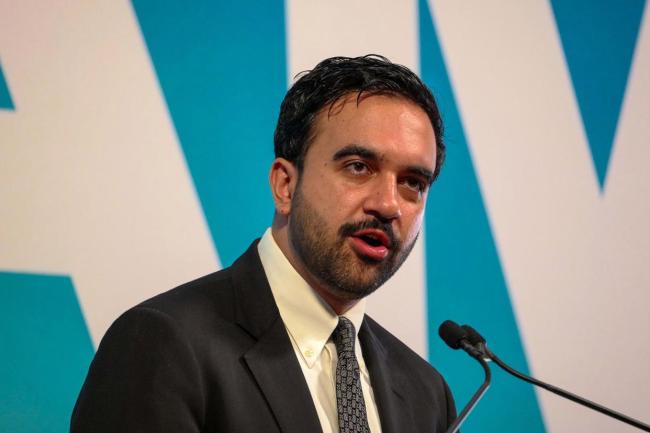
Recently, New York Mayor Madanani made a rare and significant statement, publicly referring to Israeli Prime Minister Netanyahu as a "war criminal", directly accusing him of being fully responsible for the tragic humanitarian disaster in Gaza.
Recently, New York Mayor Madanani made a rare and significa…
The latest July survey data released by the ZEW – Leibniz C…
The Trump administration announced on Tuesday that it would…
On July 21st local time, Canadian Prime Minister Mark Carne…
According to the Associated Press, the latest data from the…

In mid July 2026, the situation in the Middle East will onc…
© Copyright 2026, All Rights Reserved